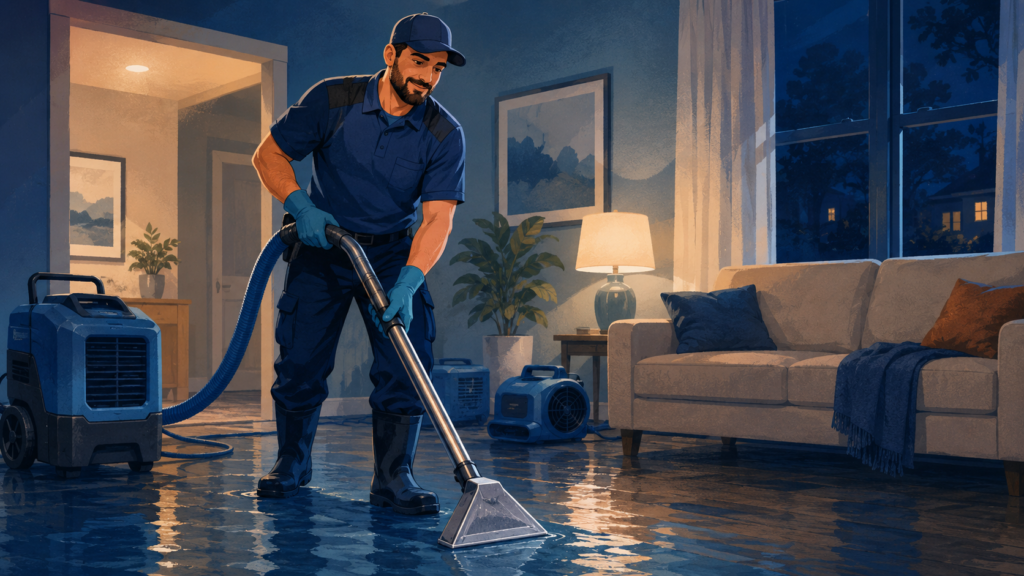
Water doesn’t keep business hours. If you’re staring at a flooded floor or a burst pipe at 2 in the morning, you need help now, not at 9 AM. Here’s exactly who to call for emergency water removal in Glendale, what to do while you wait, and why acting fast tonight can save you thousands.
The short answer: call a 24/7 water damage restoration company that serves Glendale and the West Valley. They can extract standing water, dry your home, and stop the damage from spreading, any hour of the day. While you wait, there are a few safe steps you can take right now.
Who to call for emergency water removal in Glendale
For a true water emergency, your first call should be a 24/7 emergency water removal and restoration service. These are the crews with truck mounted pumps, extraction wands, and commercial drying equipment, and they answer the phone in the middle of the night.
You may also need a plumber if the source is an active plumbing failure like a burst supply line, and your insurance company once things are stable. But the restoration crew is who actually gets the water out of your home. If sewage or contaminated water is involved, don’t try to handle it yourself. That needs trained, protected pros.

What to do while you wait for help
Once you’ve called, put these few minutes to good use. Stay calm and stay safe.
- Stay safe around electricity. If water is near outlets, appliances, or your panel, don’t wade in. Cut power to the area at the breaker only if you can reach it safely and dryly.
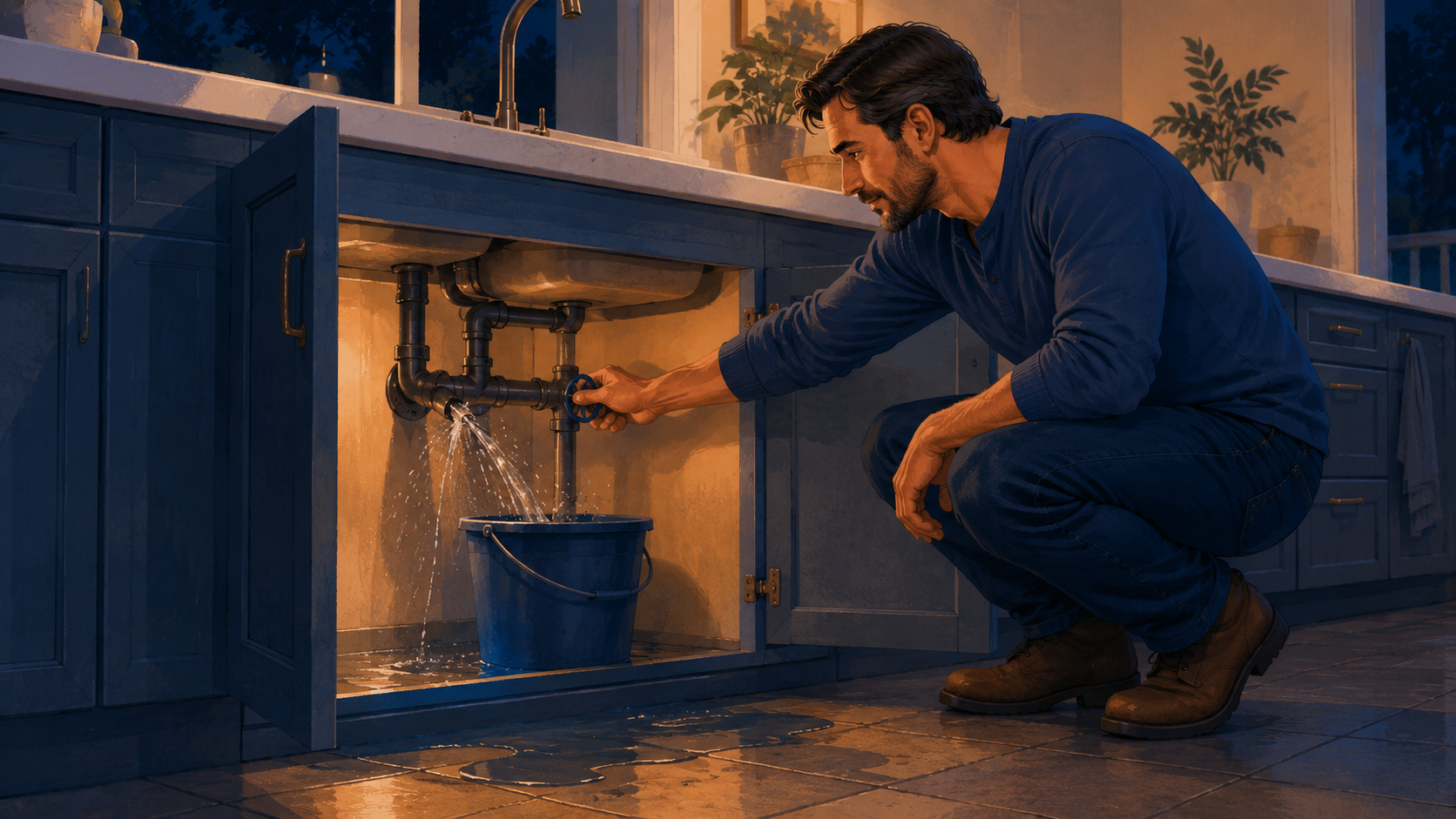
- Stop the water. Shut off your home’s main water valve if it’s a plumbing leak, or close the supply line to the leaking appliance or water heater.
- Document it. Take photos and a short video of the water and damage before you move anything. This helps your insurance claim.
- Move what you can. Lift furniture, electronics, and valuables out of the water. Pull up rugs. Mop or towel up what’s safe to reach.
That’s it. Don’t put yourself at risk trying to do more. The crew will handle the heavy extraction.
Why water removal cannot wait until morning
It’s tempting to throw down towels and deal with it in the daylight. Here’s why that’s a costly mistake. Water spreads within minutes, soaking into flooring, drywall, baseboards, and subfloor. Within hours, drywall swells and wood starts to warp. And in the Arizona heat, mold can begin to grow within 24 to 72 hours.
Every hour the water sits, the damage and the repair bill grow. Fast overnight extraction and drying is what keeps a wet floor from becoming a gut and replace project. That’s the whole reason emergency service exists.
What emergency water removal involves
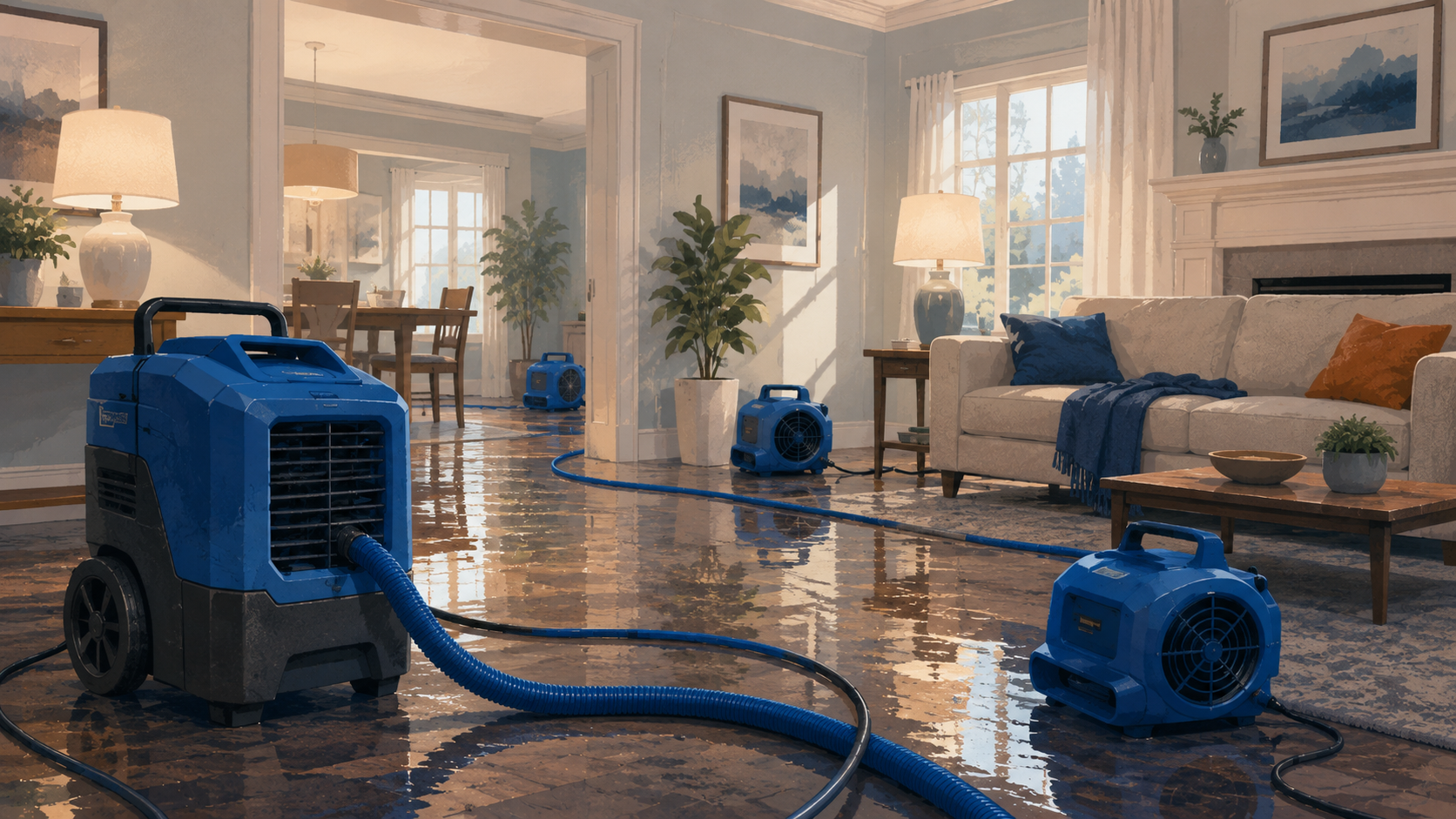
When the crew arrives, they follow a clear process. First they inspect the damage and use moisture meters to find water hiding inside walls and under floors. Then they extract the standing water with powerful pumps and wands. Next they set up fans and dehumidifiers to dry the structure completely, because a floor that feels dry on top can still be soaked underneath. Finally they clean, sanitize, and start any repairs, and many will help document everything for your insurance claim.
Common 2 AM water emergencies in Glendale homes
Late night water calls in Glendale and the West Valley usually come from a familiar list.
- Burst or leaking pipes. A failed supply line can flood a room fast while everyone’s asleep.
- Water heater failures. An aging water heater can let go overnight and empty its tank across the floor.
- Monsoon roof leaks. During monsoon season, roughly July through September, a storm can drive rain through roof damage and into ceilings and walls.
- AC condensation leaks. A clogged condensate line can overflow and soak a ceiling, and you often notice it at night.
- Appliance overflows. A washing machine or dishwasher hose can fail and run for hours.
- Slab leaks. A leak under the slab may finally show up as warm, damp floors.
A quick example from a Glendale home
Picture a Glendale family woken at 2 AM by the sound of running water. A supply line under the bathroom sink had burst, and water was creeping down the hall. They shut off the main valve, took a few photos, and called a 24/7 crew. A technician arrived, extracted the water, and had drying equipment running before sunrise. The floors and most of the drywall were saved. Waiting until morning could have meant tearing out the hallway and bathroom. Acting at 2 AM made the difference.
Does insurance cover emergency water removal?
Often, yes. Sudden and accidental water damage, like a burst pipe or an appliance overflow, is commonly covered by Arizona homeowners policies, and emergency mitigation to prevent further damage is usually part of that. Monsoon wind or hail roof damage that lets rain in is frequently covered too.
Flooding from outside, such as flash flood water entering the home, usually needs separate flood insurance. Gradual, ignored leaks can be denied. Coverage varies by policy, carrier, and situation, so confirm with your own insurer. A good restoration crew documents the damage to support your claim.
Common mistakes to avoid
- Waiting until morning. The delay lets water spread and mold start.
- Only mopping the surface. Water hides in walls and subfloor. If it isn’t fully dried, mold shows up later.
- Using a household vacuum on water. That’s a shock hazard. Leave standing water to the pros.
- Handling sewage yourself. Contaminated water needs trained, protected cleanup.
Preventing the next late night emergency
Once things are dry, a few habits lower your odds of another 2 AM scare. Know where your main shutoff is so you can act fast. Check the supply lines and hoses behind your washing machine, dishwasher, and water heater once a year, and swap old rubber hoses for braided steel ones. Have your roof looked at before monsoon season, and keep your AC condensate line clear. A few inexpensive water leak alarms near the water heater and under sinks can wake you before a small drip becomes a flooded floor.
Key takeaways
- For a 2 AM water emergency in Glendale, call a 24/7 water removal and restoration crew first.
- While you wait, stay safe around electricity, stop the water, document it, and move valuables.
- Water spreads by the hour and mold can start in 24 to 72 hours in the Arizona heat, so don’t wait for morning.
- Insurance often covers sudden water damage and emergency mitigation, but flooding usually needs a separate policy.
Frequently asked questions
Is anyone really available at 2 AM?
Yes. Water damage is treated as an emergency, so 24/7 crews serving Glendale and the West Valley answer the phone around the clock and can be dispatched right away.
How fast can someone get here?
It depends on your exact location and the time, but the goal is to get a crew extracting water as fast as possible, because every hour counts.
What does emergency water removal cost?
It depends on how much water there is, how far it spread, and what needs drying or replacing. A crew can inspect and give you a clear estimate before work begins, and much of it may be covered by insurance.
Should I call my insurance or the restoration crew first?
Call the restoration crew first to stop the damage, then your insurer once things are stable. Emergency mitigation to prevent further damage is usually expected under your policy.
Get help now
A 2 AM water emergency is stressful, but you’re not stuck until morning. Stay safe, stop the water, document it, and get a trusted local crew on the way. Glendale AZ Water Damage is a water damage information and lead request service. We are not a licensed restoration contractor, and this article is general information, not professional restoration, insurance, or health advice, so a licensed local pro should assess your specific situation. If you need help now, call for fast 24/7 service or reach out through our homepage and we’ll connect you with a trusted local restoration pro.