
You catch it late on a Sunday. A soft spot in the hallway carpet of your Glendale home, still damp from a slow leak you thought you’d dried. No dramatic flood, no ceiling caving in, just a patch of wet that won’t quit, so you tell yourself it can wait. That’s the moment most homeowners get wrong. It isn’t about the water you can see. It’s about what quietly starts growing in the walls a day or two later.
Here’s the honest picture. Water on your floor isn’t the real threat. The threat is what damp materials become when they sit. So is water damage dangerous? It can be, and the danger has less to do with the puddle and more to do with time, the kind of water involved, and who’s breathing the air afterward. Once you understand what’s actually risky, you’ll know what to act on and what not to lose sleep over.
What actually makes water damage a health concern
Clean water sitting on tile for an hour is a mess, not a hazard. The problems start when water soaks into porous materials and stays there. Drywall, carpet, wood, and insulation all soak up moisture fast and hold it, and that’s exactly the environment mold needs.
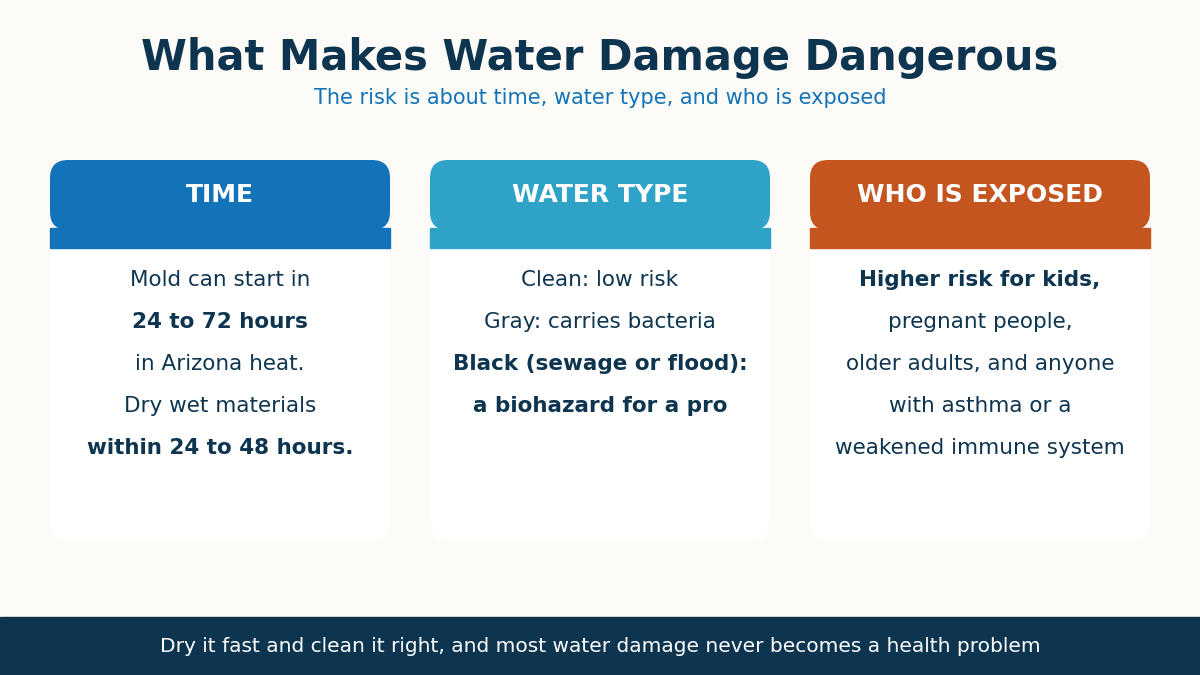
The EPA says wet materials should be dried within 24 to 48 hours to keep mold from growing. Miss that window and microscopic mold can begin colonizing on damp drywall and wood, often before you ever see or smell a thing. In our Arizona heat, that clock runs even faster. So the danger isn’t the water event itself. It’s the days that follow if the area stays wet, which means the risk is largely in your control if you move quickly.

The health risks water damage can bring into your home
The main health concern after water damage is mold, specifically breathing it in. The EPA and CDC are clear that inhaling mold can cause real symptoms in some people: coughing, wheezing, a stuffy or runny nose, itchy eyes, and skin irritation.
For people who already have asthma or allergies, mold can trigger flare ups and asthma attacks, and longer exposure has been linked to more serious lung reactions in sensitive people. The takeaway isn’t fear. It’s that a damp, moldy home can genuinely make some people feel unwell, and the effect builds the longer the moisture sits.
Not everyone reacts the same way. Two people can share a house and only one gets symptoms. That’s also why mold testing usually isn’t the answer. The CDC doesn’t recommend it, because knowing the exact type doesn’t change what you do. If you can see mold or smell that musty odor, find the moisture and fix it.
Not all water is equal: clean, gray, and black water
How dangerous your situation is depends a lot on where the water came from. Restoration pros sort water into three categories, and it’s worth knowing yours.
Clean water comes from a fresh source like a supply line, a broken pipe, or a leaking water heater. It’s the least risky, though it still grows mold if it sits and it can pick up contaminants as it spreads.
Gray water is used water with some contamination, like runoff from a dishwasher, washing machine, or sink. It carries bacteria and can make you sick if it reaches your mouth or an open cut.
Black water is the serious one: sewage, a toilet backup with waste, or floodwater that ran in during a monsoon storm. It can carry bacteria, viruses, and parasites, and it’s a genuine biohazard. This isn’t a doing it yourself job. Step back and get a licensed pro with the gear to handle it safely.
The other hazards people forget about
Mold gets all the attention, but a wet home has a couple of more immediate dangers. The first is electrical. Standing water near outlets, appliances, or a breaker panel is a shock risk. If you’d have to stand in pooled water to reach a switch or appliance, don’t. Keep out and call an electrician or your restoration pro.
The second is structural. Water weakens drywall and ceilings, so stay out from under a bulging, dripping ceiling. And if floodwater came in from outside, treat it as contaminated: wash your skin with soap and clean water after contact, and toss porous items that soaked in it.

Who in your home is most at risk
Water damage isn’t equally risky for everyone under your roof. The EPA and CDC point to a few groups who should stay away from the wet area and out of any cleanup: infants and children, people who are pregnant, older adults, anyone with asthma or ongoing breathing problems, and anyone with a weakened immune system.
If that describes someone in your household, keep them in a dry part of the house while the wet area gets handled, and let a healthy adult or a pro do the work with proper protection.
The Arizona twist: heat, monsoon, and a faster clock
There’s a myth that our dry desert air protects Glendale homes from mold. It doesn’t. The air inside a soaked wall cavity isn’t dry, and Arizona’s heat actually speeds mold up. In our summer temperatures, mold can take hold in roughly 24 to 72 hours.
Monsoon season, July through September, is when this bites hardest in the West Valley. A wind driven roof leak or flash flooding can push water into homes across Glendale, Peoria, Surprise, and Sun City, and then the heat goes to work on whatever stayed damp. A leak you shrug off on a Friday can be a mold problem by Monday. Speed matters more here than in cooler parts of the country.
So, is water damage dangerous? Here’s the honest answer
People ask us, is water damage dangerous, more than almost anything else. A small, clean spill you dry within a day or two usually isn’t a health danger. The risk climbs when the water is contaminated, when it sits long enough for mold to grow, or when vulnerable people are living in it. A soaked carpet ignored for a week, a sewage backup, or floodwater in the living room are all real. And what lowers that risk is simple: dry it fast and clean it right.
Common mistakes that make water damage more dangerous
A few habits turn a manageable leak into a real hazard. Watch for these.
- Drying the surface and calling it done. The carpet feels dry on top while the pad and subfloor underneath stay soaked. That hidden moisture is where mold quietly starts.
- Waiting to see if it dries on its own. In the Arizona heat, waiting is how a small leak turns into mold in a couple of days.
- Treating black water like clean water. Sewage and floodwater need protective gear and a pro, not a mop and bucket.
- Letting kids, older adults, or anyone with breathing issues hang around the wet room.
- Skipping protective gear. Gloves, goggles, and an N95 mask keep spores and bacteria out of your lungs and off your skin.
What to do next to keep your home safe
If you’re staring at a wet spot right now, here’s the calm order of operations. First, stop the water source if you can and keep everyone away from standing water near anything electrical. Second, figure out what kind of water it is, since clean, gray, and black each call for a different response.
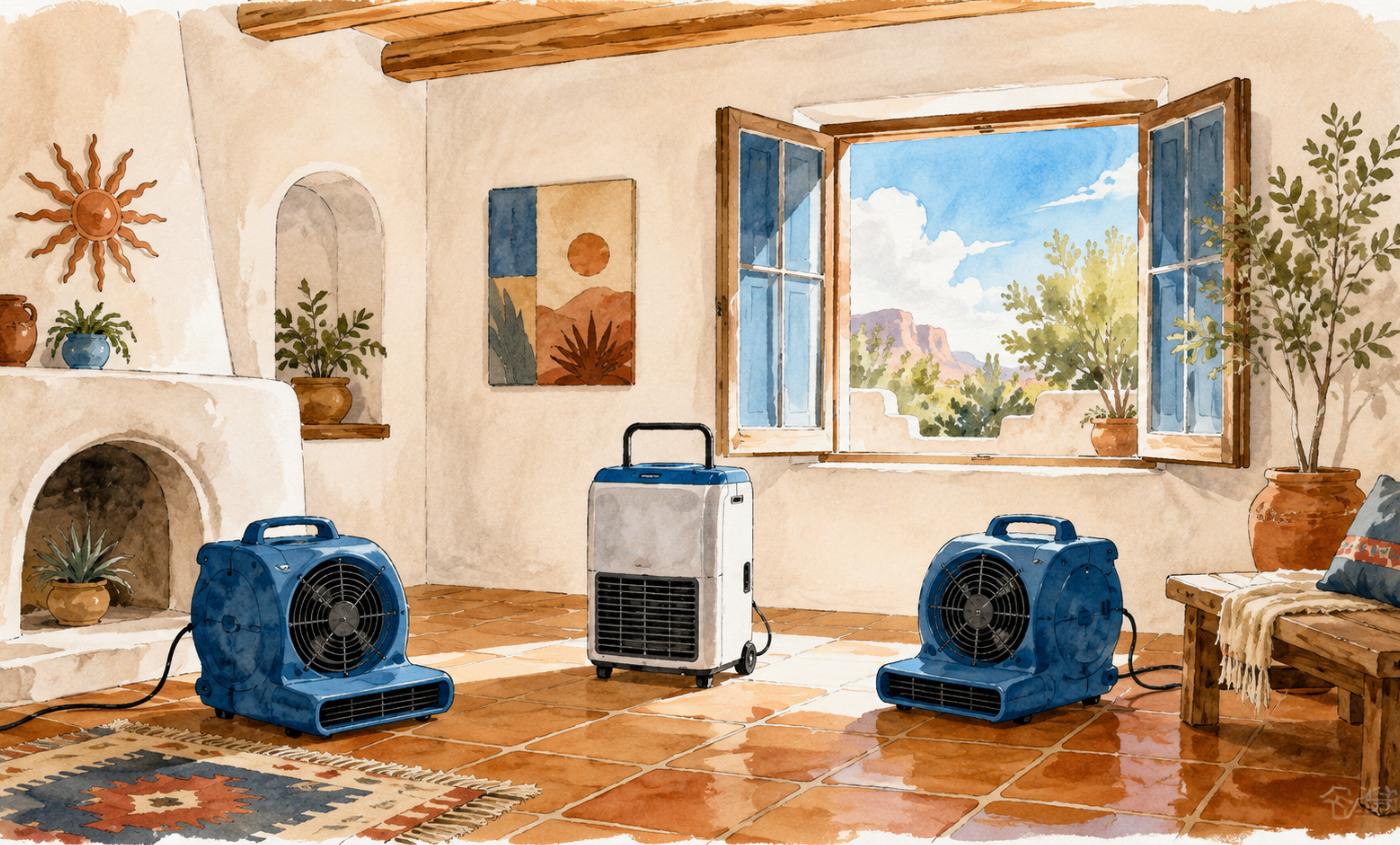
Third, dry it fast. Move air with fans, pull humidity with a dehumidifier, and get porous items up off the wet floor. Fourth, watch for signs it’s beyond a quick fix: a musty smell, spreading stains, water you can’t fully reach, or anything involving sewage or floodwater. Those are your cue to call a professional.
Take the West Valley homeowner near 67th Avenue and Bell Road who found a damp closet wall after a monsoon roof leak. She ran a box fan at it for two days and the surface dried. Three weeks later a musty smell returned, and behind the wall was mold feeding on the wet insulation the whole time. Fast and thorough beats surface deep every time.
Key takeaways
- The danger comes mostly from mold and contaminated water, not the water you can see. Dry wet materials within 24 to 48 hours, since Arizona heat can grow mold in as little as 24 to 72 hours.
- Breathing mold can cause coughing, wheezing, congestion, and asthma flare ups, especially in sensitive people.
- Clean water is low risk, gray water carries bacteria, and black water (sewage or floodwater) is a biohazard for a pro.
- Children, pregnant people, older adults, and anyone with breathing or immune issues should stay out of the wet area, and handle standing water near electrical sources with extreme care.
Frequently asked questions
How quickly can water damage become a health risk?
Mold can begin growing on wet materials within about 24 to 48 hours, and Arizona’s heat can push that closer to 24 to 72 hours. The sooner an area is fully dried, the less likely it is to become a health concern at all.
Can a small leak really make you sick?
A small leak dried quickly usually won’t. The risk climbs when moisture sits and feeds mold, or when the water is contaminated. Sensitive people, like those with asthma or allergies, can react to even modest mold growth, so it’s worth drying things out promptly.
Do I need to test my home for mold?
Usually not. The CDC doesn’t recommend routine mold testing, because the type doesn’t change the fix. If you can see mold or smell that musty odor, find the moisture source, dry the area, and clean or remove what’s affected.
Is it safe to stay in a house with water damage?
For a small, clean, quickly dried leak, usually yes. For contaminated water, widespread mold, or if someone has breathing or immune issues, keep vulnerable people out of the affected area and get a professional assessment of your situation.
Glendale AZ Water Damage is a water damage information and lead request service. We’re not a licensed restoration contractor, and this article is general information, not professional restoration, insurance, or health advice. Every home and situation is different, so a licensed local pro should assess yours in person. If mold or water damage is affecting your family’s health, talk with a medical professional too.
Worried about a wet spot in your Glendale or West Valley home? Don’t wait for it to dry on its own. Reach out for fast 24/7 help or call the number at the top of the page, and a local pro can help you dry it out and keep your home safe. You can also see how we help on our services page.