A monsoon storm just rolled through Glendale, and now you’re staring at the ceiling wondering if that mark was there yesterday. Here’s the short answer. Check inside your home first for fresh stains, drips, or a musty smell, then look over your roof from the ground for cracked or missing tiles and loose flashing. Don’t climb up on a wet roof. And move fast, because in the Arizona heat, trapped moisture can start growing mold in as little as 24 to 72 hours. A monsoon roof leak in Arizona rarely announces itself with a dramatic drip. It usually seeps in quietly through the layers of your roof, so catching it early is what keeps a small fix from turning into a big one.
Here’s what to check after a West Valley storm, why our roofs leak the way they do, and what to do the moment you spot trouble.
Why monsoon storms cause roof leaks in Arizona
Most Glendale homes wear a tile roof, and tile is tough. It can last decades under the desert sun. But the tile isn’t actually what keeps water out of your house. The real waterproof layer is the underlayment, the felt or synthetic sheet hidden underneath the tiles. The tile shields that layer from sun and impact, and the underlayment is what stops the water.
Here’s the catch. Arizona’s heat and UV are brutal on that hidden layer. Years of triple digit summers dry it out and let it crack long before the tile above it wears out. So you can have a roof that looks fine from the curb while the layer doing the real work is quietly failing.
Then the monsoon shows up. A haboob or a fast moving storm drives rain sideways at high wind speeds. That wind driven rain doesn’t politely land on top of the tiles and run off. It gets pushed under the tile edges, into the valleys, and through tiny gaps in the flashing around vents and chimneys. If the underlayment beneath is cracked or the flashing has loosened, water finds its way in. That’s the story behind most every monsoon roof leak in Arizona.
What to check inside your home first
Start indoors, where it’s safe and where the clues are easiest to read. A roof leak almost always shows up on the inside before you can spot the cause up top.
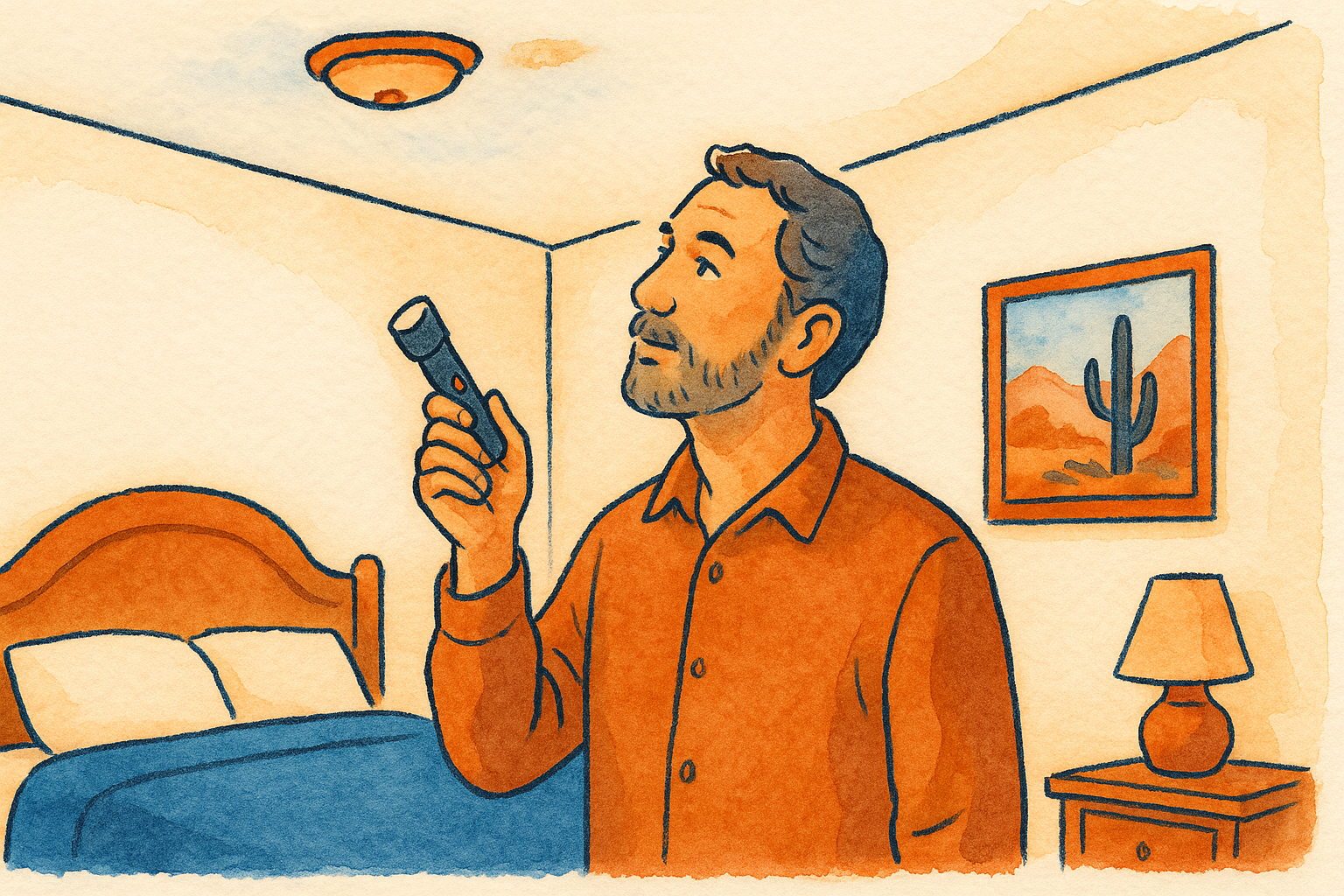
Walk through your home after the storm and look up. Check ceilings and the tops of walls, and pay close attention to corners and the area around light fixtures and ceiling fans, where water likes to collect. A fresh leak often looks like a soft, damp spot. An older one leaves a yellowish brown ring, which means water has been getting in for a while.
Use your nose too. If a room smells musty, like a damp closet that never airs out, that often means moisture is trapped in the attic or inside a wall even if you can’t see a stain yet. Feel for soft or spongy drywall, look for paint that’s bubbling or peeling, and check closets and the ceiling of your garage, which people tend to forget. If you can safely peek into the attic with a flashlight, look for wet insulation, water tracks on the wood, or daylight coming through where it shouldn’t.
What to check on your roof, from the ground
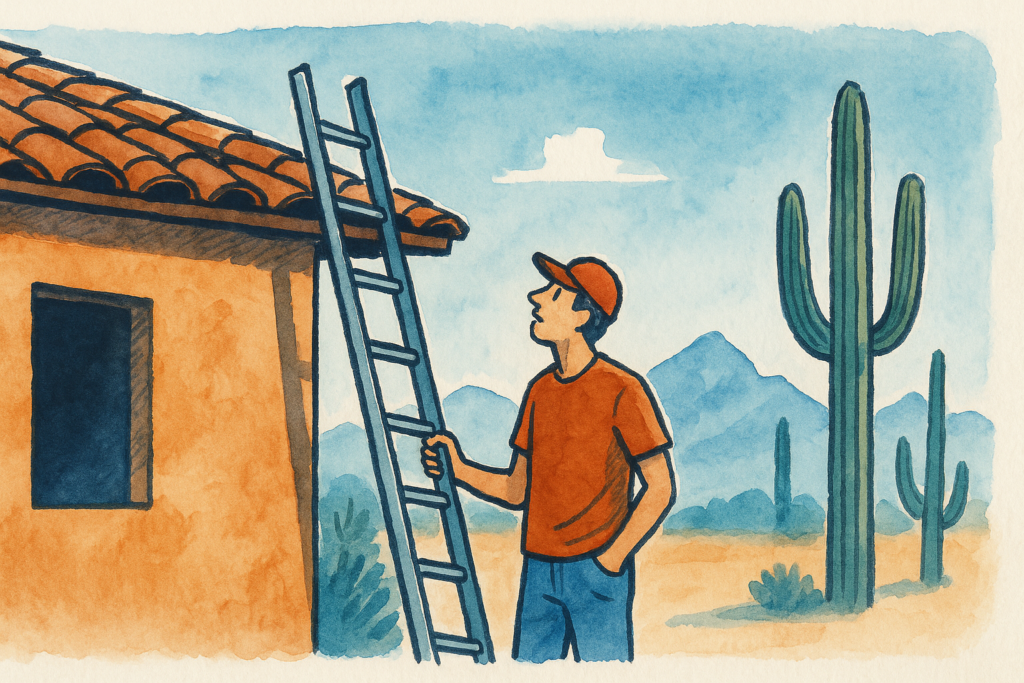
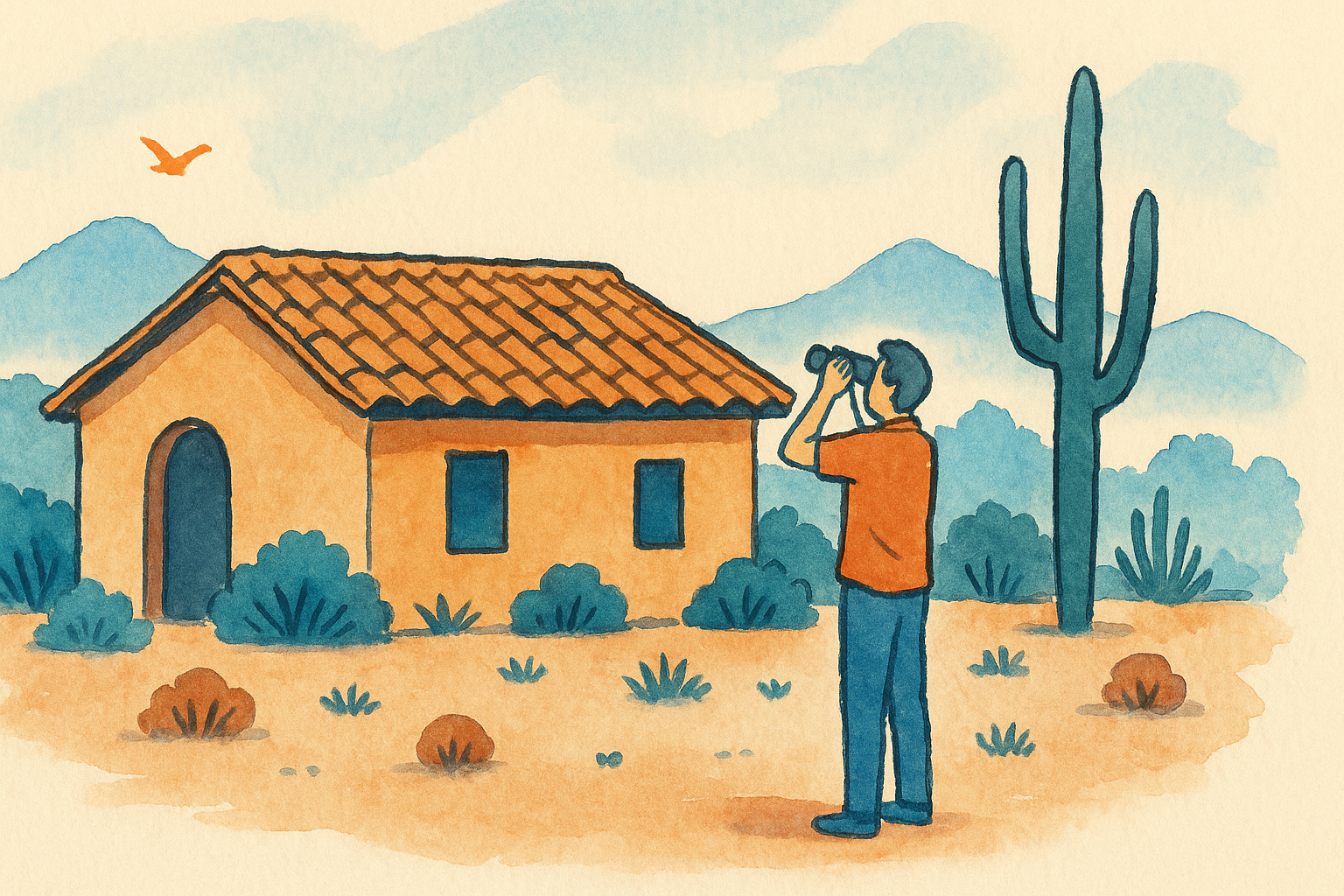
Now step outside and look up at the roof, but keep both feet on the ground. A wet tile roof is dangerously slick, and walking on tile can crack it and cause the very leak you’re trying to find. Grab your phone or a pair of binoculars and inspect from the yard.
Scan for tiles that are clearly cracked, chipped, slipped out of place, or missing entirely. Wind and flying debris are the usual culprits, and a monsoon can lift or shatter a tile in seconds. Look at the metal flashing around anything that pokes through the roof, like vents, skylights, and the chimney, since storms often loosen those seals. Check the edges and valleys where two roof slopes meet, because that’s where water concentrates.
Then look down at your yard. Broken pieces of tile on the ground or a fallen branch point to roof impact worth a closer look. Keep in mind that the most dangerous damage is often the kind you can’t see from below. A hairline crack in a tile won’t leak today, but it lets water reach the underlayment, and that turns into an interior leak weeks later. When in doubt, a licensed local roofer can safely get up there and check what you can’t.
What to do if you find a leak
If water is actively coming in, act now. Every hour matters in our climate. Here’s a calm order to work in.
- Protect what’s below. Move furniture, rugs, and anything you care about out from under the drip. Put down a bucket or a bin and lay towels to catch splash.
- Relieve a bulging ceiling. If part of your ceiling is sagging and holding water, that pocket can burst and make a bigger mess. From a safe distance, poke a small hole at the low point with a screwdriver to let it drain into a bucket. It feels wrong, but it prevents a worse collapse.
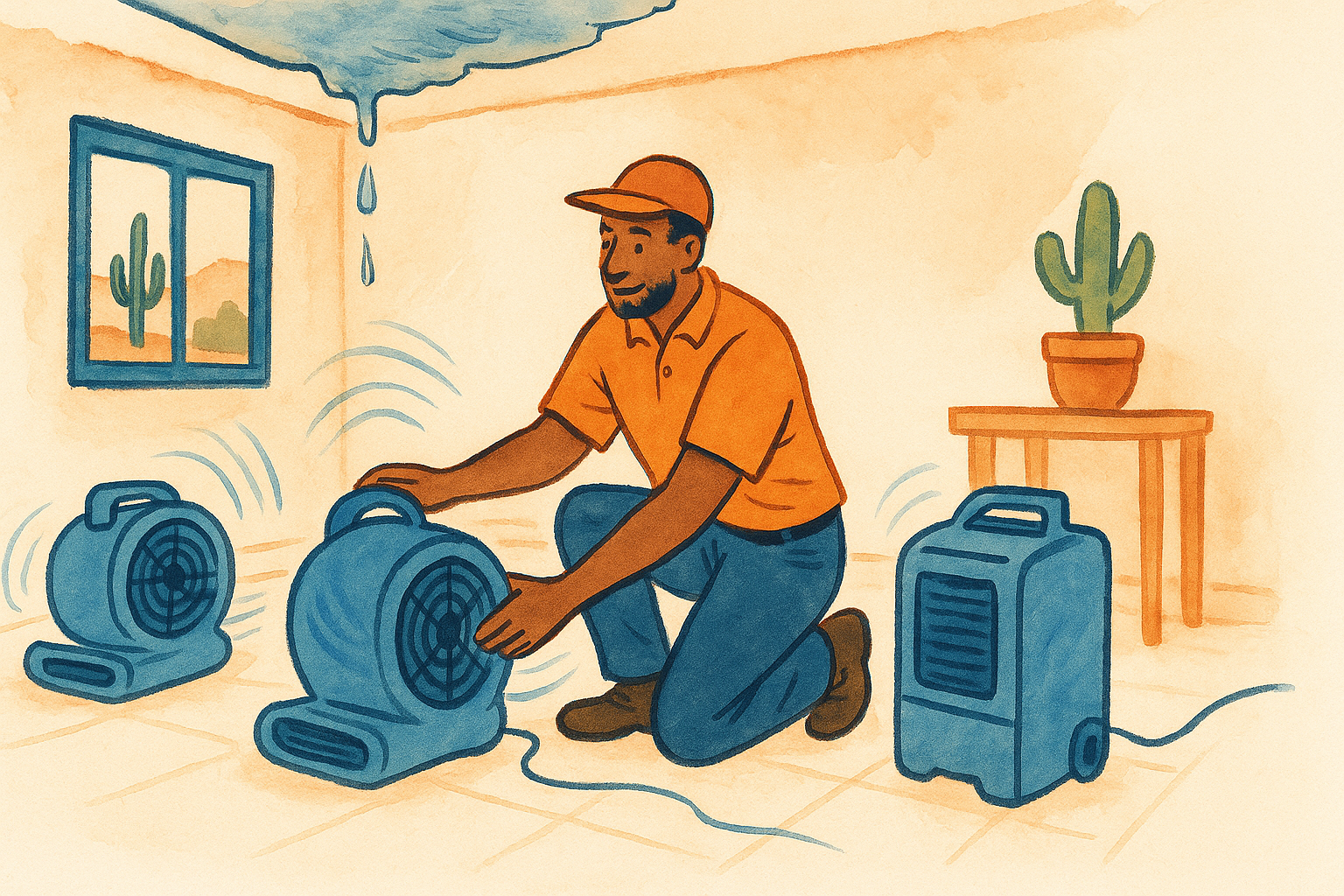
- Start drying. Once the drip slows, get air moving. Open windows if the weather has cleared, run fans, and point a box fan at wet drywall or carpet. In the desert, fast drying is your best defense against mold.
- Document everything. Take photos and video of the damage inside and any tiles or debris outside before you clean up or repair anything. Your insurer will want to see it.
- Call for help. A quick professional inspection tells you how far the water traveled and whether the underlayment needs attention. Water spreads sideways inside walls and ceilings, so the wet spot you see is rarely the whole story.
Take a recent example from a home near 59th Avenue and Union Hills. The owners saw a small brown ring on a bedroom ceiling the morning after a July storm and figured they’d watch it. Two weeks later the spot had doubled and the drywall had gone soft, because water had been wicking across the ceiling the whole time. Catching it that first morning would have meant a patch instead of a ceiling repair.
Common mistakes to avoid
A few habits turn a manageable leak into a costly one. The biggest is the wait and see approach. A stain that looks small on the surface is often much larger inside the ceiling, and in Arizona heat, waiting is exactly what lets mold take hold.
The second is climbing onto the roof to investigate or patch it yourself while it’s still wet. It isn’t worth a fall or a cracked tile. Let a pro handle the height. The third is skipping documentation. If you clean everything up and dry it out before taking a single photo, you make an insurance claim much harder to support later. Snap the pictures first.
Insurance and a monsoon roof leak in Arizona
This part trips up a lot of West Valley homeowners, so here’s the general picture. A standard Arizona homeowners policy often covers sudden storm damage, like wind or hail that cracks tiles, and rain that gets in through an opening the storm just created. If a monsoon rips tiles loose and rain pours through, that’s commonly a covered claim.
What’s usually not covered is flood, meaning water that enters at ground level from outside. That’s typically excluded from a standard policy and needs a separate flood policy. Slow leaks from long neglected wear can also be denied, since insurers expect normal upkeep. Coverage depends on your specific policy, so read yours or call your agent to be sure. Document the damage, report it promptly, and keep the wind damage and any ground flooding clearly separate in your claim, because mixing the two is a common reason claims get delayed.
Key takeaways
- Check inside first. Look for fresh stains, yellowish brown rings, soft drywall, and a musty smell, especially near corners, light fixtures, and in the attic.
- Inspect the roof from the ground only. Never walk a wet tile roof. Look for cracked, slipped, or missing tiles and loose flashing.
- The underlayment, not the tile, is what waterproofs your roof, and Arizona’s heat wears it out faster than you’d think.
- Move fast. Contain the water, start drying, and document everything, because AZ heat can grow mold in 24 to 72 hours.
- Insurance often covers sudden monsoon wind and hail roof damage but usually excludes flood. Check your policy.
Frequently asked questions
How soon after a monsoon should I check my roof?
As soon as the storm clears and it’s safe. Do your indoor walkthrough right away and your ground level roof look once things dry out a bit. The sooner you spot a problem, the less it spreads.
Can a small crack in one tile really cause a leak?
Yes. A hairline crack lets wind driven rain reach the underlayment underneath, and once that layer is compromised, water works its way inside. That’s why damage you can barely see from the ground still deserves a professional look.
My ceiling has a stain but no active drip. Do I still need to worry?
A stain means water got in at some point, even if it isn’t dripping now. The moisture may still be trapped above the ceiling, where it can feed mold or weaken the drywall. It’s worth having someone check the source.
Should I try to tarp or patch the roof myself?
Focus on protecting the inside of your home and leave the roof to a licensed pro, especially while it’s wet. A fall or a cracked tile can cost far more than the leak.
Get help fast
A monsoon roof leak is stressful, but you don’t have to sort it out alone. If you’ve found water inside your Glendale or West Valley home, the fastest path is to contain the leak, start drying, and get a professional set of eyes on it before the damage spreads. You can reach out any time through our home services page or the call button at the top of the site for fast 24/7 help. For more monsoon season guidance, see our guides on protecting your home from monsoon flooding and handling your first 24 hours after flooding.
Glendale AZ Water Damage is a water damage information and lead request service. We are not a licensed restoration contractor, and this article is general information, not professional restoration, insurance, or health advice. Coverage and repairs vary by home, insurer, and situation, so a licensed local pro should assess your specific case.