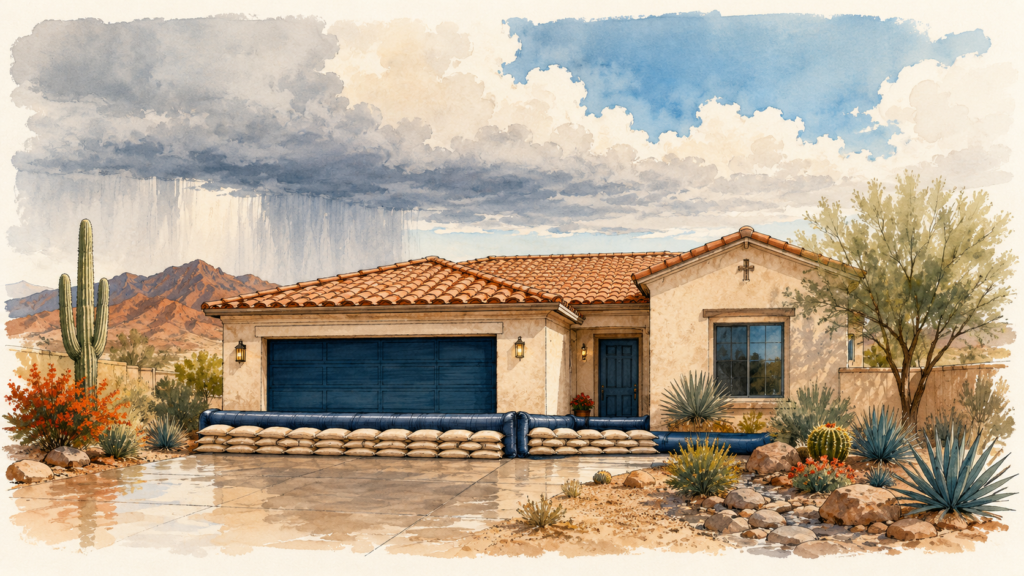
If a monsoon storm just pushed water toward your Glendale home, take a breath. You have more control than it feels like right now. Most types of monsoon flood damage in Glendale comes from a few predictable weak spots, and a handful of simple moves can keep the worst of the water out. This guide walks you through how to protect your West Valley home before the storm hits, what to do while the rain is coming down, and the first steps if water still gets inside.
Here’s the short version. Grade water away from your foundation, keep your roof drains and yard washes clear, have barriers ready, and never drive or wade into moving floodwater. If water gets in, act fast, because in Arizona heat mold can start growing within 24 to 72 hours.
Why monsoon flood damage hits Glendale homes so hard
Arizona’s monsoon runs from mid June through the end of September, and the storms peak in July and August. A single afternoon cell can drop more rain in an hour than our dry ground can absorb.
That’s the real problem. Desert soil, concrete, and rooftops don’t soak up water. All that rain sheets across the surface and rushes toward the lowest point it can find. Sometimes that’s a storm drain. Sometimes it’s your driveway, your garage, or your back door.
Glendale and the wider West Valley have another wrinkle: the washes. Normally dry channels like the New River and Skunk Creek corridors run through Glendale, Peoria, Surprise, and Sun City, and they can go from bone dry to fast moving in minutes. If your home sits near one of these channels or in a low spot where runoff collects, your monsoon flood damage risk is higher than a neighbor a few streets away on higher ground.
Before the storm: how to protect your West Valley home
The best time to deal with monsoon flooding is before a cloud ever shows up. A quiet weekend in June beats scrambling once the wind picks up. Here’s where to focus.
Around your yard and roof
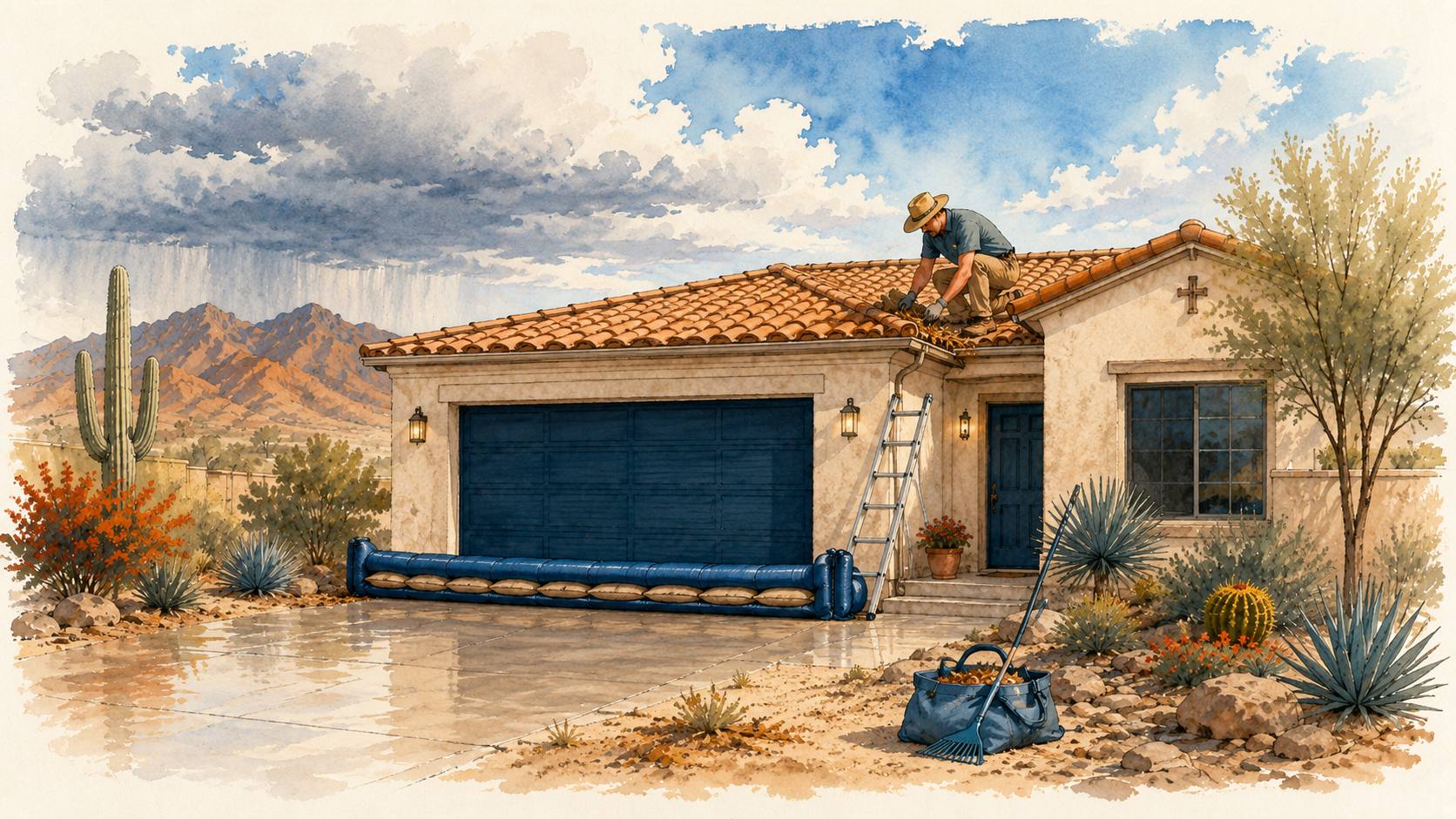
Walk your property and watch where water would go. You want it flowing away from the house, not pooling against the foundation. What helps:
- Clear your roof drains, scuppers, and any gutters so rain runs off instead of backing up and pushing under the roofline.
- Trim overgrown trees and thin out heavy branches that could snap in a monsoon microburst and tear open your roof.
- Clean out drywells and yard drains so runoff has somewhere to go.
- Regrade or add soil where the ground slopes toward the house, so water is nudged out toward the street or a wash instead of your slab.
Have your barriers ready
You don’t want to be hunting for sandbags at 8 p.m. with a wall of rain coming. Keep options on hand. Traditional sandbags still work, and many West Valley cities offer sandbag stations during monsoon season. There are also reusable water activated barriers that swell up when they touch water and divert it like a sandbag would. They store flat, so they’re easy to keep in the garage year to year.
Know your low doors ahead of time. The garage, a side door, a patio slider on the low side of the lot. Those are usually where water sneaks in first.
Get your inside game plan set
If your place has flooded before, move what matters up off the floor before the season starts. Papers, electronics, and anything sentimental do better on a shelf than in a box on the garage floor. Back up your computer files. And if you rely on a sump pump, think about a battery backup, because monsoon storms knock out power all the time.
During the storm: stay safe first
When a storm is actually on top of you, your safety comes before your stuff. Every year in Arizona, flash floods kill more people than any other kind of weather, and almost all of it is avoidable.
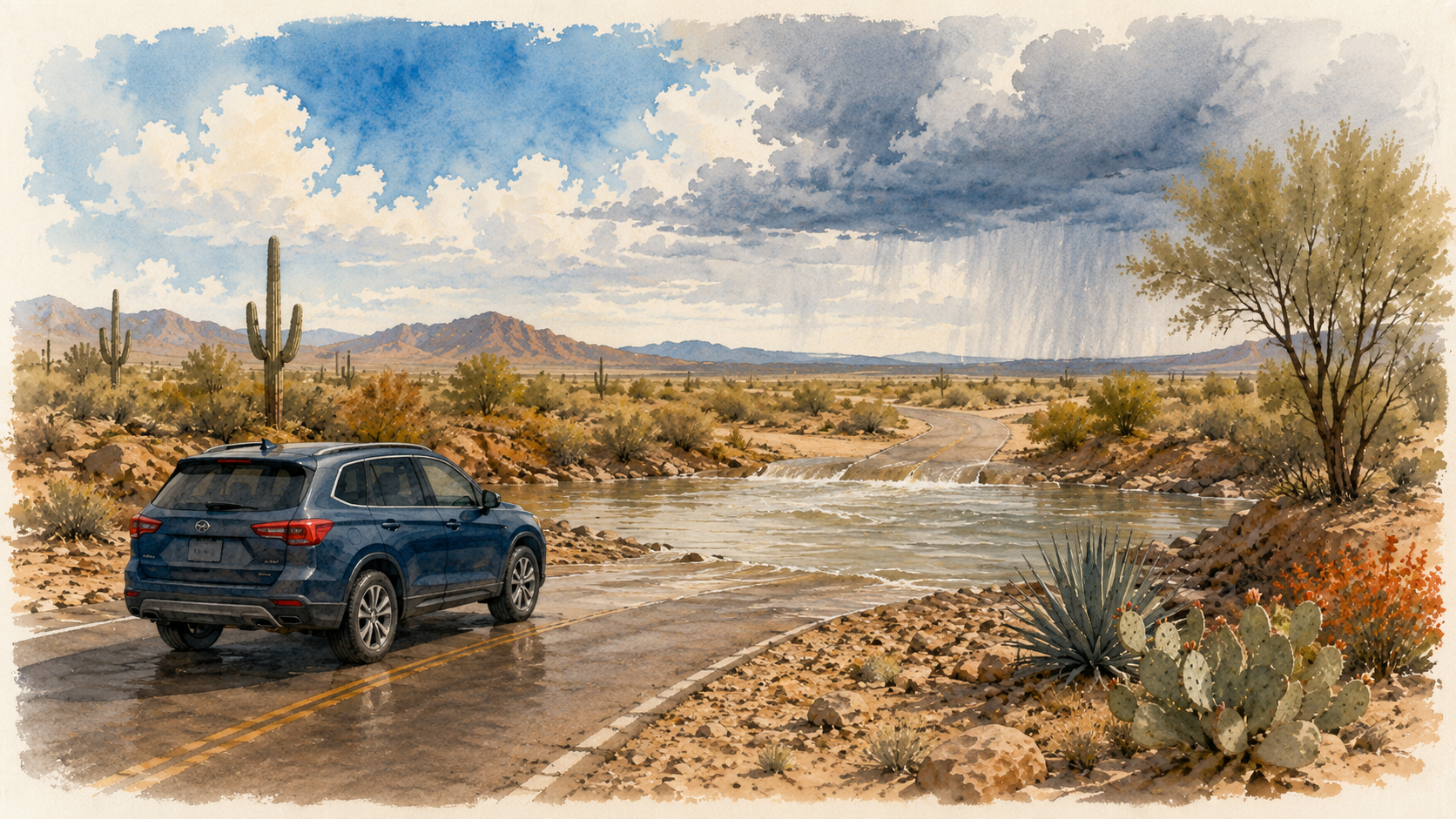
The rule that saves lives is simple: turn around, don’t drown. Never drive through a flooded street or wash, even one you cross every day. Six inches of moving water can float a car. Two feet can carry off a truck or SUV. You can’t see if the road under the water has washed out, so don’t gamble on it.
Inside, stay away from electricity if there’s water on the floor. Don’t touch outlets, panels, or plugged in appliances while you’re wet or standing in water, because that’s how people get shocked. If you can reach your breaker on dry footing, cutting power to a flooding area is smart. If you can’t do it safely, wait for help. And watch the alerts on your phone. A flash flood warning for your part of Glendale means the water is happening now, not later.
After the flood: your first moves
Once it’s safe, the clock starts. Water damage gets worse by the hour, and our summer heat speeds up mold growth, so the sooner you get things drying, the better.
Start by documenting everything. Take photos and video of the standing water, soaked drywall, and ruined belongings before you move or toss anything. You’ll want that record for any insurance claim.
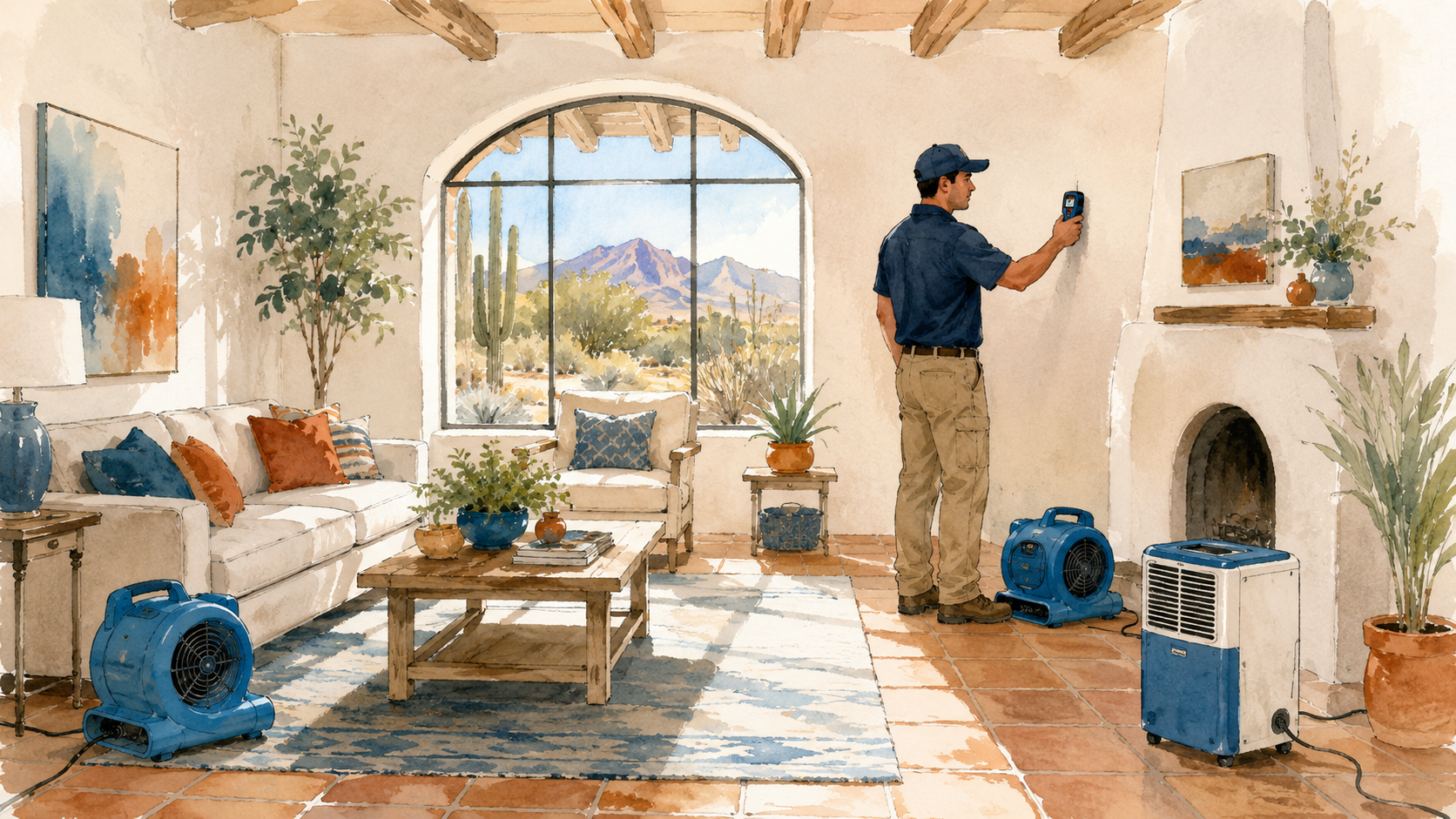
Then get the water out and air moving. Pull up soaked rugs, open windows if the weather has calmed, and run fans and a dehumidifier. Be careful with anything the floodwater touched, since outdoor floodwater can carry sewage, chemicals, and debris and isn’t the same as a clean supply line leak.
For anything more than a little water, or anytime the water was dirty, call a professional. A good local water damage restoration crew has the truck mounted extractors, commercial dryers, and moisture meters to pull water out of walls and subfloor you can’t reach, and to catch hidden moisture before it turns into mold behind your baseboards.
Does insurance cover monsoon flood damage in Arizona?
This is where a lot of Glendale homeowners get a rude surprise, so it’s worth understanding before you file. The answer depends on how the water got in.
Standard homeowners policies in Arizona commonly exclude flood, meaning surface water that flows into your home from outside at ground level. That’s exactly what most monsoon flooding is. To be covered for that, you usually need a separate flood policy, either through the National Flood Insurance Program or a private flood insurer. One catch worth knowing: flood policies typically have about a 30 day waiting period, so you can’t buy one as the storm rolls in and expect it to help.
Wind driven rain is treated differently. If a monsoon microburst rips shingles off or breaks a window and rain pours in through that opening, a standard policy will often cover the resulting water damage as storm damage rather than flood. The details vary by policy, so read yours or ask your agent, and never assume you’re covered without checking.
None of this is legal or insurance advice, and your coverage depends on your specific policy, your insurer, and how the damage happened. When in doubt, call your agent and document everything.
Common mistakes to avoid
A few missteps turn a manageable situation into an expensive one:
- Waiting to dry things out. “It’ll air out on its own” is how a wet baseboard becomes a mold problem in three days.
- Driving through a flooded wash. No shortcut is worth it. The water is deeper and faster than it looks.
- Assuming you’re covered. Plenty of folks learn about the flood exclusion only after a claim gets denied.
- Tossing damaged items before photographing them. Document first, then clean up.
- Treating dirty floodwater like clean water. It can be contaminated, so let a pro handle the heavy cleanup.
A quick West Valley example
Picture a homeowner off 75th Avenue near one of the Skunk Creek washes. Every summer they watched water creep up the driveway and stopped worrying about it. One August storm, it came over the garage threshold and soaked the drywall along the back wall before they noticed. Because they kept reusable barriers in the garage and moved fast to run fans and call a restoration crew that night, they dried it out before mold set in and kept the damage to one wall instead of the whole garage. That wasn’t luck. It was being ready and acting quickly.
Key takeaways
- Most monsoon flood damage in Glendale comes from surface runoff finding the low points of your home. Grade water away and keep drains clear.
- Have sandbags or reusable barriers ready before the season, and know your low doors.
- During a storm, safety first: turn around, don’t drown, and stay clear of electricity near water.
- After a flood, document, dry fast, and call a pro for anything more than a little clean water.
- Standard homeowners insurance usually excludes flood in Arizona, so check your policy and consider separate flood coverage.
Frequently asked questions
When is monsoon season in Glendale?
Arizona’s monsoon officially runs from mid June through September 30, with the strongest storms usually in July and August. That’s the window to have your home ready.
Does homeowners insurance cover monsoon flooding in Arizona?
Usually not. Standard policies commonly exclude flood, which is the surface water most monsoon storms produce. You typically need a separate flood policy for that, while wind driven rain through a damaged roof or window is often covered as storm damage. Check your specific policy.
How fast can mold grow after a flood?
In Arizona’s summer heat, mold can start within about 24 to 72 hours of things staying wet. That’s why quick drying matters so much.
Is it safe to drive through a flooded Glendale street?
No. Six inches of moving water can sweep a car off the road, and you can’t tell if the roadway underneath has washed out. Find another route and wait for the water to drop.
What should I do first if my home floods during a monsoon?
Once it’s safe, document the damage with photos, get the water out and air moving, stay away from electricity in wet areas, and call a local restoration pro for anything beyond a small amount of clean water.
Glendale AZ Water Damage is a water damage information and lead request service, not a licensed restoration contractor. This article is general information, not professional restoration, insurance, or health advice, and a licensed local pro should assess your specific situation.
If a storm has water in your home right now, don’t wait it out. Reach out through glendaleazwaterdamage.com or call the number at the top of the page for fast 24/7 help connecting with a local Glendale water damage crew. For more, read our guides on what to do first after water damage in Glendale and your first 24 hours after a flooded home.