
Standing in a flooded house wondering what to do first? Take a breath. Here’s the short version: get everyone safe, cut the power if you can reach your panel without touching water, stop the water at its source, and get help moving fast. Everything else can wait a few minutes.
Whether a monsoon storm pushed water under your doors or a pipe let go inside a wall, the first 24 hours decide how bad this gets. Glendale homeowners have one extra thing working against them: Arizona heat. Warm, wet materials can start growing mold in as little as 24 to 72 hours. This guide walks you through your first day, step by step, so you always know your next move.
The first hour: safety before anything else
Get every person and pet out of the water and onto dry ground. Then think about electricity. If you can reach your breaker panel without stepping in water, shut off power to the flooded rooms. If the panel sits in or near standing water, leave it alone and call an electrician or your utility instead.
Never touch anything electrical while you’re standing in water. Not the panel, not a plugged in fan, not the light switch. Water and electricity don’t give second chances.
One more thing before you wade back in. Water that came from outside during a storm isn’t clean. It can carry sewage, lawn chemicals, and sharp debris. Put on rubber boots and gloves, keep kids and pets well away, and wash your hands after touching anything wet. The CDC has a good rundown on reentering a flooded home safely.
Stop the water at its source
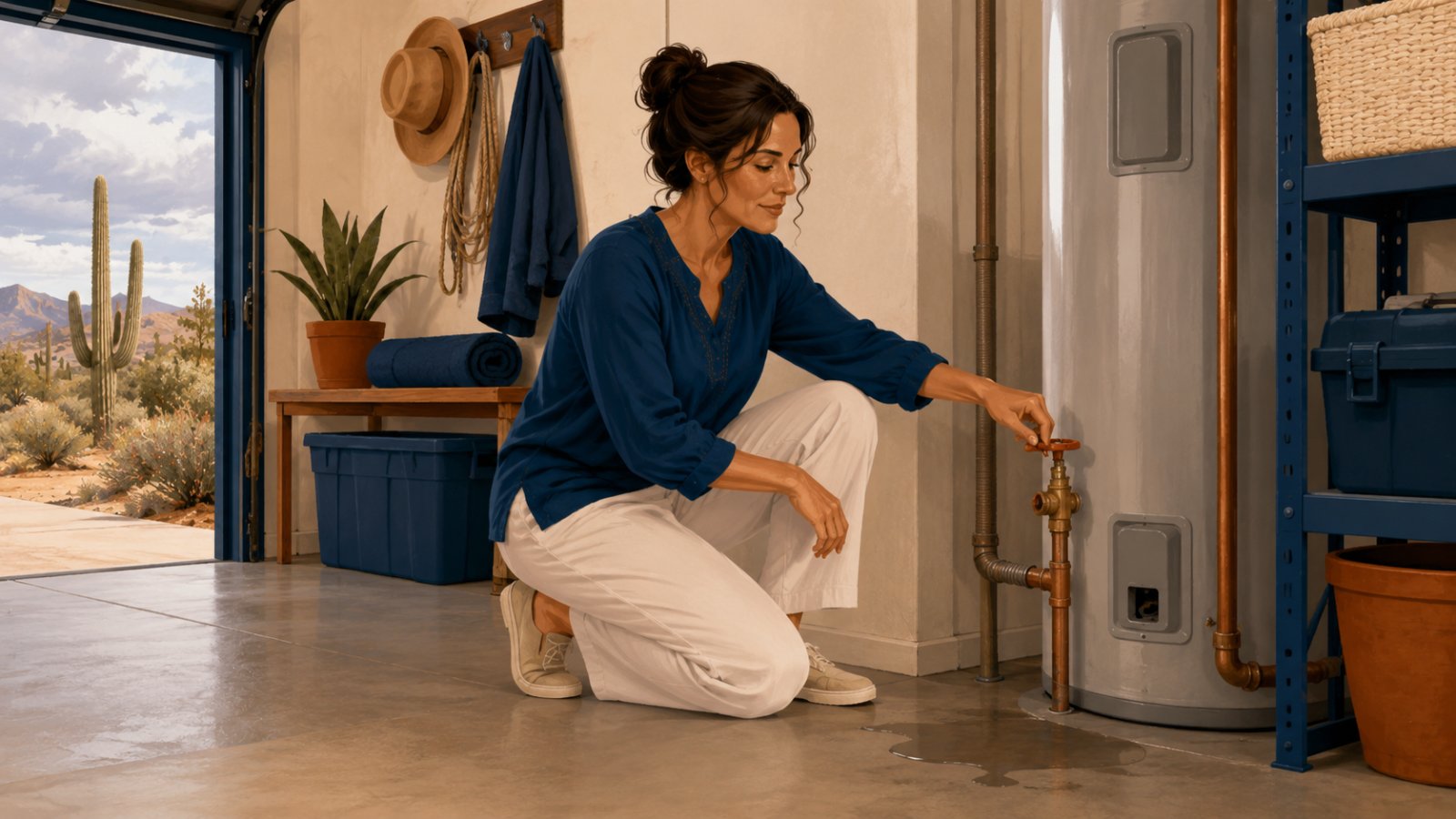
If the water is coming from inside your home, shut it off. Most Glendale houses have a main shut off valve in the garage, near the water heater, or out front at the meter box by the curb. Turn it clockwise until it stops. If a single fixture caused the mess, like a toilet or washing machine, the small valve behind that fixture may be enough.
If the water came from a monsoon storm, you can’t shut off the sky. Do what you can safely: roll towels against door gaps, move valuables up high, and wait for the cell to pass. West Valley washes fill fast during July through September storms, so never try to clear water away from your home while the street is still running.
Roof leaking? Catch drips in buckets and poke a small hole in any sagging ceiling bubble to drain it into a bucket before it bursts on its own. Stay off the roof until the storm is completely done.
Call for help early, not after you’re exhausted
Here’s the honest truth about a flooded house: what to do in the first 24 hours matters more than anything you do in the following month. Water keeps soaking deeper into drywall, baseboards, and subfloor every hour it sits. A professional crew brings truck mounted extraction equipment, commercial air movers, and dehumidifiers that pull water out far faster than a shop vac and a box fan ever will.
Restoration help runs 24/7, even at 2 AM during a storm. We covered who answers the phone at that hour in our guide to emergency water removal in Glendale. You can also request help through our quote form and get connected with a local pro.
Document everything before you clean anything
This step protects your wallet, so don’t skip it. Before you move furniture or rip up carpet, walk every affected room with your phone and take photos and video of all the damage. Get the water line on the walls, the soaked flooring, and any damaged furniture or electronics. A tape measure in the shot showing water depth helps your claim.
Then call your insurance company and report the loss. Ask what documentation they want and whether they need to see materials before you toss them. Keep a cut sample of wet carpet and pad if you remove them. Save receipts for everything you buy or rent, from fans to a night in a hotel.
Get the water out and start drying
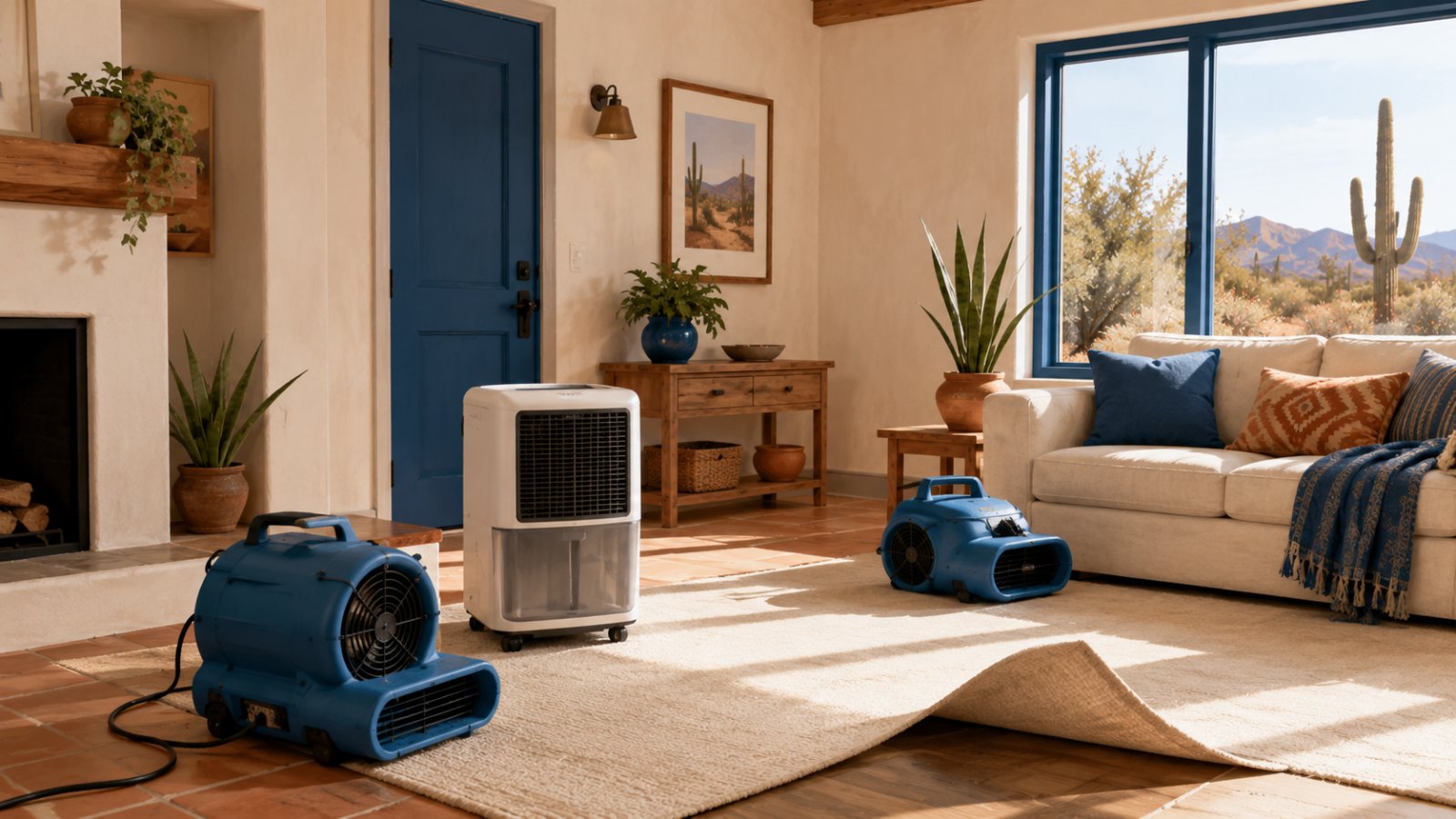
Once you’ve documented the scene, move fast. Use a wet vac, pump, buckets, or old towels to remove standing water. Get furniture legs up on blocks or squares of foil. Pull up area rugs. Open closet doors, cabinet doors, and drawers so air reaches inside them.
Now a Glendale specific tip. During most of the year our desert air is so dry that opening windows speeds up drying. During monsoon season it often works against you, because outdoor humidity climbs just when you need dry air most. On a muggy August day you’re usually better off closing up the house and running the AC plus a dehumidifier together.
Point fans across wet floors and at wet walls, not straight down. Carpet pad soaks up water like a sponge and usually can’t be saved, though carpet itself often can be if the water was clean and you act quickly. Baseboards trap moisture behind them, which is one reason pros pull them early.
Watch the clock on mold
In Arizona heat, mold doesn’t wait for an invitation. Give it a warm room and wet drywall and it can get started in 24 to 72 hours. That’s why the first day matters so much.
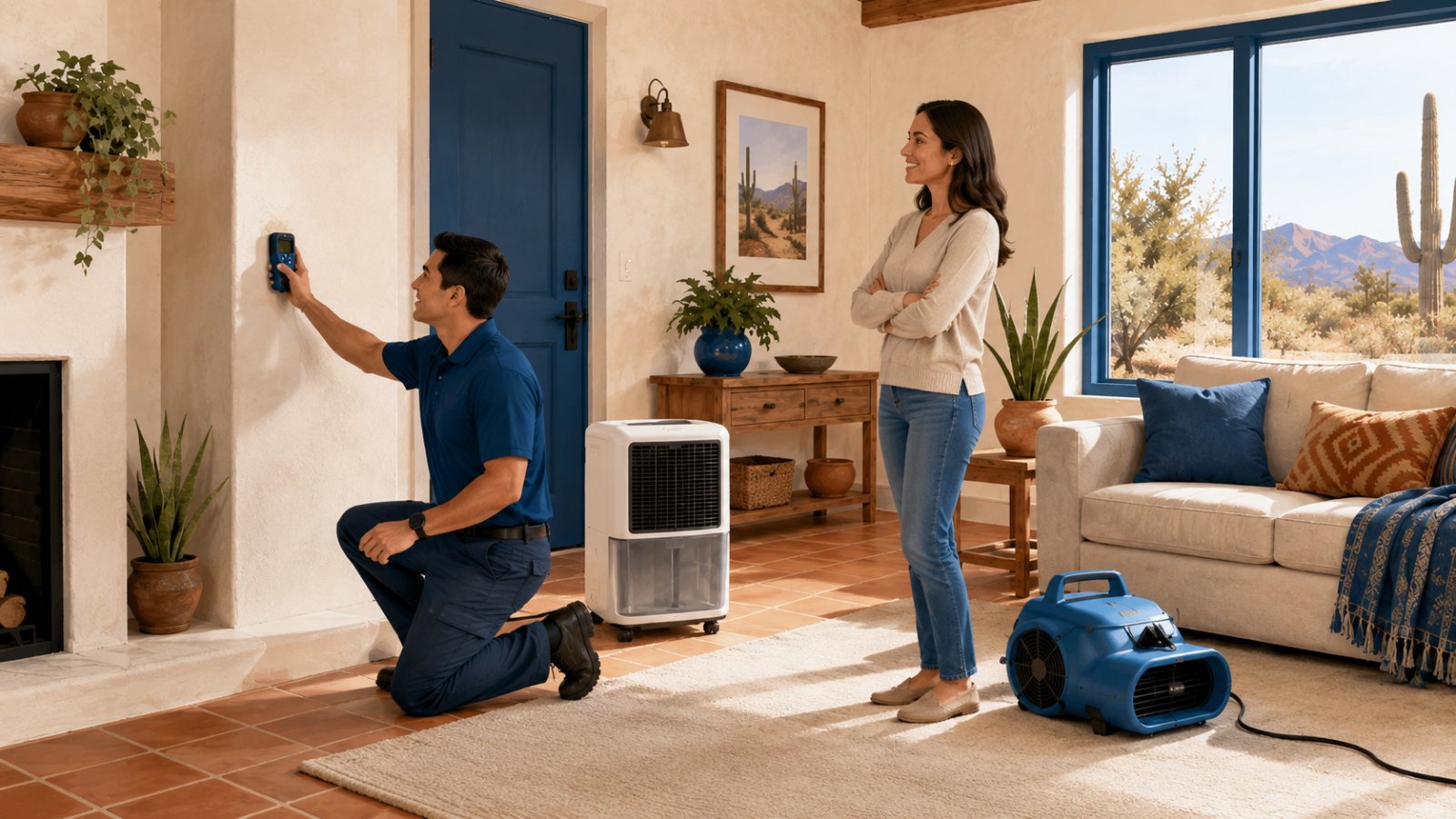
The tricky part is that a floor can feel dry while the wall cavity behind it stays wet for weeks. If water sat for more than a few hours, got into walls, or covered more than a small area, have a pro check the structure with a moisture meter before you call it done. A musty smell days later is a warning sign, not a quirk of the house.
Common mistakes that make a flooded house worse
Most of the expensive flood stories we hear from West Valley homeowners come down to one of these:
- Waiting a day to see if it dries on its own. It won’t. It soaks deeper and starts the mold clock instead.
- Using a regular household vacuum on water. That’s an electrocution and fire risk. Only a wet rated vac belongs near standing water.
- Turning the power back on too soon. Outlets and wiring that got wet need to be checked first.
- Treating storm water or sewage like clean water. Contaminated water calls for protective gear and professional cleanup, not a mop and a prayer.
- Tossing damaged items before the adjuster sees them. Photograph first, ask your insurer, then discard.
What insurance often covers in Arizona
Here’s the short version, with the usual caveat that every policy is different. Standard Arizona homeowners policies commonly cover sudden internal water damage, like a burst pipe or a failed appliance line. Monsoon wind or hail damage to your roof, and the rain that follows it inside, is often covered too.
Rising water from outside is the exception. Flooding from street runoff, an overflowing wash, or sheet flooding across your yard is usually excluded from standard policies and needs a separate flood policy, typically through the National Flood Insurance Program. Don’t assume either way. Call your agent, describe exactly what happened, and let the adjuster make the call.
What the first 24 hours look like when it goes right
Picture a July night near 59th Avenue and Bell Road. A monsoon cell parks over the neighborhood and an inch of water pushes under the back door into the family room. The homeowners get the kids to the dry side of the house, kill the breakers for the back rooms, and spend ten minutes shooting video of the water line.
By midnight they’ve called for professional extraction and rolled up the area rug. By morning the crew has pulled the standing water, lifted the carpet, removed the pad, and set air movers and a dehumidifier. The insurance adjuster gets a folder of photos and a clean timeline. Drying finishes in a few days, the drywall stays, and mold never gets a foothold. Same storm, very different ending than the family who waited until Monday.
Key takeaways
- Safety first: people out, power off only if you can do it without touching water.
- Stop the water at the main shut off valve if the source is inside.
- Photograph and video everything before you clean.
- Call your insurer and a restoration pro within the first few hours, not days later.
- Extract water and start aggressive drying right away. In Arizona heat, mold can start in 24 to 72 hours.
Flooded house FAQ
Is it safe to stay in the house tonight?
If the flooding is small, the power to wet areas is off, and the water was clean, many families stay. If sewage is involved, the water is widespread, or you have any doubt about the electrical system, spend the night elsewhere and keep your receipts, since temporary housing is often reimbursable on covered claims.
How long does it take a flooded house to dry?
With professional equipment, several days is typical for the structure, though it varies with how much water, how long it sat, and what it soaked into. Wall cavities and subfloors take longer than surfaces, which is why pros verify with moisture readings instead of guessing by touch.
Will my homeowners insurance pay for this?
Often, if the cause was sudden and internal, like a burst pipe. Rising water from outside usually needs separate flood coverage. Your specific policy language controls, so report the claim promptly and ask direct questions.
Can I handle the cleanup myself?
A small, clean water spill caught immediately? Usually yes. More than a couple of inches, water that sat overnight, anything touching walls or wood floors, or any sewage at all? That’s professional territory. The cost of doing it halfway is usually a mold problem later. Our overview of water damage restoration in Glendale explains what the pros actually do.
Glendale AZ Water Damage is a water damage information and lead request service. We aren’t a licensed restoration contractor, and this article is general information, not professional restoration, insurance, or health advice. Every home and policy is different, so have a licensed local pro assess your specific situation.
If your home is wet right now, don’t wait it out. Call the number at the top of this page for fast 24/7 help, or reach out through our site and we’ll connect you with a local pro who handles exactly this kind of emergency.