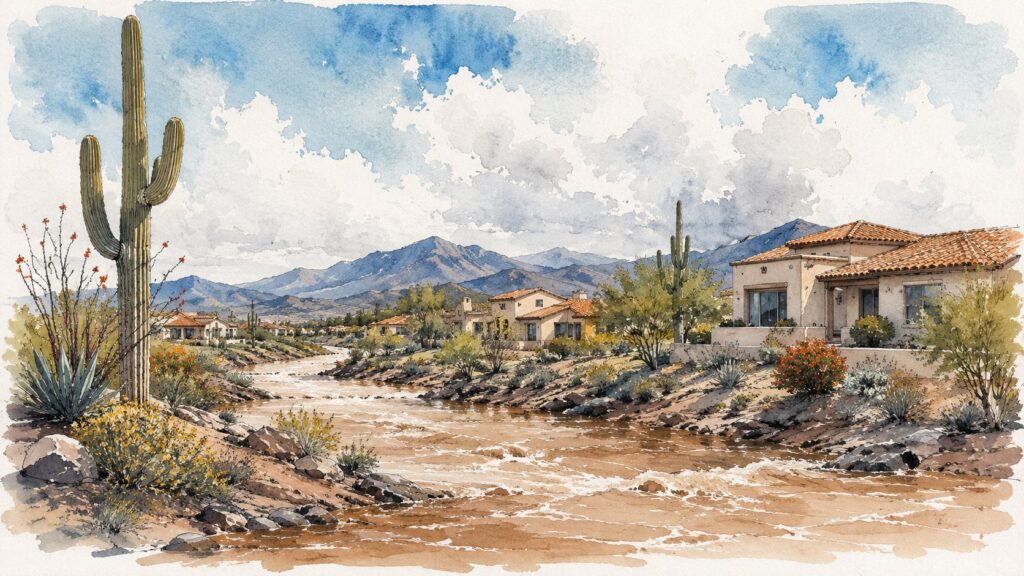
If a wall of water is moving through your street right now, get to higher ground first and worry about the house later. People, not property, come first in a flash flood. West Valley flash flooding can turn a dry Glendale wash into a fast river in minutes, and it catches homeowners in Glendale, Peoria, and Surprise off guard every monsoon season. Once your family is safe, you can protect what you can, document the damage, and start drying out fast. This guide walks you through it, calmly, so you know what to do before, during, and after the water comes.
What West Valley flash flooding actually is
A flash flood is a sudden rise of water, usually within a few hours of heavy rain. In the desert it doesn’t take much. Our ground is hard and dry, so it can’t soak up a downpour. The rain runs off almost instantly and races toward the lowest point it can find, often a wash, a street, or a low spot near your foundation.
During monsoon season, roughly mid June through the end of September, a single storm can drop an inch of rain in half an hour. That’s when the New River, Skunk Creek, the Agua Fria, and the smaller washes and canals that thread through the West Valley fill up fast. A channel that was bone dry at breakfast can be running full by dinner.
Why Glendale, Peoria, and Surprise flood so fast
The whole Phoenix metro shares this problem, but a few local features raise the risk. Many newer neighborhoods in Peoria and Surprise sit near or across old drainage paths, so water still goes where it always went. Our hard caliche soil sheds water instead of absorbing it, so runoff builds quickly, and the washes and canals go from empty to overflowing in minutes. Streets become channels too, pooling water at low intersections until it finds the nearest garage or side door. If your home sits at the bottom of a slope or backs up to a wash, pay closer attention when a storm rolls in.
What to do the moment water starts rising
Safety comes before everything. If water is rising fast and you’re told to leave, leave. Don’t wait to move furniture or find keepsakes. A flash flood is dangerous mostly because of how fast and deep it gets, and it’s easy to misjudge.
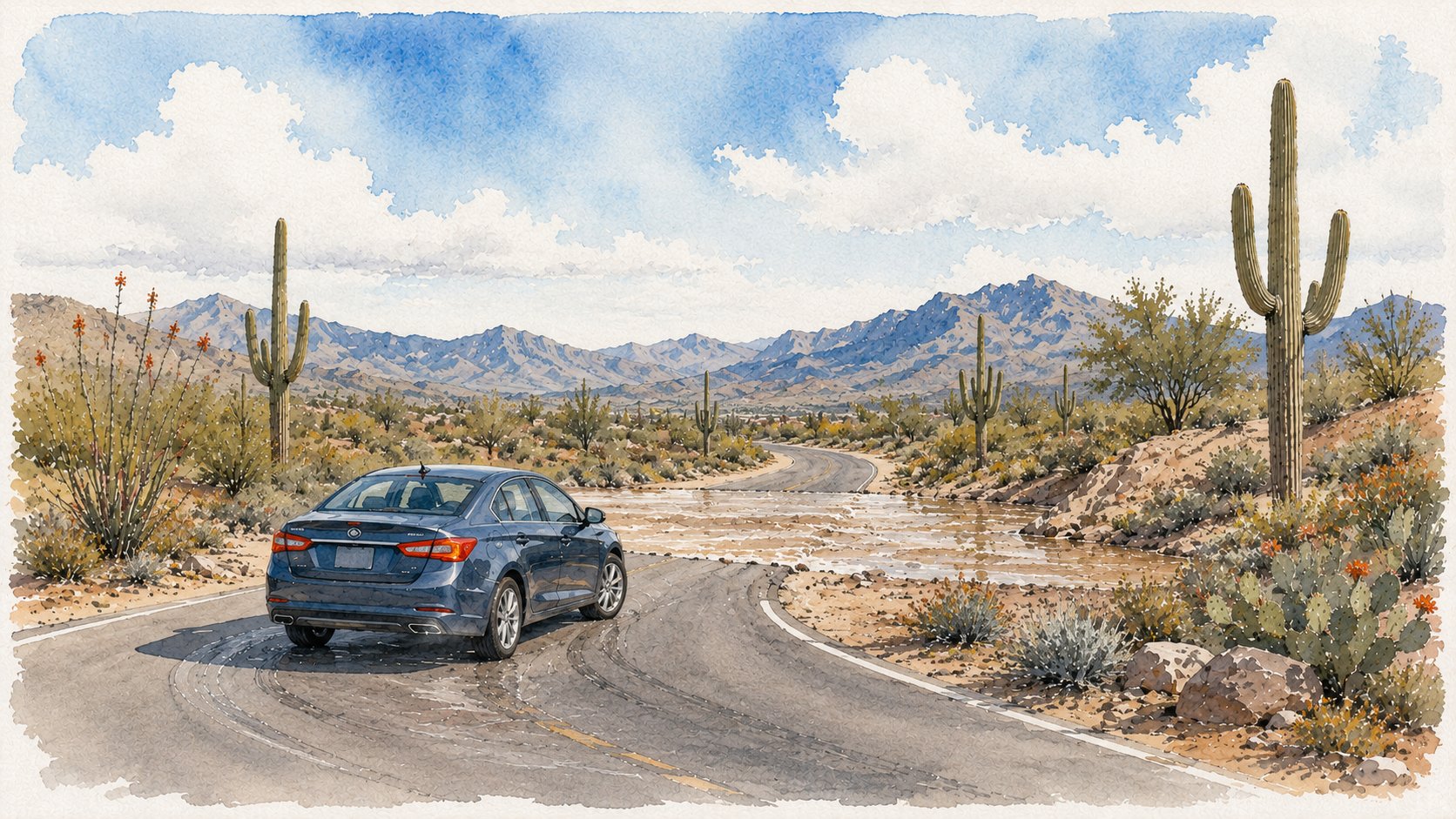
The most important rule is simple. Turn around, don’t drown. Never drive or walk into moving water across a road, even if it looks shallow. It only takes about six inches of moving water to knock you off your feet, and a foot or two can float a vehicle. Most flood deaths in Arizona happen when people try to cross a flooded wash or dip in a car. If you see water over the road, find another way around.
Inside the home, if you can safely reach your main electrical panel, shut off power to the flooded areas. Standing water and electricity are a deadly mix, so if the panel is wet or you’d have to stand in water to reach it, stay clear and call a professional. Move what you can to higher shelves, keep kids and pets away from the water, and stay calm. It usually starts to recede on its own once the storm passes.
How to protect your home before the next storm
The best time to prepare is on a clear, sunny day, well before the clouds build, and none of it is complicated or expensive. Start by keeping water away from the house. Clear leaves, gravel, and debris out of the drainage paths, gutters, and low spots so water flows past instead of pooling, and make sure the ground slopes away from your foundation. If your yard collects water near the garage or a side door, that’s your weak point.
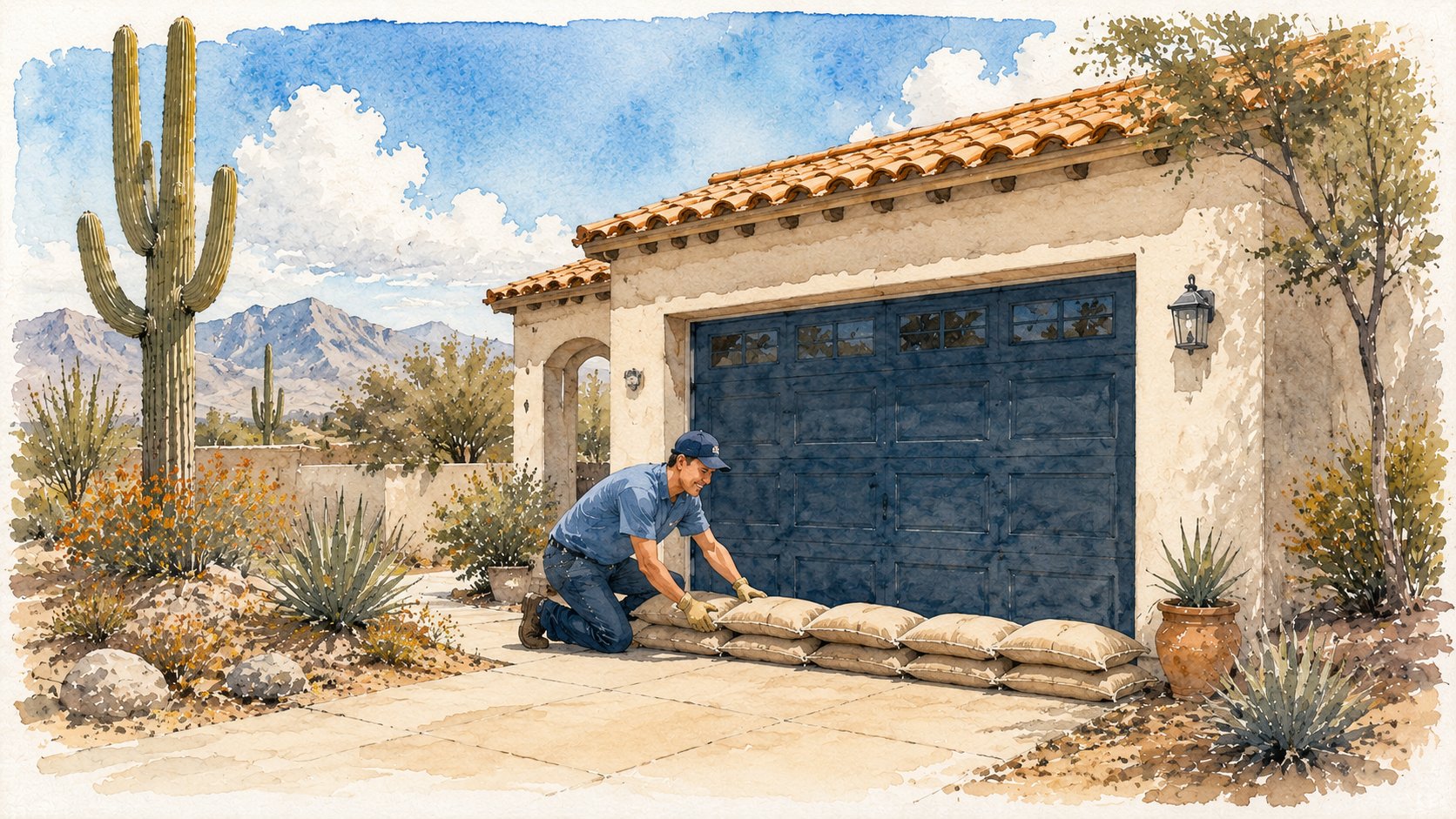
Sandbags are your best friend for a low, wide barrier. Placed across a garage opening or doorway, they slow and redirect sheet flow so it goes around your home instead of under the door. They don’t seal water out completely, so think of them as buying time and cutting how much gets in. Many West Valley cities and Maricopa County offer free sandbag fill sites when storms are forecast, so know your closest one before you need it.
A few quick wins help too. Park vehicles on higher ground away from washes, move valuables off the garage floor onto shelves, and know where your main water and power shutoffs are.
After the water recedes: your first steps
Once it’s safe and the water is gone, the clock starts. In our Arizona heat, mold can begin growing in as little as 24 to 72 hours on wet drywall, carpet, and baseboards, so fast drying is what keeps a small problem from becoming a big one.
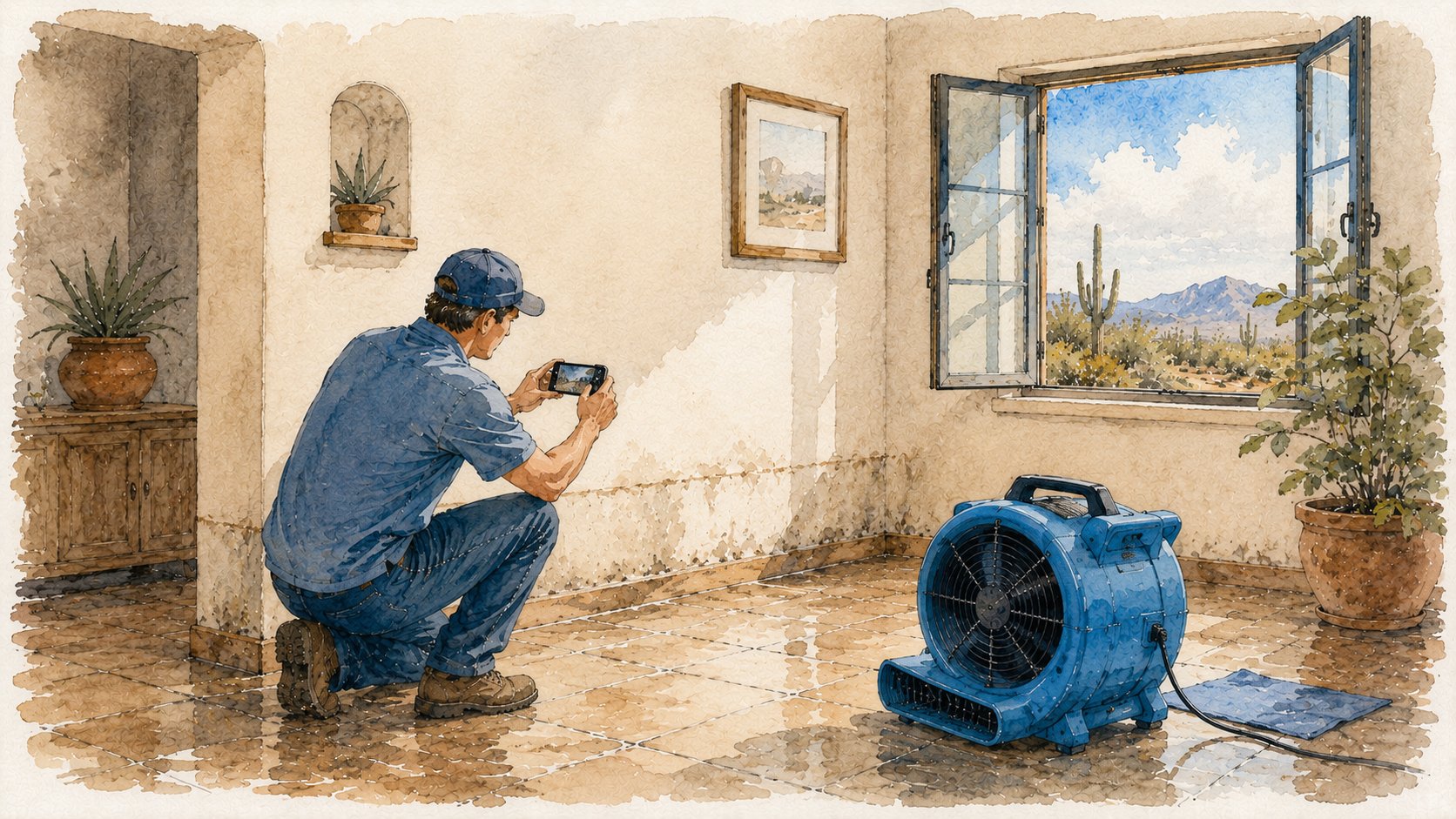
Before you clean anything up, document it. Take clear photos and short videos of every wet area, the water line on the walls, and any damaged belongings, since that record matters if you file a claim. Then get air moving. Open windows if the weather allows, run fans, and pull out soaked rugs and cushions to dry in the sun.
Treat flash flood water as dirty. It picks up mud, chemicals, and sometimes sewage, so wear gloves and boots, keep it off your skin, and throw out food or soft items that touched it. Wet drywall, insulation, and carpet padding that stayed soaked usually need to come out rather than dry in place. If the flooding was more than an inch or two, or it reached walls and cabinets, a local restoration pro can pull moisture out of the structure before it spreads. You can see how that works on our home services page.
Does insurance cover flash flood damage?
Here’s where a lot of West Valley homeowners get a hard surprise. A standard homeowners policy usually does not cover flood damage, and rising water from a flash flood or an overflowing wash is treated as flood. That’s true even if you’ve had the same policy for years.
Flood coverage almost always comes from a separate policy, most often through the federal National Flood Insurance Program or a private flood insurer. These policies commonly have about a 30 day waiting period, so buying one the day a storm is coming won’t help. If you’re near a wash or in a low lying area, it’s worth pricing out before monsoon season.
Your regular policy may still help in related situations. For example, if wind driven monsoon rain comes through a storm damaged roof, that’s often covered as sudden storm damage rather than flood. Coverage always depends on your specific policy, your insurer, and how the damage happened, so read your declarations page and call your agent. We break down the details in our guides on what Arizona homeowners insurance covers and filing a monsoon water damage claim.
Common mistakes homeowners make
A few avoidable missteps cause most of the extra damage and stress after a flash flood. Watch for these.
- Driving through a flooded wash. This is the most dangerous mistake of all. No shortcut is worth it. Turn around.
- Waiting to dry things out. Every hour counts once mold has heat and moisture, so don’t put off the fans and cleanup.
- Skipping the photos. If you clean up before documenting, you may weaken a future claim. Snap pictures first.
- Assuming your homeowners policy covers it. Confirm your flood coverage now, not after the water is in the living room.
- Letting soaked drywall and carpet pad dry in place. Trapped moisture behind walls is exactly where hidden mold starts.
A real West Valley example
Picture a family near 75th Avenue and the Skunk Creek path in Peoria. A fast July storm dumps heavy rain for twenty minutes while they’re at work. The wash behind their block fills, water sheets across the street, and a few inches push under the garage door and into the hallway before the storm moves on.
They come home to a wet garage and damp hallway carpet. Because they’d kept sandbags on hand and the ground sloped away from the house, most of the water stayed in the garage. They photograph everything, pull up the wet carpet and pad, run fans overnight, and call a restoration pro the next morning to check the walls for hidden moisture. A week later the house is dry, and the only real loss is a section of carpet pad.
Key takeaways
- People first. Get to higher ground and never cross moving water. Turn around, don’t drown.
- West Valley flash flooding rises fast because hard soil sheds rain into washes and streets, but it often recedes within an hour or two.
- Prepare on sunny days: clear drainage, slope water away, and keep sandbags ready for garage and door openings.
- After the water drops, document everything, then dry fast. Mold can start within 24 to 72 hours in the heat.
- Standard homeowners insurance usually excludes flood. A separate flood policy has about a 30 day wait, so line it up early.
Frequently asked questions
How fast can a West Valley wash flood?
Very fast. A dry wash can go from empty to running full within minutes of heavy rain upstream, even if it isn’t raining where you are. That’s why you should never enter a wash or flooded dip, and why it’s smart to watch local alerts during monsoon storms.
Where do I get sandbags in the West Valley?
When storms are in the forecast, many West Valley cities and Maricopa County open free self serve sandbag fill sites. Check your city’s website or emergency management page ahead of monsoon season so you know your closest location before you need it.
Do I need flood insurance if I’m not in a mapped flood zone?
It’s worth considering. A large share of flood claims come from outside high risk zones, and West Valley flash flooding doesn’t always follow the maps. Talk to your agent about a separate flood policy, and remember it commonly takes about 30 days to kick in.
Glendale AZ Water Damage is a water damage information and lead request service. We are not a licensed restoration contractor, and this article is general information, not professional restoration, insurance, or health advice. Every home and storm is different, so a licensed local pro should assess your situation, and your insurer can confirm your coverage.
If a storm has left water in your Glendale or West Valley home, don’t wait for it to dry on its own. Fast help keeps a small flood from becoming a big repair. Call anytime for fast 24/7 help, or reach out through our website and we’ll connect you with a local pro right away.