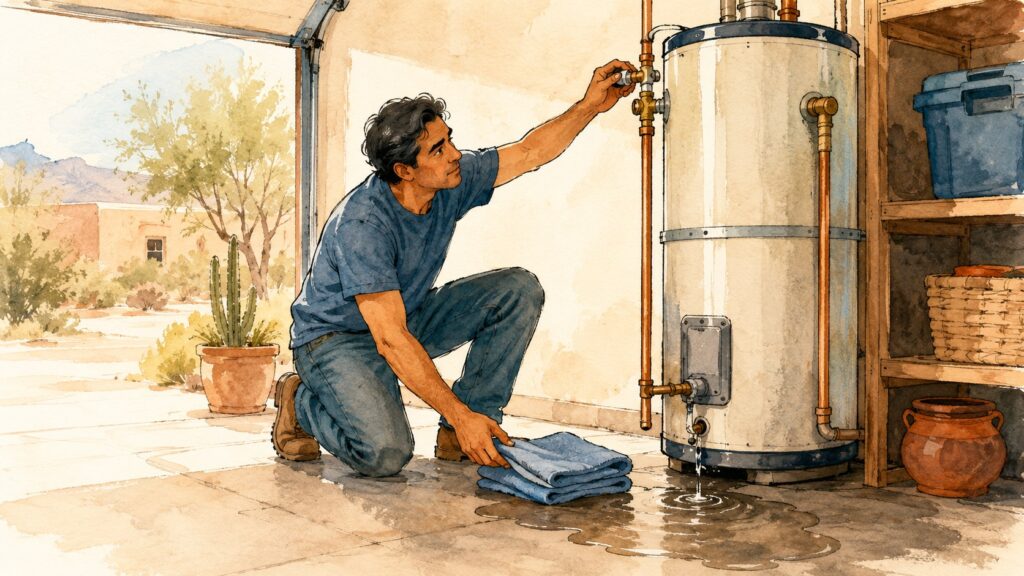
You walk into the garage on a Glendale summer morning, and the concrete is dark and shiny near the base of your water heater. Maybe there’s a slow puddle spreading toward the boxes you keep out there, or a drip you can hear before you see it. That tank holds forty or fifty gallons, and out here in the West Valley heat, standing water is a problem that only grows.
Take a breath. Most of the time you can slow or stop the water yourself in the first few minutes, before a pro ever arrives. The trick is knowing the right order to move in. So here’s exactly what to do when you find your water heater leaking, step by step, calm and in control.
First, make sure it’s really the water heater
Water travels. A puddle by the tank doesn’t always mean the tank is the source. Before you shut anything down, wipe the area dry with a towel and watch for a minute or two to see where fresh water shows up.
Look above and around the unit too. In many Glendale garages the water heater sits near the softener loop and the main water lines, so a drip from a fitting overhead can pool at the base and fool you. If the water is clearly coming from the heater itself, you’re in the right place.

Water heater leaking? What to do in the first few minutes
Once you know it’s the heater, work through these steps in order. Don’t skip the power step, because a tank that keeps heating while it drains can be damaged or dangerous.
1. Cut the power to the heater
If you have an electric water heater, go to your breaker panel and flip the breaker labeled for it to off. If you have a gas water heater, turn the dial on the front of the unit to the off or pilot position. This protects the heating element or burner from running dry, and it makes the rest of the job safer.
2. Shut off the water to the tank
Look for the cold water valve on the pipe going into the top of the heater. Turn it clockwise until it stops. If it’s a lever style valve, turn it a quarter turn so it sits across the pipe. That single move stops fresh water from feeding the leak, the most important step right now.
If that valve is stuck or you can’t find it, shut off the main water valve for the whole house instead. In many West Valley homes it’s near the front hose bib or by the water meter at the curb. Cutting the main stops the water either way.
3. Drain the tank if the leak is bad
For a small drip, shutting the water and power may be enough until help arrives. For a steady leak or a crack in the tank, drain it. Attach a garden hose to the drain valve near the bottom, run the other end to the driveway or a floor drain, and open the valve. Open a hot water faucet somewhere in the house so air can get in and the tank empties faster.

Where the leak is coming from
Knowing the source helps you tell the pro what’s happening and gives you a sense of how urgent it is. A few spots leak far more often than the rest.
The inlet and outlet connections at the top are a common culprit. Fittings loosen over years of heating and cooling, and a little pipe tape or a snug turn often fixes them. The drain valve at the bottom can drip if it doesn’t close all the way, which is usually a cheap part to swap.
The temperature and pressure relief valve, the one with a little pipe running down the side, releases water on purpose when pressure climbs too high. If it’s dripping, you may have a pressure problem worth checking. The one you don’t want is a leak from the bottom of the tank itself. That usually means the inside has rusted through, and a rusted through tank gets replaced, not repaired.
Why a leaking garage water heater needs fast attention in Glendale
It’s tempting to think a garage leak is no big deal because it’s not in your living room. Out here, a few things make it worth moving quickly anyway.
Our hard Glendale water is rough on tanks. The minerals build sediment on the bottom, which traps heat and wears the steel from the inside out, so West Valley heaters often age faster than the label promises. Most tanks last eight to twelve years, and a leak on an older one is often the first sign the tank is done.
Then there’s the heat. Water that sits against drywall, baseboards, and the wall between the garage and the house can grow mold within about 24 to 48 hours in Arizona warmth. The garage shares a wall with your living space, so a leak that soaks that wall doesn’t stay in the garage for long. Drying it fast keeps a small problem from becoming a moldy one.
When you can wait and when to call a pro right now
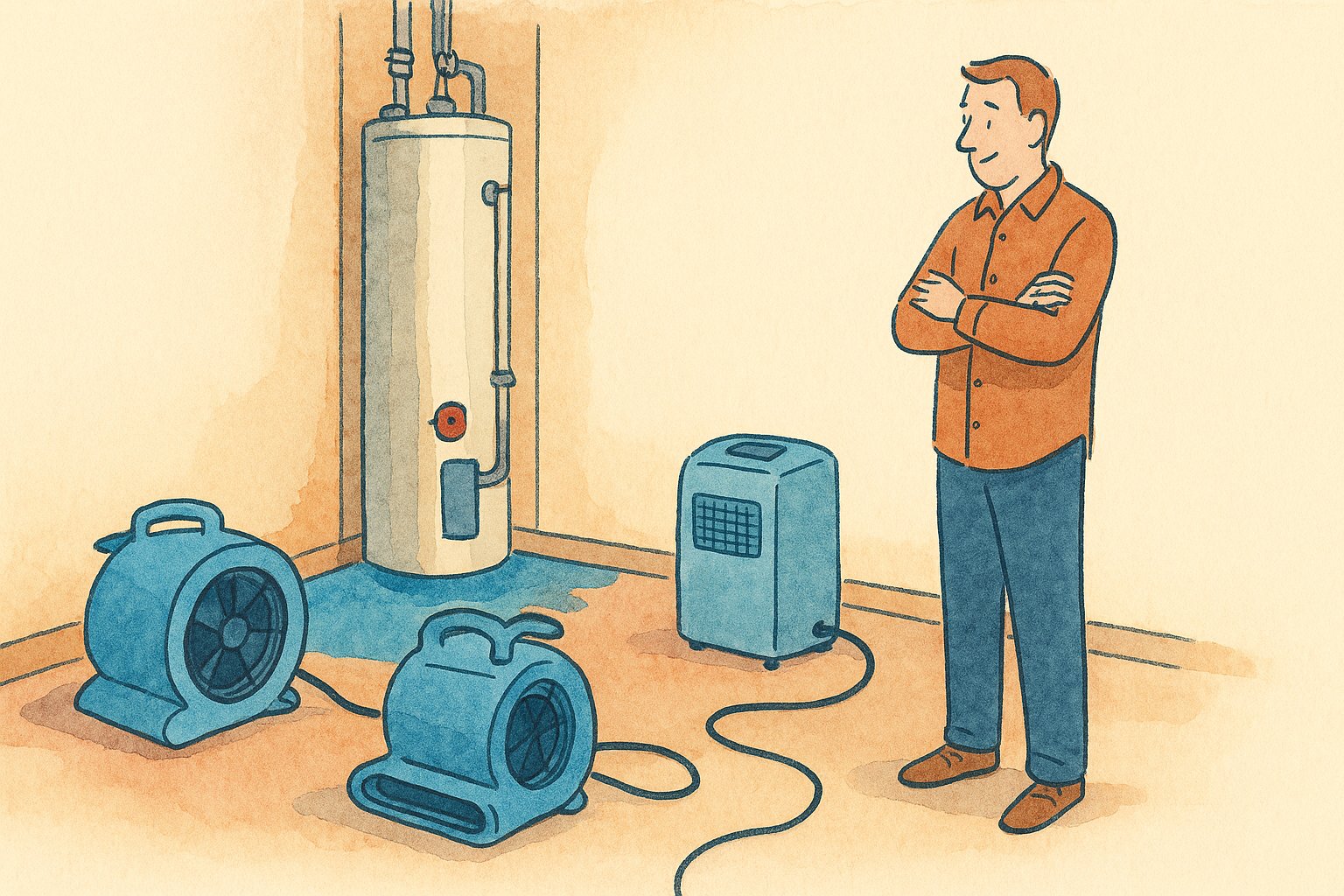
If you’ve shut off the water and power and the leak is a slow drip from a fitting, you can usually wait for a plumber during normal hours. Mop up the water, set a fan on the wet spot, and keep an eye on it.
Call for help right away if the tank is gushing or cracked, if water has reached drywall or the wall into the house, if you smell gas, or if you’re not comfortable working around the gas or electrical connections. Once water has soaked into building materials, a water damage crew can extract it and dry the space before mold sets in. You can reach a local team any time through our emergency water damage services, and if a burst supply line was part of the mess, our guide on what to do about a burst pipe covers that too.
Common mistakes to avoid
A few missteps turn a manageable leak into a bigger repair. Watch for these.
- Leaving the power on. An electric element that keeps heating an empty or half empty tank can burn out. Kill the breaker or the gas first.
- Ignoring a small drip. A minor leak from the base rarely fixes itself. It’s usually the early warning that the tank is failing, so it’s worth a look now rather than a flood later.
- Only wiping up what you can see. Water wicks under baseboards and into the wall cavity. If the shared garage wall feels damp, get air moving on it and have it checked.
- Storing valuables on the garage floor near the heater. If your unit is getting older, keep boxes and keepsakes up on shelves so a future leak doesn’t reach them.
A West Valley example
A homeowner near 67th Avenue and Union Hills found a ring of water around the base of a ten year old heater in the garage one July afternoon. She flipped the breaker, turned the cold water valve on top, and laid down towels while she called for help. Because she’d stopped the flow early, the water hadn’t crossed into the house.
The tank had rusted through at the bottom, so it needed replacing. A crew dried the damp drywall along the shared wall the same day, and because it never sat wet in the heat, there was no mold to deal with. A calm first hour saved her a much larger cleanup.
Does insurance cover a water heater leak?
It depends on how the leak happened, and coverage is never guaranteed. Standard Arizona homeowners policies often cover the water damage from a sudden, accidental failure, like a tank that bursts or cracks without warning. That means the cost to dry out and repair your floors and walls is commonly part of the claim.
Two things to keep in mind. Policies usually don’t pay to replace the water heater itself, just the resulting damage. And a slow leak that dripped for weeks, or damage tied to a heater you knew was failing, is commonly denied as a maintenance issue. Document everything with photos and check your own policy, because the details vary by home and insurer.
Key takeaways
- Confirm the heater is the real source, then cut the power, shut off the cold water valve, and drain the tank if the leak is bad.
- A leak from the bottom of the tank usually means it has rusted through and needs replacing.
- Glendale’s hard water shortens tank life, and standing water can grow mold in about a day or two in the heat, so dry it fast.
- Call a pro right away if the tank is gushing, water reached the wall into the house, or you smell gas.
- Insurance often covers the resulting water damage from a sudden failure, but usually not the heater itself or a slow, neglected leak.
Frequently asked questions
Should I turn off the water heater if it’s leaking?
Yes. Cut the power to it first, either at the breaker for an electric unit or at the gas dial, then shut the cold water valve on top so no more water feeds the leak. That’s the safest, fastest way to slow things down.
Is a leaking water heater an emergency?
A slow drip you’ve shut off can usually wait for a plumber during the day. A tank that’s gushing or cracked, water reaching the wall into your home, or the smell of gas all mean you should get help right away.
Can a leaking water heater be repaired, or does it need replacing?
It depends on where the leak is. A loose fitting, a bad drain valve, or a dripping relief valve are often simple fixes. A leak from the bottom of the tank usually means the steel has corroded through, and that means replacement.
How long do water heaters last in Arizona?
Most tank water heaters last about eight to twelve years. Glendale’s hard water and mineral buildup can wear them out on the earlier end, so if yours is past ten years and starting to leak, it’s often time to plan for a new one.
Glendale AZ Water Damage is a water damage information and lead request service. We are not a licensed restoration contractor, and this article is general information, not professional restoration, plumbing, insurance, or health advice. A licensed local pro should assess your specific situation.
If a leaking water heater has left water in your Glendale or West Valley home, don’t let it sit. Reach out for fast, 24/7 help and get the space dried out before mold has a chance to start.