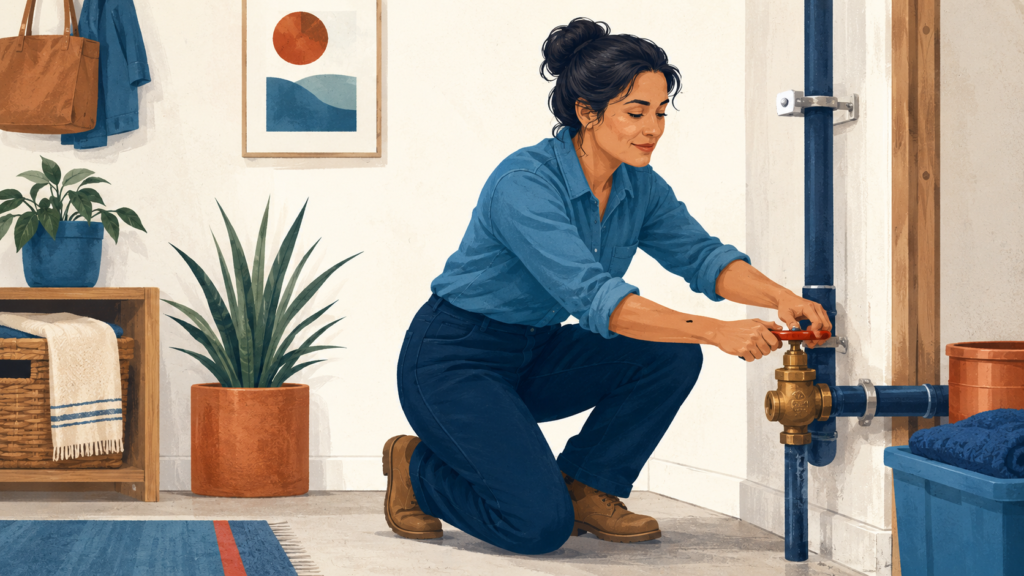
A pipe just let go somewhere in your Glendale home, water is spreading, and you need to know what to do about a burst pipe right now. Here’s the short version, then the details. Shut off your main water valve first. Cut the power to any area that’s getting wet. Open your faucets to drain the lines. Move what you can, start snapping photos, and call for help. Every one of those steps matters, and in the Arizona heat the clock runs faster than most people expect. Stay calm. You can get the water stopped and the drying started, and this guide walks you through it.
Step one: shut off your main water valve
The single most useful thing you can do is stop the water at the source. Find your main shutoff valve and turn it until the flow stops. In most Glendale and West Valley homes the main valve sits near the front of the house, often in a box in the ground close to the street, by the water heater in the garage, or near the pressure regulator on an exterior wall. A round wheel valve turns clockwise, several times, until it’s fully closed. A lever style valve turns a quarter turn so it sits across the pipe.
If the leak is coming from one fixture, like a toilet or a sink, you may be able to close the small valve right under or behind it instead. But when water is really moving, don’t waste time hunting for the local valve. Go straight for the main and shut the whole house down. You can sort out the details once the water stops rising.
Take two minutes this week to find your main valve before you ever need it. Standing in an inch of water at 2 AM is the worst time to learn where it is.
Step two: cut the power where it’s wet
Water and electricity together are dangerous, so this step protects you, not just your house. If water is near outlets, light fixtures, or your electrical panel, turn off the breakers for those areas at your panel. Flip the individual circuits that feed the wet rooms.
Here’s the line you should not cross. If reaching your breaker panel means walking through standing water, stop. Don’t do it. Call an electrician or your utility instead and wait for help. No amount of saved carpet is worth the risk. Once the power to the wet area is off and it’s safe to walk, you can keep going.
Step three: drain the lines and stop the drip
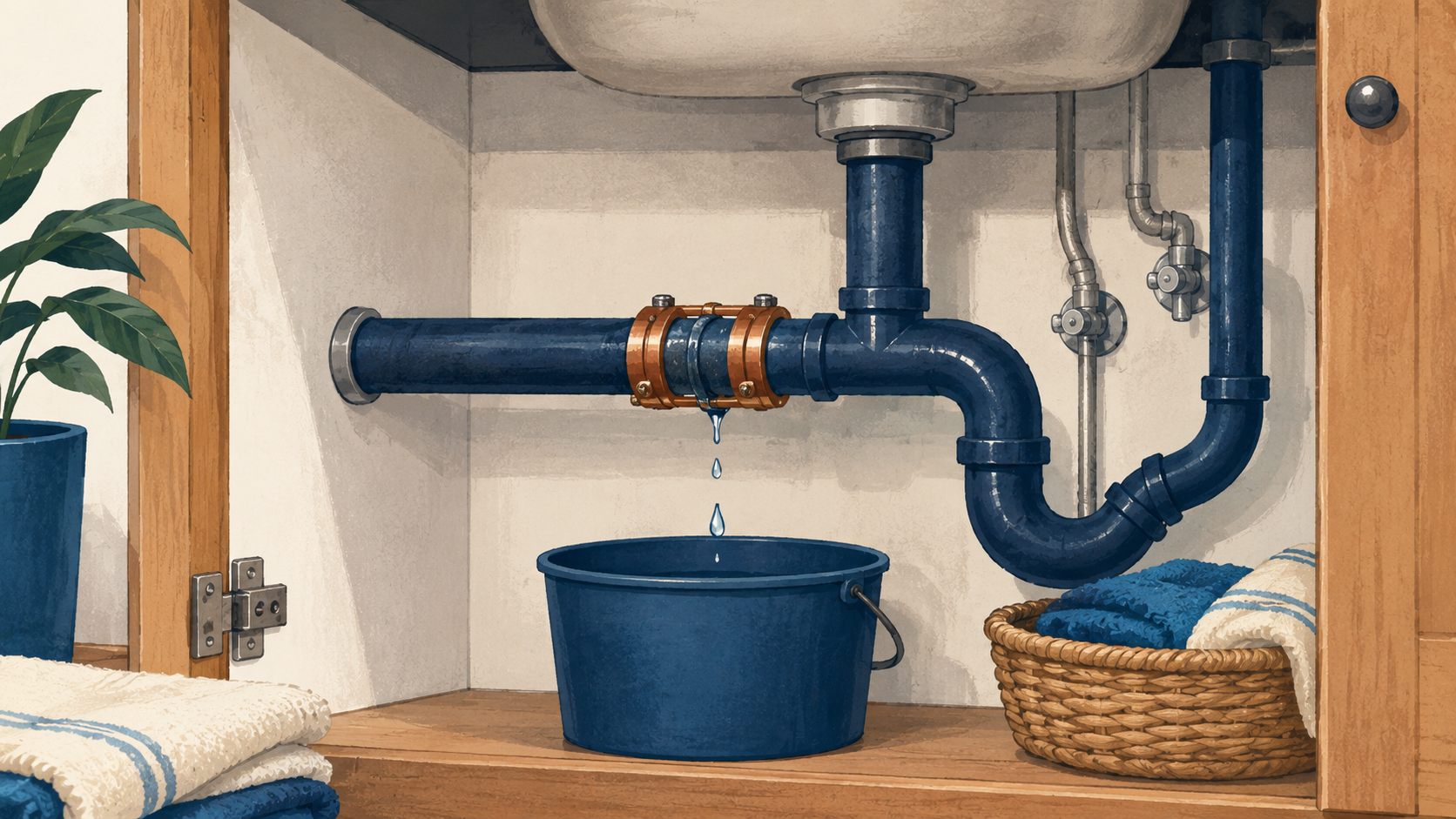
Even after the main is closed, there’s still water sitting in your pipes, and gravity will keep pushing it out of the break. Clear it out fast. Open the cold water faucets around the house, starting with the lowest ones, and flush a toilet or two. Then open a couple of hot water faucets. This relieves the pressure and empties the lines so less water reaches the burst spot.
If you can see the cracked section of pipe and it’s still weeping, a temporary wrap can slow it down while you wait for a pro. Pipe repair tape, a rubber patch held with a clamp, or even a tight wrap of cloth and a bucket underneath buys you time. Think of this as first aid, not a fix. The real repair comes later.
Step four: protect your stuff and document everything
Now move anything you can lift out of the water. Get furniture legs onto blocks or foil, pull rugs up off the floor, and lift electronics, photos, and important papers to a dry spot. Fast beats perfect. Save what’s easy to save.
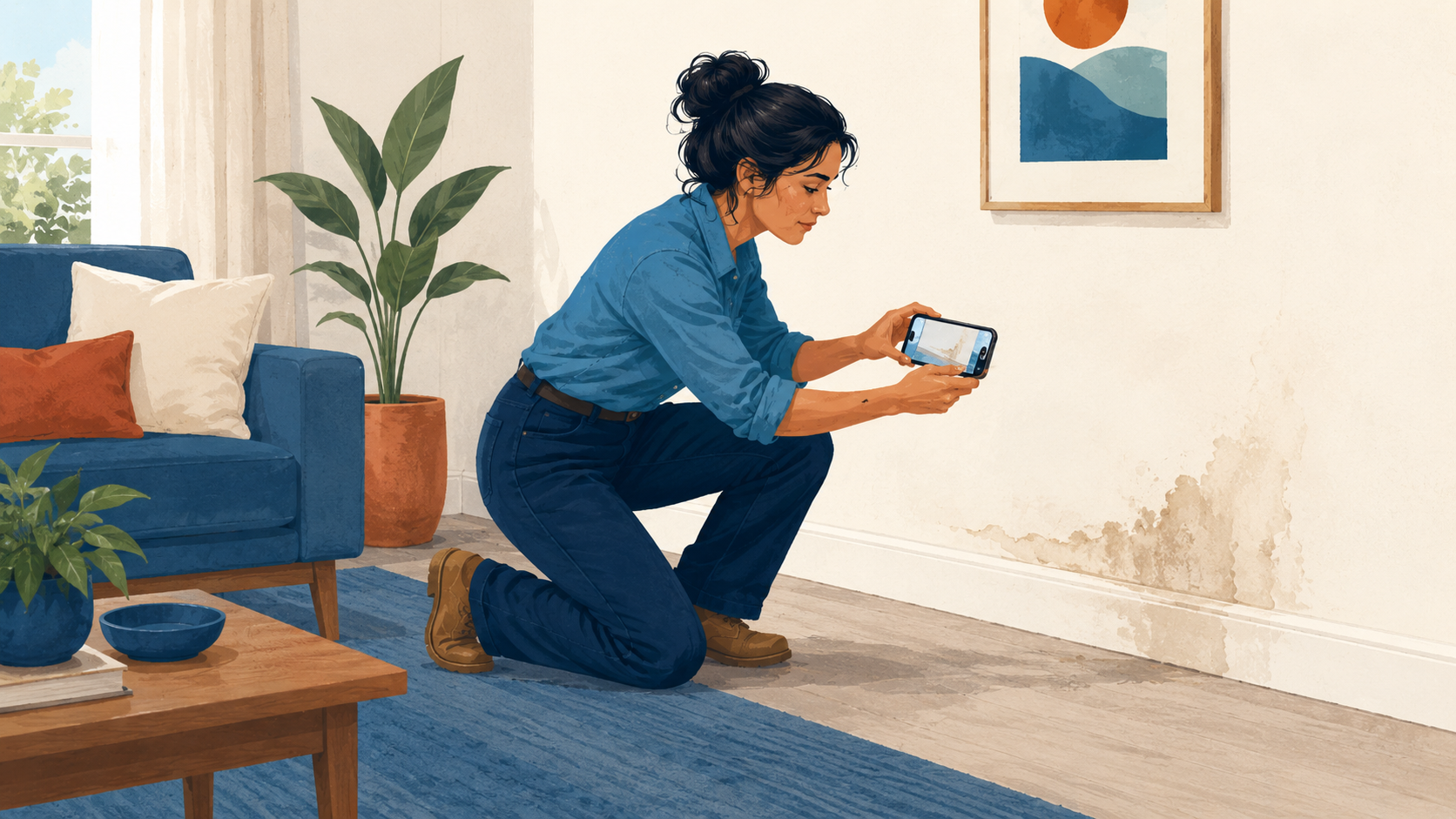
Before you mop up too much, photograph and video the damage. Get wide shots of each room and close ups of the pipe, the soaked drywall, the wet flooring, and any damaged belongings. This record is what your insurance claim will lean on, and memories fade fast when you’re stressed. A two minute walkthrough on your phone is plenty. Do it now, while the evidence is fresh.
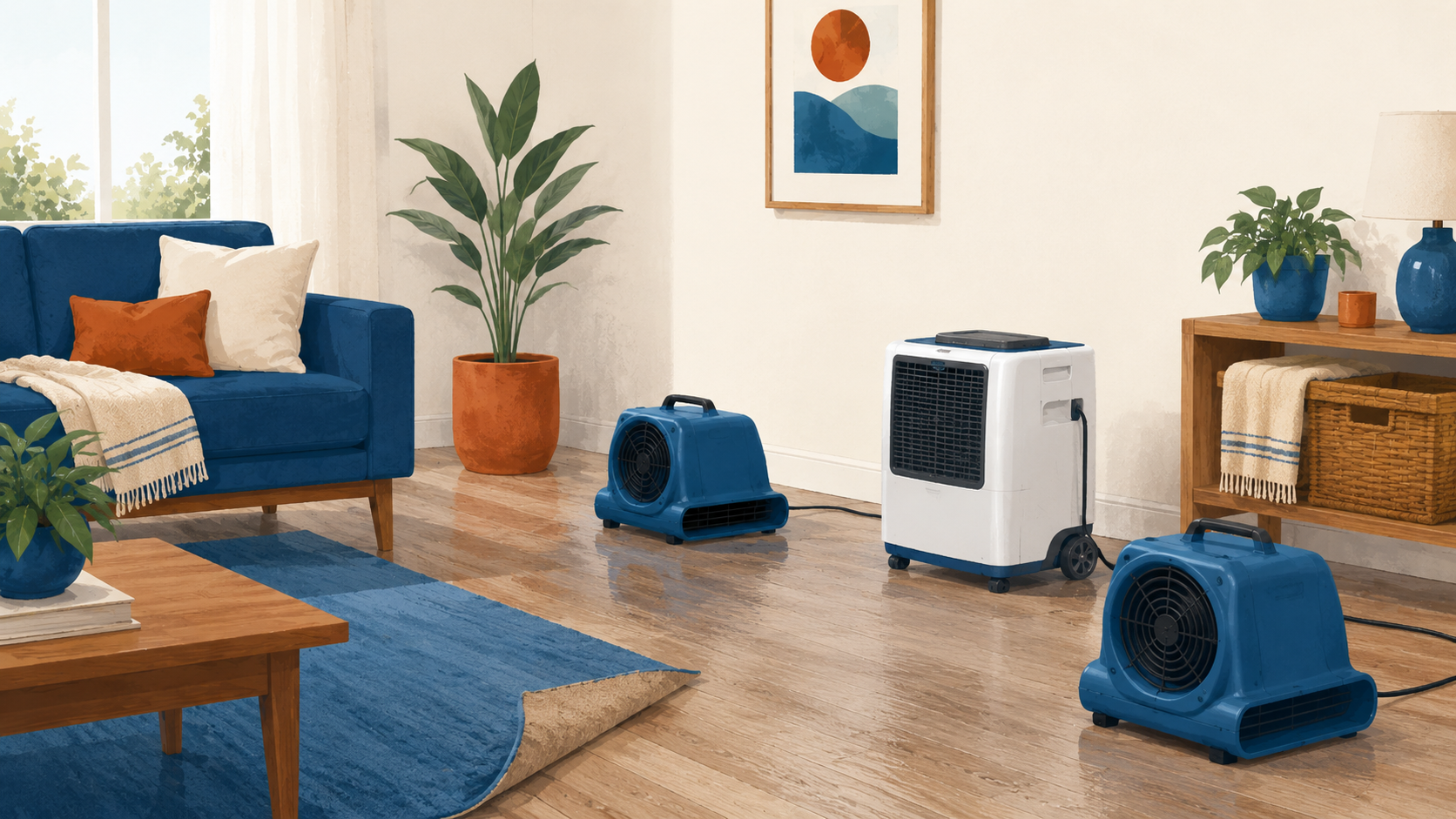
Then start pulling water out with whatever you’ve got: towels, a mop, or a wet vacuum. In a Glendale summer, run your AC and fans rather than opening windows. The goal is to get things drying, because in our climate wet materials don’t get a grace period.
Why the first hours matter so much in Glendale
Water damage isn’t a one time event. It keeps working. Drywall wicks moisture up the wall, baseboards swell, and water slides under flooring where you can’t see it. The longer it sits, the more it ruins, and the more it costs to put right.
Arizona adds its own twist. Our heat speeds everything up. Mold can start growing within 24 to 72 hours of materials getting wet, and a hot Glendale house with the water off and no airflow is close to ideal for it. That’s why drying quickly matters as much as stopping the leak. A burst pipe you dry out in a day is a very different problem from one you leave sitting over a long summer weekend.
Common mistakes to avoid with a burst pipe
A few honest missteps make a burst pipe worse. Watch for these:
- Waiting to see if it dries on its own. It won’t, and hidden moisture behind walls is where mold and rot start. Act the same day.
- Only wiping up what you can see. Water travels under cabinets, into wall cavities, and beneath flooring. Surface dry does not mean actually dry.
- Skipping the photos. If you clean up first and call insurance later, you may have nothing to show for the worst of the damage.
- Assuming a small leak is minor. A pinhole under pressure can soak a room overnight. Treat every burst pipe as urgent.
- Doing risky things for the sake of belongings. Never wade through charged water. Stuff can be replaced.
What makes pipes burst in Glendale homes
Up north people worry about frozen pipes in winter. Here in the West Valley, the usual culprits are different. Glendale’s hard water leaves mineral buildup that corrodes pipes and fittings from the inside over the years, especially in older homes. High water pressure strains weak joints. And the daily swing from a scorching afternoon to a cooler night makes materials expand and contract until a tired connection finally gives.
Summer piles on more risk. Water heaters that run hard, washing machine hoses that crack in the heat, and slab leaks under the foundation all show up more in the hot months. If your pipes are decades old or you’ve spotted rusty water, low pressure, or a spike in your bill, those are quiet warnings worth checking before a small problem turns into a soaked living room.
Consider a real West Valley example. A family near 67th Avenue came home from a weekend away to water seeping under the garage door. A corroded fitting on the water heater had let go Friday night. Because no one was home to shut the main, it ran for two days, and by the time they found it the drywall was soaked three feet up and the concrete was damp across half the garage. Same failed part, wildly different outcome depending on how fast the water gets stopped.
Will insurance cover a burst pipe in Arizona?
Good news on this one, with the usual caution. Standard Arizona homeowners policies often cover sudden and accidental water damage, and a pipe that bursts out of nowhere usually fits that description. The cleanup, drying, and repairs tied to it are commonly covered, though every policy and situation is different.
Two things commonly trip people up. First, damage that builds from a slow leak you knew about, or that comes down to deferred maintenance, is often denied, since insurers expect you to fix known problems. Second, and this matters in monsoon country, standard policies usually exclude flood, meaning rising water from outside. That needs a separate flood policy. A burst pipe inside your home is a different category from a wash overflowing during a storm. When in doubt, call your agent and ask before you assume either way.
Whatever your coverage, the steps are the same: stop the water, document the damage, and get the place dried out quickly. Acting fast helps your home and usually helps your claim too.
Key takeaways
- Shut off the main water valve first. Know where it is before you need it.
- Cut power to wet areas, but never walk through standing water to reach the panel.
- Open faucets to drain the lines, then wrap the break as a temporary measure.
- Photograph and video everything before you clean up, for your insurance claim.
- Dry fast. In Arizona heat, mold can start within 24 to 72 hours.
- Arizona policies often cover sudden burst pipes, but usually not outside flooding.
Frequently asked questions
What should I do first when a pipe bursts?
Shut off your main water valve. Stopping the flow at the source does more to limit the damage than anything else, and it takes only a minute once you know where the valve is.
Can I fix a burst pipe myself?
You can slow a leak with pipe tape or a clamp as a temporary patch. A lasting repair should be done by a licensed plumber, and the water cleanup is best handled by a restoration pro so hidden moisture doesn’t turn into mold.
How fast do I need to act?
Immediately. Water spreads and soaks in by the hour, and in the Glendale heat mold can begin within a day or two. The faster you stop the water and start drying, the less damage and cost you’ll face.
Is a burst pipe covered by homeowners insurance in Arizona?
Often, yes. Sudden and accidental water damage from a burst pipe is commonly covered, while slow leaks and outside flooding usually are not. Check your specific policy with your agent to be sure.
Glendale AZ Water Damage is a water damage information and lead request service. We are not a licensed restoration contractor, and this article is general information, not professional restoration, insurance, or health advice. Every home and situation is different, so a licensed local pro should assess yours.
If you’re dealing with a burst pipe right now, don’t wait it out. Call for fast 24/7 help using the number at the top of this page, or reach out through our homepage and tell us what’s going on. You can also see how we help Glendale and West Valley homeowners on our services section. For more on the first steps in any water emergency, read our guides on emergency water removal in Glendale and what to do in your first 24 hours after a flood.