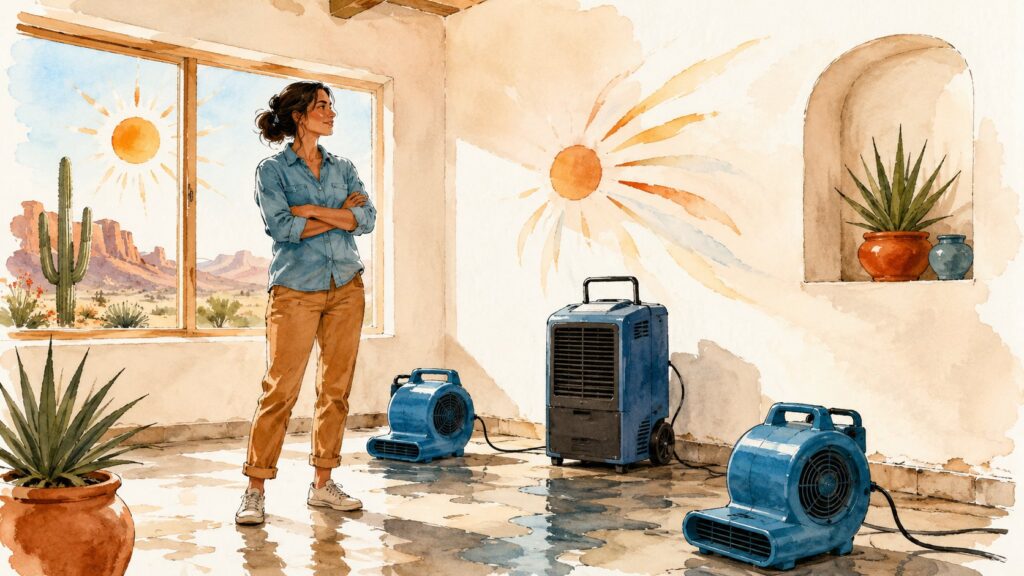
If a pipe let go or a monsoon storm pushed water into your Glendale home, here’s the short answer on how fast does mold grow in Arizona heat: mold can start growing within 24 to 48 hours of a leak, and our summer heat sits right in the range mold loves. That sounds scary, but here’s the calming part. If you get the wet materials dried out inside that same window, in most cases mold never gets a foothold. So take a breath. The clock matters, but it’s on your side if you move now.
Below we’ll walk you through what actually happens hour by hour, why Glendale and the West Valley are tougher on this than cooler climates, what mold can do to your family’s health, and the practical steps that stop it before it spreads.
How fast does mold grow in Arizona after a leak?
Mold spores are already floating in every home, everywhere, all the time. They’re harmless until they get what they need to grow: moisture, a food source, and warmth. A wet wall or soaked carpet gives them all three at once. According to the EPA, once materials stay damp, mold can begin growing in about 24 to 48 hours.
Here’s a rough timeline for what happens after water sits in your home:
- First 24 hours: spores germinate on damp surfaces. You usually can’t see anything yet, but the process has already started.
- 24 to 72 hours: visible growth often begins to appear as spots or fuzz, and a musty smell can set in.
- 1 to 3 weeks: mold colonizes and spreads across materials, digging into drywall, wood, and padding.
Those are general ranges, not a stopwatch. Real homes vary. But the takeaway is simple and worth acting on: the first two days decide most of the outcome. Dry things out fast and you usually win. Let them sit and you’re fighting a much bigger problem.
Why Arizona heat speeds mold up
Mold grows fastest in warm, damp conditions, roughly in the 77 to 86 degree range, with humidity above 60 percent. Now think about a Glendale summer. Your home sits warm, and the second water gets trapped inside a wall or under flooring, that pocket becomes exactly the kind of warm, humid space mold thrives in.
People assume our dry desert air protects them. Outside, sure, the air is bone dry most of the year. But the problem with water damage is hidden moisture, and hidden moisture doesn’t care what the patio thermometer says. Behind baseboards, under tile, inside a soggy cabinet base, the air stays humid and hot. That’s a greenhouse for mold.
Monsoon season makes it worse. From roughly July through September, the West Valley gets bursts of humidity along with the storms. A roof leak during a monsoon downpour pairs standing moisture with muggy air, and that combination is why so many local mold calls come in late summer. If you want the bigger picture on storm water in the area, our guide on monsoon flooding in Glendale covers how to keep water out in the first place.

Where mold hides in a Glendale home
The mold you can see is rarely the whole story. The spots that cause the most trouble stay out of sight, damp long after the visible mess looks dry. Common hiding places in West Valley homes include:
- Inside drywall and behind baseboards, where water wicks up and lingers
- Under carpet padding and beneath tile or laminate flooring
- Inside kitchen and bathroom cabinets, especially the base near a leak
- Around AC air handlers and condensation drain lines, a big summer culprit here
- In attic wood after a monsoon roof leak
This is why a surface that feels dry to the touch can still be soaking wet underneath. Pros use moisture meters to check what your hand can’t feel. If you dried the floor but never opened the wall, the water trapped inside can keep feeding mold for weeks.
Is mold dangerous to your family’s health?
For most people, small amounts of household mold are more of a nuisance than an emergency, but it isn’t something to ignore. Mold produces allergens, irritants, and in some cases substances that can affect health. Common reactions include irritated eyes, skin, nose, throat, and lungs.
Some people feel it more than others. Kids, older adults, and anyone with asthma, allergies, or a weakened immune system can be more sensitive. If someone in your home starts getting stuffy, wheezy, or headachy after water damage and it eases when they leave the house, that’s worth paying attention to. If you have real health concerns, talk to a doctor, and consider stepping up how quickly you get the moisture handled.
The point is simple: mold is a health matter as much as a home repair one, which is exactly why speed pays off.

How to stop mold before it starts
Here’s the good news you can act on right now. The same 24 to 48 hour window that lets mold start is the window that stops it. Dry the materials thoroughly in that time and, in most cases, mold never grows.
- Stop the water first. Shut off the source, whether that’s a supply valve, the main, or a tarp over a roof leak. Drying while water still flows gets you nowhere.
- Get standing water out fast. Mop, towel, wet vac, or pump. The sooner the bulk water is gone, the less soaks in.
- Move air and pull humidity. Open windows only if it’s dry out, run fans, and put a dehumidifier to work. In our heat, moving air is your friend.
- Pull up what traps water. Lift soaked carpet and padding, open cabinet toe kicks, and pull wet baseboards so the wall cavity can breathe.
- Don’t just cover it up. Painting over a damp spot or closing a wall back up traps moisture and feeds mold you won’t see coming.
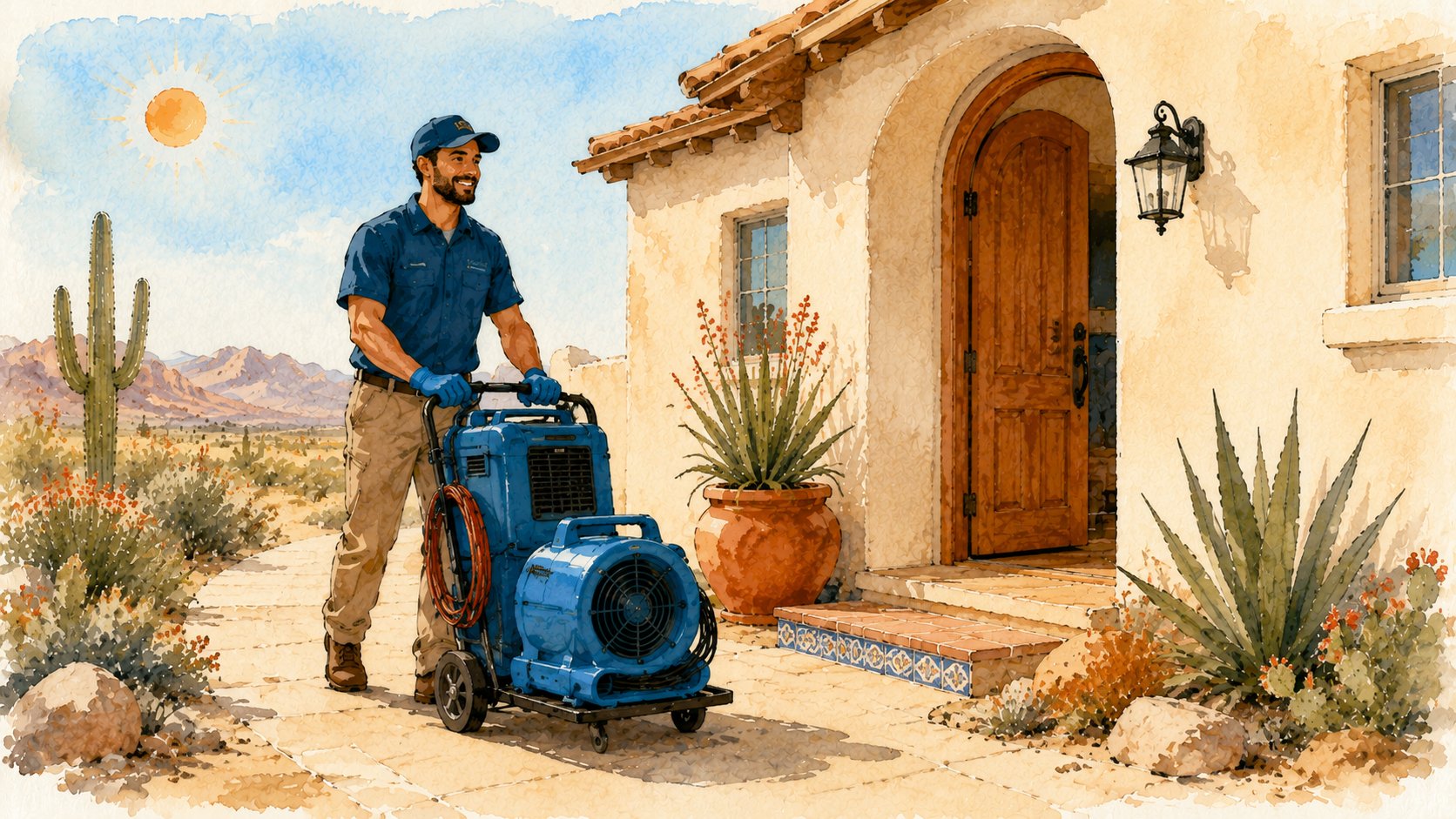
Professional drying gear moves far more water than household fans, which is why a quick response from a local crew often makes the difference between a cleanup and a remodel. If the water was clean and the area is small, you may handle it yourself. If it was a big soak, or the water was gray or from sewage, that’s a job for a pro. You can see how a full dry out works in our walkthrough of the water damage restoration services we connect Glendale homeowners with.
When to call a professional
General guidance from the EPA gives a useful line for cleaning mold yourself versus calling for help. A patch smaller than roughly 10 square feet, about a three foot by three foot area, is usually a doable home job with proper care. Beyond that, or in these situations, bring in someone with experience:
- Mold covers more than about 10 square feet
- There was heavy water damage, or the water sat for days
- The water came from sewage or another contaminated source
- You smell must but can’t find the source, which points to hidden mold
- Someone in the home has health concerns tied to the moisture
A pro can find hidden moisture, dry the structure properly, and remove mold safely so it doesn’t scatter spores through the rest of the house.
A real world Glendale example
Picture a homeowner near 59th Avenue and Bell Road who gets home from a July weekend trip. A supply line under the guest bath sink had dripped the whole time. The floor looked mostly dry, so they wiped it up and moved on.
Two weeks later, a musty smell led them to open the vanity. The cabinet base and the bottom of the drywall behind it were covered in growth, because that warm, closed cabinet had stayed damp the entire time. The surface was dry. The hidden part never was. The lesson isn’t to panic, it’s to check underneath and dry completely, not just the parts you can see.
Key takeaways
- Mold can start growing 24 to 48 hours after a leak, and visible growth often shows by 48 to 72 hours.
- Arizona heat and monsoon humidity land right in mold’s favorite range, so trapped moisture grows mold fast.
- The most damaging mold hides where materials stay wet out of sight, so a dry feeling surface isn’t proof.
- Drying wet materials thoroughly within that first day or two usually prevents mold entirely.
- Call a pro for large areas, contaminated water, hidden mold, or any health concern.
Frequently asked questions
Can mold really grow in Arizona’s dry climate?
Yes. People often ask how fast does mold grow in Arizona given our dry climate, and the honest answer is fast. Water damage creates hidden pockets of trapped moisture inside walls, floors, and cabinets. Those pockets stay warm and humid, which is exactly what mold needs, no matter how dry it is outside.
How long do I have to dry things out before mold grows?
Aim for the first 24 to 48 hours. If wet materials are dried thoroughly in that window, mold usually won’t grow. After that, the risk climbs quickly, especially in summer heat.
Does homeowners insurance cover mold from water damage?
It depends on the cause. When mold follows a sudden covered event like a burst pipe, coverage is often available, though many Arizona policies cap mold amounts. Slow leaks left unaddressed are commonly denied. For a fuller look, see our guide on whether Arizona homeowners insurance covers water damage, and always check your own policy.
Is a musty smell always mold?
A musty, earthy smell is one of the most reliable early signs, often before you can see anything. It usually means moisture is feeding growth somewhere out of sight. If you smell it after water damage, treat it as a reason to investigate and dry the area.
You can also read the EPA’s homeowner overview in A Brief Guide to Mold, Moisture and Your Home for more on cleanup and prevention.
Glendale AZ Water Damage is a water damage information and lead request service. We are not a licensed restoration contractor, and this article is general information, not professional restoration, insurance, or health advice. Mold and moisture situations vary by home, so a licensed local pro should assess your specific situation, and any health concerns should go to a medical professional.
Water damage really does get worse by the hour, and in the Arizona heat mold moves fast. If you’re dealing with a leak, a flood, or a musty smell right now, don’t wait it out. Call the number at the top of the page for fast 24/7 help, or reach out through our site and we’ll help you get a local pro on it before mold gets started.