
If you’re staring at a wet floor and wondering what this is going to cost, here’s the honest answer up front: water damage restoration cost in Glendale depends far more on your specific situation than on any flat rate. Two homes on the same street can pay very different amounts for what looks like the same leak. What drives the number is how clean the water was, how much of your home it touched, how long it sat, and what materials it soaked. This guide walks you through exactly what shapes the price, so when a Glendale pro hands you an estimate, you’ll know what you’re looking at and why.
The cost of water damage restoration in Glendale isn’t one fixed figure, and any company that quotes you a price sight unseen is guessing. A small clean water leak caught the same day sits at the low end. A sewage backup that spread across a floor and sat for two days sits at the high end. Most jobs land in between. Let’s break down what moves that number.
What drives water damage restoration cost in Glendale
A good estimate is built from a handful of factors. Once you understand them, the range stops feeling random and starts making sense.
How clean the water was
Restoration pros sort water into three categories, and the category changes almost everything about the job. Clean water from a supply line or a leaking water heater is the least expensive to handle. Gray water, the kind that comes from a washing machine or dishwasher, carries some contamination and needs more care. Black water, which includes sewage backups and floodwater from outside, is the most involved and the most expensive because it brings health risks that require protective gear, disposal, and disinfection. The dirtier the water, the more labor and safety steps the job takes.
How much of your home got wet
Square footage is one of the biggest levers on the final bill. A damp corner of one room is a small job. Water that spread across a living room, soaked into the walls, and wicked up into a hallway is a much bigger one. More affected area means more drying equipment, more days on site, and more labor. Damage that reaches ceilings and insulation from a leak above costs more than water sitting on a tile floor you can squeegee.
How long the water sat
This is the factor you actually have some control over, and it matters more here than in most places. Every hour that water sits, it spreads deeper into drywall, baseboards, and subfloor, turning a quick dry out into a demolition and rebuild. In the Arizona heat, standing moisture can start growing mold in as little as 24 to 72 hours. Calling for help fast is the single biggest thing you can do to keep the cost down.
What the water soaked into
Materials matter. Tile and concrete shrug off water and dry quickly. Carpet and pad often have to come out. Drywall that stayed wet usually gets cut away and replaced. Hardwood can cup and warp, and cabinets can swell. A room finished with tough, water friendly materials costs less to restore than one with soft finishes that trap moisture.
The Arizona factor most cost guides miss
National cost articles rarely account for where you live, and Glendale changes the math in a few ways. Our dry desert air can help materials release moisture quickly once fans and a dehumidifier are running, which sometimes shortens drying time. That’s the good news.
The harder news is our summer. During monsoon season, roughly July through September, wind driven rain and flash flooding send a wave of roof leaks and flooded rooms across the West Valley all at once. When demand spikes, the fastest same day help goes quickly. The other Arizona reality is heat. A wet wall in a closed up Glendale home in July is a mold factory waiting to happen, which is why speed here isn’t just about comfort, it’s about keeping the job small.
What you’re actually paying for
It helps to see where the money goes. A typical restoration isn’t one service, it’s a sequence, and a fair estimate reflects the steps your home actually needs.
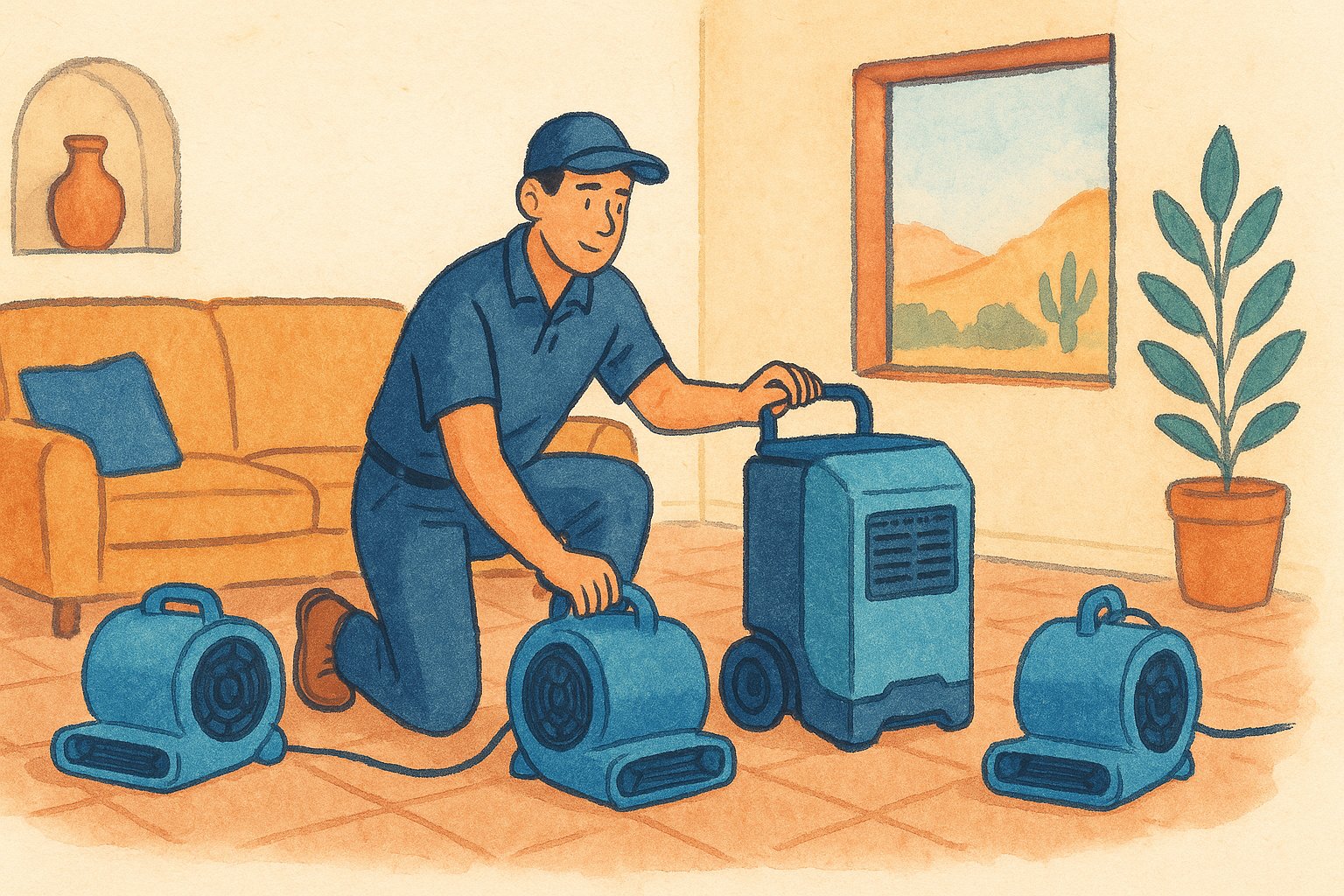
First comes inspection and water extraction, where a pro finds the source, stops it if it’s still active, and pulls out standing water with pumps and truck mounted vacuums. Next is structural drying, where air movers and dehumidifiers run for several days while a technician checks moisture readings and adjusts the equipment. If materials are too far gone, there’s controlled removal of soaked carpet, pad, or drywall. Then comes cleaning and disinfecting, which is heavier for gray and black water jobs. Finally there’s the rebuild, putting back drywall, paint, flooring, and trim so your home looks like itself again.
Many companies split the drying phase, called mitigation, from the rebuild phase, called repairs. That’s normal. Drying fast is urgent, while the cosmetic rebuild can follow once everything reads dry. Ask any Glendale company to walk you through which phases their estimate covers.

Does insurance cover it in Arizona?
This is where a scary number often gets a lot smaller, so it’s worth understanding. A standard Arizona homeowners policy often covers sudden and accidental water damage, like a pipe that bursts or a water heater that fails without warning. Monsoon damage from wind or hail that opens your roof and lets rain in is also commonly covered as storm damage.
The big exception in Arizona is flood. Water that rises from outside and enters your home, the kind of surface flooding a monsoon storm can cause, is usually excluded from a standard policy and needs a separate flood policy. Slow, long ignored leaks are also commonly denied, because insurers expect you to fix a known drip. Coverage always depends on your specific policy, your insurer, and how the damage happened, so read your policy and call your agent before you assume anything. When water damage is covered, you typically pay your deductible and your insurer handles much of the rest.

Common mistakes that raise the cost
A few avoidable missteps turn manageable jobs into expensive ones.
- Waiting to see if it dries on its own. It usually doesn’t, and the delay is what invites mold and rot. Fast action keeps the job, and the bill, smaller.
- Not documenting the damage. Before you clean anything up, take photos and video of every wet area. Skipping this can complicate an insurance claim later.
- Only drying what you can see. Water hides behind baseboards and under flooring. A pro with a moisture meter finds the wet spots your eyes miss.
- Choosing purely on price. The cheapest quote that skips proper drying can leave hidden moisture that costs far more to fix down the road.
- Turning off the AC to save money. In a Glendale summer, a warm, humid, closed up home dries slowly and grows mold fast.
A real world Glendale example
Picture a homeowner near 59th Avenue and Bell Road who came home from a weekend away to find the supply line under a bathroom sink had let go. Clean water had run for a day and a half, spreading across the bathroom tile and soaking into the carpeted hallway and one bedroom wall.
Because it was clean water caught reasonably quickly, the job stayed on the smaller side. The crew extracted the water, pulled the wet carpet pad, cut away a low strip of soaked drywall, and ran fans and a dehumidifier for about three days. Had that same leak sat for a week in the July heat, the story would’ve been mold in the wall cavity, a bigger tear out, and a much larger number. The difference between a modest bill and a major one was mostly time. That’s the pattern we see across the West Valley.
Key takeaways
If you remember nothing else, remember this. There’s no single price for water damage restoration cost in Glendale, because the number is built from the water category, the size of the area, how long it sat, and what got soaked. The cleaner the water and the faster you act, the smaller the job. Arizona heat and monsoon season raise the stakes on speed, since mold can start within 24 to 72 hours. And insurance often covers sudden, accidental water damage, though flood usually needs its own policy. Get a real, itemized estimate from a local pro who actually looks at the damage.
Frequently asked questions
How soon should I get an estimate?
Right away. Getting a pro out fast is what keeps the damage, and the cost, from growing. Most Glendale companies offer 24/7 emergency response and can start extraction the same day, then give you a clearer estimate once they see what’s wet.
Is the first assessment free?
Many local restoration companies offer a free inspection or estimate, especially for emergency calls. Ask when you call so there are no surprises. If insurance is involved, the company can often work directly with your adjuster.
Will my costs be higher during monsoon season?
The work itself is priced the same way year round, but demand climbs sharply during the summer storms, so the fastest slots fill up. Calling early, before a small leak becomes a big one, is your best move in July and August.
Does homeowners insurance pay for the whole thing?
When a covered event causes the damage, you typically pay your deductible and your policy covers much of the rest, though it depends on your coverage. Flood from outside usually isn’t included without a separate flood policy. Check with your agent about your specific situation.
Get a clear answer for your home
The only way to know what your restoration will cost is to have someone look at the actual damage. If you’re dealing with water in your Glendale or West Valley home right now, don’t wait for it to spread. A quick call gets a local pro out to assess the situation, stop the damage, and give you a real estimate. You can see how our fast response service works or reach out through our homepage for fast 24/7 help. For more on handling the first hours of a leak, read our guides on what to do first when you find water damage and your first 24 hours after a flood.
Glendale AZ Water Damage is a water damage information and lead request service. We are not a licensed restoration contractor, and this article is general information, not professional restoration, insurance, or health advice. Costs vary widely by home, insurer, and situation, and a licensed local pro should assess your specific case. If you have an emergency, call for fast 24/7 help or reach out through the site.