
You walk across the tile in your Glendale living room and one spot feels warm under your bare feet. Not the whole floor, just a patch. Maybe the water bill crept up last month and you blamed the heat. Maybe you hear a faint hiss of running water at night when every faucet is off. Any one of those is easy to shrug off. Together, they often point to the same quiet problem: a leak in the pipes under your slab.
A slab leak is water escaping from a pipe buried in or beneath the concrete foundation your home sits on. Because it happens out of sight, it can run for weeks before you notice, and in the Arizona heat that hidden moisture can start growing mold within a day or two. The good news is these leaks are fixable, and catching one early keeps a small repair from becoming a foundation and flooring mess.
What a slab leak is and why it matters
Most homes across Glendale and the West Valley sit on a concrete slab poured right on the ground, with water and drain lines running through or under it. When one of those lines cracks, corrodes, or pulls apart at a joint, the water has nowhere to go but into the soil and up into your foundation. Left alone, it softens the ground under your home, seeps into flooring and baseboards, feeds mold beneath your tile, and wastes a lot of water. That last part is why a bill spike is often the first clue.
Warning signs to watch for
Slab leaks rarely announce themselves. They show up as small, easy to miss changes around the house:
- A water bill that climbs for no clear reason, even though your habits haven’t changed.
- The sound of running or trickling water when everything is turned off.
- Warm or hot spots on the floor, which usually mean a hot water line is the culprit.
- Damp, buckling, or discolored flooring, or carpet that stays moist, plus low water pressure that wasn’t there before.
- A musty smell, or mold starting along baseboards and lower walls.
- New cracks in the floor or walls as the soil shifts underneath.
One sign alone might be nothing. Two or three together are worth taking seriously, because water damage genuinely gets worse by the hour once it’s loose under your home.
Why Glendale and West Valley homes are prone to them
Arizona is tough on buried plumbing, and our corner of the Valley is no exception. A few local realities stack the deck.
First, the water is hard. Phoenix area tap water carries a heavy mineral load, and over the years those minerals scale up and wear at the inside of copper pipe. Add the chlorine used to treat municipal water and you get slow pitting on pipe walls that can take a couple of decades to fail, right about the age of much of Glendale’s housing stock.
Second, the soil moves. The caliche and clay soils under West Valley homes swell when they get wet and contract when they dry out. During our long dry stretches the ground shrinks away from the foundation, then monsoon rain swells it back. That constant push and pull stresses pipes at their joints and bends, exactly where they tend to give out.
Put hard water corrosion and shifting desert soil together and you have the two biggest reasons homes here leak under the slab. It isn’t anything you did wrong. It’s the ground your house lives on.

How a leak under the slab gets found
You don’t want anyone breaking up your floor to go hunting. A good pro locates the leak first, without tearing anything open. They use acoustic gear that picks up the sound of water escaping under concrete, thermal cameras that spot the temperature change from a hot water leak, and pressure tests that confirm which line is losing water.
This noninvasive step matters. Pinpointing the exact spot keeps the repair small and targeted instead of guesswork that opens up half your floor. If a company wants to start jackhammering before they’ve located the leak, that’s your cue to get a second opinion.
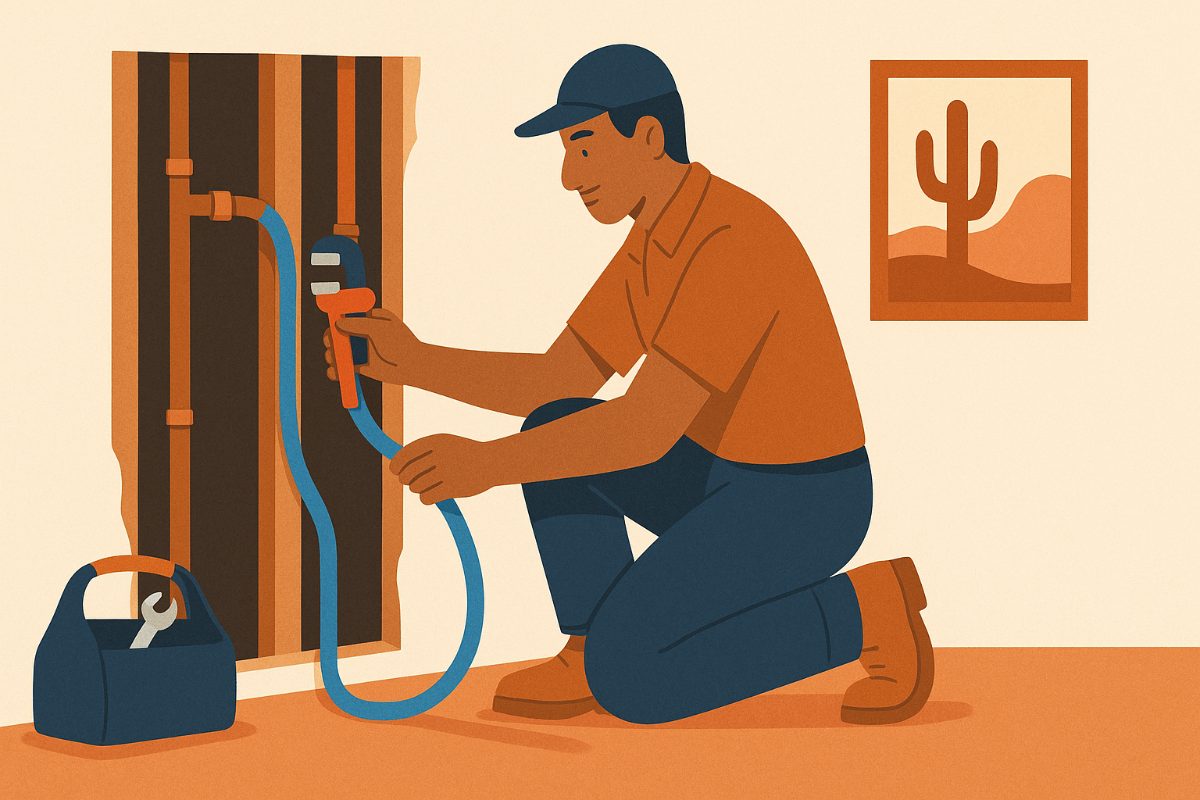
Slab leak repair options in Glendale
Once the leak is found, there are a few standard ways to fix it. The right one depends on the pipe’s age, where the leak sits, and how many trouble spots the line has. When you talk to a plumber about slab leak repair in Glendale, AZ, expect them to walk you through some version of these three.
Spot repair through the slab
For a single leak in an otherwise healthy line, a crew opens a small section of floor, fixes that one spot, and patches it back. It’s the most direct approach when the pipe is failing in only one place. The downside is opening concrete inside your home.
Rerouting the line
Instead of digging to the bad pipe, the plumber abandons it and runs a fresh line through the walls or attic to bypass the leak. This makes sense when the buried pipe is old and likely to fail again, since chasing one leak after another under the slab gets expensive fast.
Trenchless repair
Newer trenchless methods repair or reline the pipe from access points without tearing up the whole run of floor. When a home qualifies, this is often the least disruptive route and can wrap up in a single visit. Not every leak or pipe is a candidate, so a pro will tell you if yours is.
What slab leak repair tends to cost
Cost is the first thing most people ask, and the honest answer is that it varies. The price depends on where the leak is, how easy it is to reach, which repair method fits, and how much damage has already spread into flooring and drywall.
A single spot repair caught early sits at the lower end. A full reroute, or a leak that has already soaked flooring and grown mold, runs higher because you’re paying for the plumbing fix plus the cleanup. That’s the real reason to act early: the leak itself is often the cheap part, and the damage it causes while you wait is what adds up. Get a written estimate, and for a larger job it’s fair to get two.
Does insurance help
It depends on your policy and the cause, so read yours and ask your agent. In general, Arizona homeowners policies often cover the sudden and accidental water damage a slab leak causes, meaning the cost to tear out and dry the flooring and walls the water ruined. What they commonly won’t pay for is fixing the pipe itself, and many deny claims tied to slow leaks or poor maintenance. Coverage is never guaranteed, so confirm the specifics with your insurer. We go deeper in our guide on whether Arizona homeowners insurance covers water damage.

Common mistakes to avoid
When homeowners get burned on a slab leak, it’s usually one of these:
- Waiting to see if it gets better. It won’t. Every day the water keeps softening soil and feeding mold.
- Letting anyone break concrete before the leak is actually located. Detection comes first, always.
- Chasing repeat spot repairs on an old, failing line when a reroute would end it for good.
- Skipping the cleanup after the pipe is fixed. Wet subfloor and drywall left behind is how mold takes hold in our heat.
- Not photographing the damage before anyone touches it, which makes a claim harder later.
A real world example
Picture a family near 59th Avenue and Union Hills in a home built in the late 1980s. Their water bill had crept up two months running and they figured it was summer irrigation. Then a corner of the family room carpet started staying damp. By the time they called someone, a pinhole leak in a copper hot water line under the slab had run quietly for weeks, and the pad underneath was soaked enough that mold had started along the tack strip.
A plumber located the leak with acoustic gear in under an hour, and because the rest of the line was aging, they rerouted that run through the attic instead of patching one spot. A restoration crew dried the subfloor and pulled the affected carpet and pad. Had they called at the first odd water bill, they’d have skipped the mold and the carpet. The early phone call is almost always the cheaper one.
Key takeaways
- A slab leak is a pipe leaking under your foundation, and it often hides for weeks.
- Watch for a rising water bill, warm floor spots, running water sounds, damp flooring, and musty smells.
- Glendale’s hard water and shifting caliche soil are the two biggest local causes.
- A pro should locate the leak with acoustic and thermal tools before opening any concrete.
- Fixes range from a spot repair to a reroute to trenchless relining, depending on the pipe.
- Act early. The leak is usually cheap next to the damage it causes while you wait.
Frequently asked questions
Can a slab leak fix itself?
No. A leak under the slab only grows as the pipe keeps corroding or shifting. The longer it runs, the more soil, flooring, and drywall it affects.
How urgent is a slab leak?
Urgent. It’s rarely a flood in the moment, but the damage compounds daily, and in Arizona heat mold can start within a day or two of flooring getting wet. The sooner it’s found, the smaller the repair.
Will finding the leak mean destroying my floor?
It shouldn’t. Modern detection is noninvasive, using sound and heat to pinpoint the spot. Only the repair opens a small, targeted section, and rerouting or trenchless methods can sometimes avoid opening the floor at all.
Is a warm spot on the floor always a slab leak?
Not always, but it’s a strong hint, especially over tile or concrete. A warm patch usually points to a hot water line leaking below. Pair it with any other sign and it’s worth a call.
Get help fast
If the signs are adding up in your home, don’t sit on it. Catching a slab leak early is the difference between a quick plumbing fix and a torn out floor. Glendale AZ Water Damage can connect you with local help day or night. Call the number at the top of the page or reach out through our services page.
Glendale AZ Water Damage is a water damage information and lead request service. We are not a licensed restoration contractor or plumber, and this article is general information, not professional restoration, plumbing, insurance, or health advice. Every home and situation is different, so a licensed local pro should assess yours. For serious water damage or mold concerns, contact a qualified professional directly.