
You press your hand against the hallway wall the morning after a slab leak or a monsoon roof drip, and the paint gives a little. It feels cool, soft, almost spongy. That squishy patch is the question nearly every West Valley homeowner lands on once water gets behind a wall. Can this drywall dry out and be saved, or does it need to come out?
Here in Glendale, the answer leans harder on speed than most people expect. Our summer heat can grow mold inside a wet wall within a day or two, so the clock starts the moment the water hits.
The honest place to start is this: some wet drywall recovers just fine, and some has to go. Deciding whether to wet drywall repair or replace comes down to three things, how clean the water was, how long the wall stayed wet, and how far the moisture spread. Once you know those, the call gets a lot clearer.
What happens when drywall gets wet
Drywall is a gypsum core wrapped in paper, and both love to drink. The paper face soaks first, then the water wicks into the core and climbs upward through the wall by capillary action.
That’s why the damage almost always reaches higher than the waterline you can see. Restoration crews often find moisture a foot or two above the visible mark, so the wet zone is usually bigger than it looks.
As the core takes on water, it swells and loses strength. Sagging, bulging, or a soft spot you can push a finger into means the gypsum has broken down, and no amount of drying brings that back.
When wet drywall can be dried and saved
Good news first, because plenty of Glendale walls do get rescued. Drywall stands a real chance when a few things line up: the water was clean, from a supply line, a burst pipe, or rain, rather than sewage; you caught it fast, ideally within 24 to 48 hours; the moisture stayed near the surface instead of soaking all the way through; and the wall is still firm, with no sagging, crumbling, or musty smell.
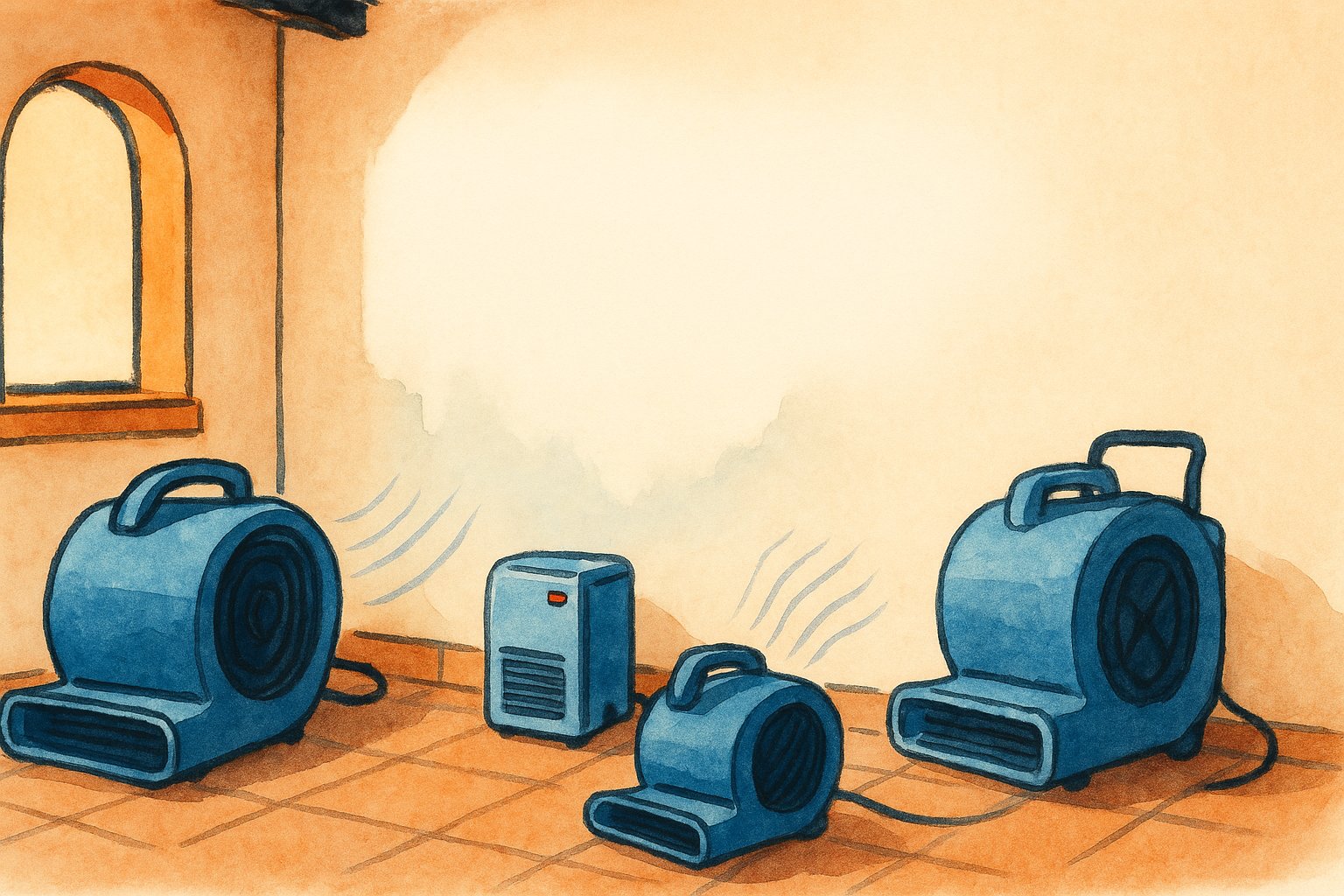
When those boxes check out, quick professional drying with air movers and a dehumidifier can pull the moisture back out before mold sets in. The single biggest factor in saving a wall is simply how fast it gets dry.
When wet drywall needs to be replaced
Some situations take the choice out of your hands. The first is contaminated water. Sewage backups, toilet overflows, washing machine drain water, and outdoor monsoon floodwater all carry bacteria, and because drywall is so porous, it can’t be truly sanitized. Category two or category three water almost always means the wall comes out.
The second is time. Drywall that stayed wet longer than about 48 hours moves into high mold risk, and in Arizona heat that happens faster than most people think. The third is physical damage. If the wall is warped, bubbling, soft, or crumbling, the core is already gone. And if you see mold or catch a musty smell, that means removal, not drying.
In these cases, drying is a gamble you usually lose. Pulling the affected section and starting fresh is the safer, cleaner fix.
Why Arizona heat changes the math
Two local realities push a lot of West Valley homeowners toward faster action. First, our heat. Mold can begin growing on damp drywall within a day or two, and a wall cavity in a Glendale summer is warm and dark, close to ideal for it. That short window is why drying has to start almost immediately to keep a wall in the save it column. Heat is a big reason the whole wet drywall repair or replace question in Glendale is really a race against the clock.
Second, monsoon season. From roughly July through September, wind driven rain and roof leaks send water into ceilings and upper walls across Glendale, Peoria, and Surprise. Storm water through a damaged roof gets treated as clean at first, but if it has run across insulation, soil, or debris, it may not be. When you’re unsure, treat questionable water as dirty.
How the pros make the call
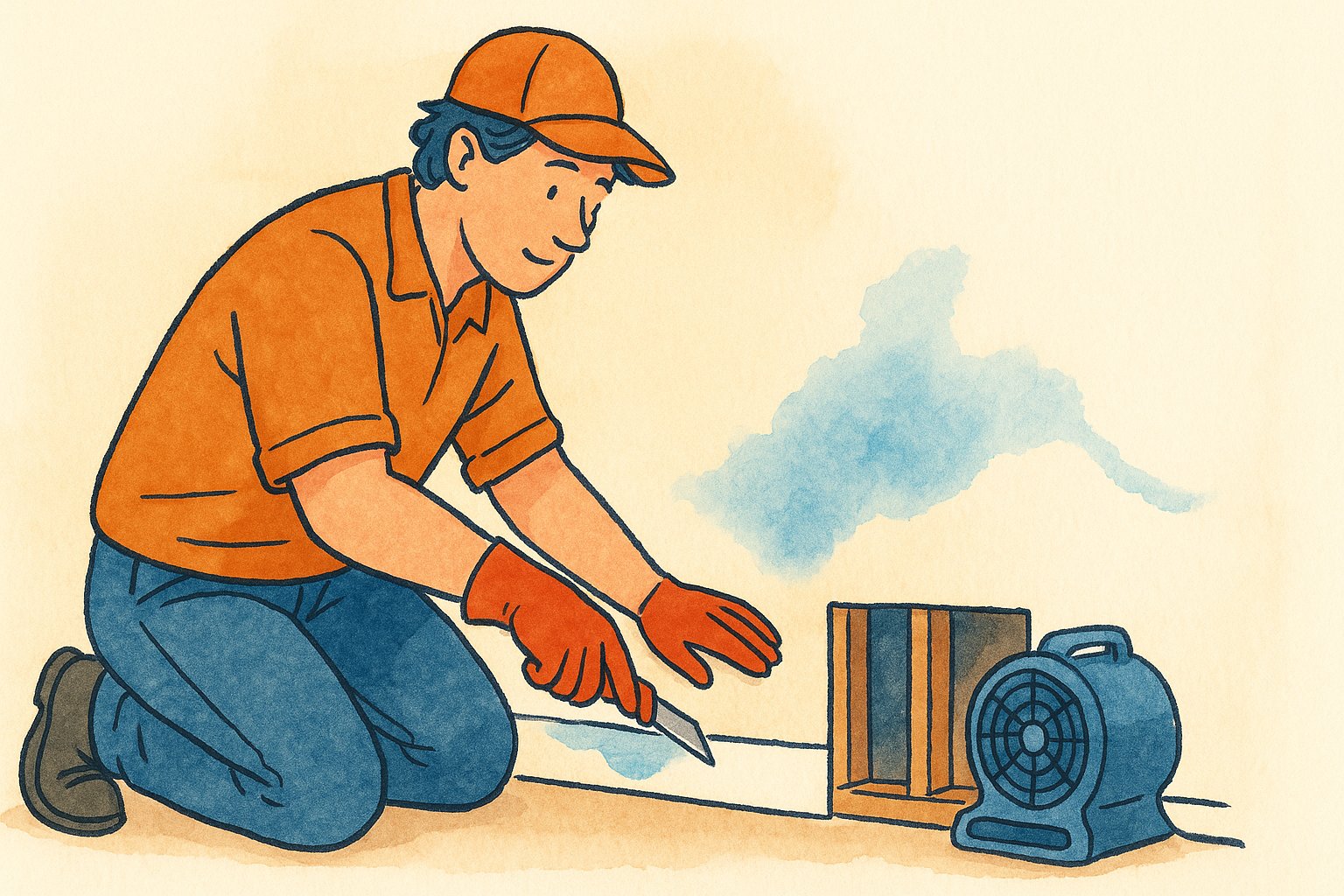
A good restoration tech doesn’t guess by touch. They use a moisture meter to read how deep the water went and to map the true edge of the wet area, which is often wider than the stain. They also check the framing and insulation behind the wall, since soaked insulation holds water against the drywall and has to be removed either way.
If the wall can be saved, they set drying equipment and watch the readings over a few days until the numbers hit normal. If it can’t, they cut out the wet section to a clean line above the damage, dry the cavity, and rebuild. Knowing which path you’re on early is what keeps a small fix from turning into a bigger one, and it’s a big part of what shapes the overall restoration cost.
Common mistakes Glendale homeowners make
The most costly mistake is painting over a stain and hoping. Fresh paint traps moisture in the wall and hides mold that keeps growing behind it. A dry looking surface is not a dry wall.
Another is relying only on a box fan and open windows. In our dry air that helps a little, but it rarely dries a wall core fast enough to beat mold, and cracking the windows in July just lets heat and humidity back in.
People also tend to underestimate how far the water traveled. Cutting out one small patch while leaving damp drywall on either side just moves the problem down the wall. Skipping the wet insulation behind it almost guarantees a repeat. And rushing to rebuild before the cavity reads dry is how a fixed wall becomes a mold problem a month later.
A West Valley example
A homeowner near 67th Avenue and Union Hills had a washing machine supply line let go while they were at work. By the time they got home, water had spread across the laundry room and wicked up the shared wall into the hallway.
The lower drywall in the laundry room, sitting in gray water for hours, came out. But the hallway side, reached only by clean water that had wicked up and been caught within a day, dried out and stayed. Same leak, two different calls, decided by water type, time, and how far it spread. That’s the pattern almost every case follows.

What to do right now
If you’ve got wet drywall this minute, a few quick moves protect your options. Stop the water at the source if you can. Pull back baseboards and lift wet carpet so air can reach the wall. Get real airflow and a dehumidifier going. And take photos of everything before you change a thing, since that matters for insurance.
Then get a professional read on the moisture before you decide to keep the wall or cut it. Whether it’s a fresh leak or a stained ceiling from a monsoon roof leak, the sooner it gets measured and dried, the better its odds.
Does insurance cover it?
It depends on how the water got there. Standard Arizona homeowners policies often cover sudden, accidental water damage, like a burst pipe or an overflowing appliance, and commonly cover wind or hail roof damage that lets monsoon rain in. Slow leaks and long ignored maintenance issues are usually denied.
One Arizona point worth knowing: standard policies usually exclude surface flooding, the kind that pushes in from outside during a heavy monsoon storm, and that needs a separate flood policy. Coverage always varies by policy, insurer, and situation, so read yours and call your agent before you assume either way.
Key takeaways
- Clean water caught within 24 to 48 hours often means the drywall can be dried and saved.
- Contaminated water, or a wall wet longer than about two days, usually means replacement.
- Soft, sagging, bubbling, or musty drywall is done and should come out.
- Arizona heat grows mold fast, so drying has to start right away.
- A moisture meter, not a guess, should decide repair versus replacement.
Frequently asked questions
How do you decide whether to repair or replace wet drywall?
It comes down to three questions. Was the water clean or contaminated? How long did the wall stay wet? And how far did the moisture spread? Clean water, caught fast, and shallow soaking point toward drying. Dirty water, long exposure, or a soft crumbling wall point toward replacement.
Can I just dry wet drywall with a fan?
A fan alone rarely dries a wall core fast enough, especially the moisture deep inside the cavity. It can help as a first step, but professional air movers and a dehumidifier give a wet wall a real shot at drying before mold starts.
How do I know if the drywall is dry enough to keep?
By measurement, not by look or feel. A moisture meter reads how much water is still in the gypsum and framing. Only when those readings return to normal is a wall safe to seal up and repaint.
Is slightly wet drywall dangerous?
The drywall itself isn’t, but what grows in it can be. Damp drywall in Arizona heat can start growing mold within a day or two, and the mold is the real health concern. If you smell a musty odor or see staining that keeps spreading, treat it seriously and bring in a pro.
Glendale AZ Water Damage is a water damage information and lead request service. We’re not a licensed restoration contractor, and this article is general information, not professional restoration, insurance, or health advice. Every home and every leak is different, so a licensed local pro should assess your specific situation.
If water has gotten into your walls, don’t wait for the guesswork to cost you. Reach out through our site or call the number at the top of the page for fast 24/7 help across Glendale and the West Valley, and get a real read on whether your drywall can be saved.