
You found a patch of mold behind the bathroom vanity, or maybe a musty smell finally led you to a soft spot in the drywall. The relief fades fast, because the next thought is almost always the same: what is this going to cost me? It’s a fair worry, and a stressful one when you don’t have a number to hold onto yet.
Here in Glendale and across the West Valley, that question comes up a lot, usually after a monsoon roof leak or a slow drip that sat unnoticed in the summer heat. So let’s talk honestly about what mold remediation runs, what moves the price, and how to avoid paying more than you need to.
What mold remediation usually costs
Let’s start with the ranges, because that’s what you came for. Keep in mind these are general national figures from home services cost guides, and your real number depends on your specific home and situation. Nobody can quote you accurately without seeing the space.
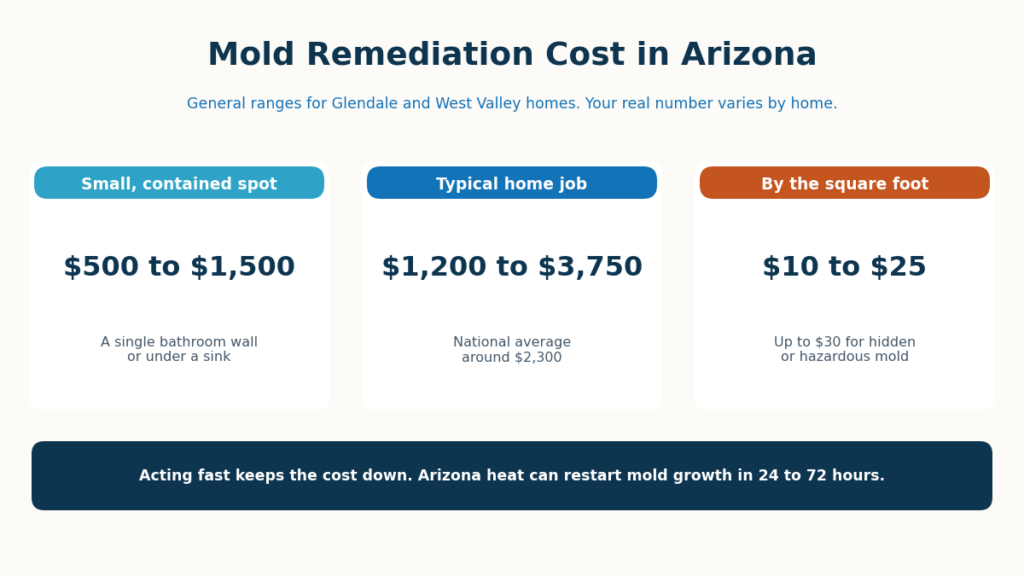
For most homeowners, professional mold remediation lands between $1,200 and $3,750, with a national average around $2,300. A small, contained problem, think a single bathroom wall or a spot under a sink, often falls in the $500 to $1,500 range. Once mold spreads past roughly 300 square feet or into more than one room, the price climbs quickly, and a whole home or HVAC job can run well into the thousands.
Priced another way, contractors often estimate $10 to $25 per square foot of affected area. Trickier jobs that involve opening wall cavities, cleaning ductwork, or handling hazardous mold can push that toward $30. These are starting points, not promises. Two homes with the same size stain can cost very different amounts once a pro sees how deep the moisture went.
What drives your mold remediation cost in Arizona up or down
A few things move the needle more than anything else. Understanding them helps you read an estimate and know whether it’s fair.
Size and spread. This is the biggest one. A patch you can cover with a towel is a small job. Mold that has crept behind cabinets, up into insulation, or across a ceiling needs containment, more labor hours, and more materials, and that’s where mold remediation cost in Arizona really starts to add up.
Where it is. Mold on an open bathroom wall is cheaper to handle than mold inside an attic air handler or spread through your ductwork. In Glendale, attic and HVAC problems are common because the equipment sits in brutal summer heat, and reaching that mold safely takes more work.
How deep it went. Surface mold on tile or paint wipes away. Mold that has soaked into drywall, wood, or carpet means those materials usually have to come out and be replaced, which raises both the labor and the repair side of the bill.
The type of water and mold. Mold tied to clean water is one thing. Mold from a sewage backup or a category 3 water event needs full protective gear, higher grade filtration, and sealed waste handling, and pros commonly add a premium for those jobs. The color of the mold matters far less than the water source and how far it spread.
What you’re actually paying for
When the estimate feels high, it helps to see where the money goes. A proper remediation is more than wiping a wall with bleach. Here’s the general process a reputable local pro follows.
First comes the inspection and moisture check. The technician finds the source, measures how wet the surrounding materials are, and maps how far the mold has traveled. Fixing the leak matters as much as the cleanup, because mold that keeps getting fed just comes back.
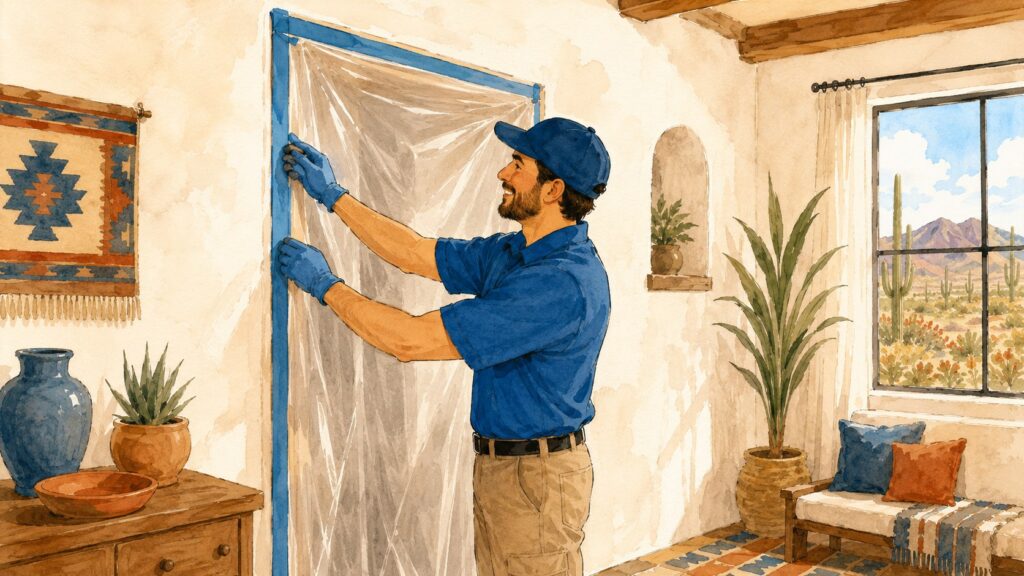
Next is containment. The work area gets sealed off with plastic sheeting and put under negative air pressure so spores don’t drift into clean rooms. This step is a big reason a real remediation costs more than a weekend of scrubbing.
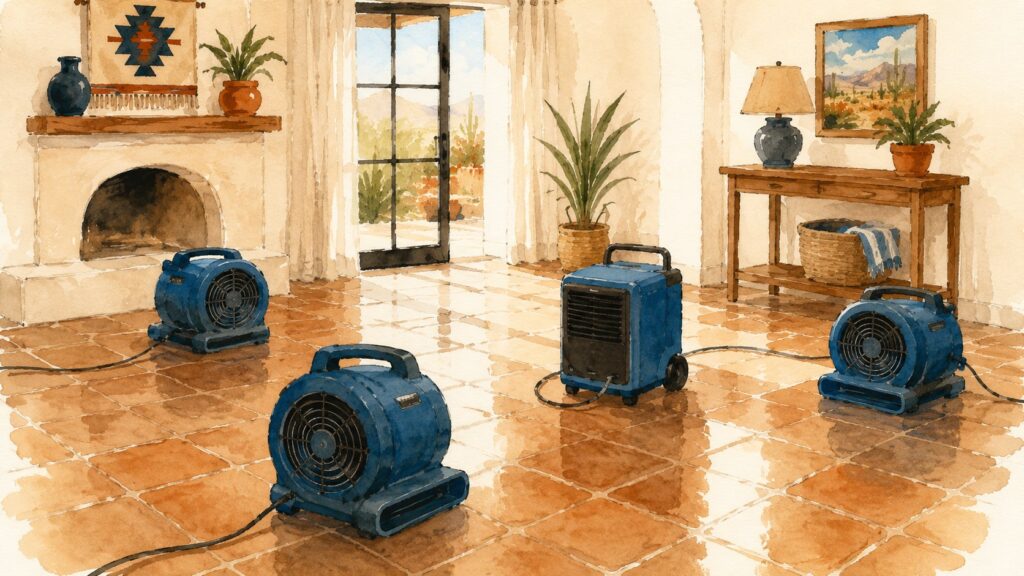
Then the crew runs air scrubbers with HEPA filters to pull spores out of the air, removes the affected materials, cleans what stays, and dries everything fully. Many pros finish with a clearance check before they rebuild. In our climate, thorough drying is not optional, since Arizona heat can restart mold growth in as little as 24 to 72 hours if any moisture is left behind.
Small job or big job, and when to call a pro
Not every spot of mold needs a full crew. General guidance holds that a small area, roughly under 10 square feet of surface mold on tile or a painted wall, is often something a careful homeowner can clean, as long as the moisture problem behind it is fixed.
Bigger than that, or mold you can smell but not fully see, is where the math changes. If it’s inside walls, in the HVAC, tied to sewage or flooding, or if anyone home has asthma or a weak immune system, that’s a job for a licensed local pro. Tearing into a contaminated wall to save money can spread spores through the whole house and turn a small bill into a big one.
Does insurance help with mold remediation cost in Arizona?
Sometimes, and it depends heavily on how the mold started. This is general information, not a coverage promise, so always read your own policy and ask your insurer.
Standard Arizona homeowners policies often help when mold results from a sudden, covered water event, like a burst pipe or an accidental overflow. Even then, many policies cap mold coverage at a set limit, so it may cover part of the cost rather than all of it. Mold from slow, ignored leaks or poor maintenance is commonly denied, since insurers expect you to fix problems early.
One local reality worth repeating: standard policies usually exclude flood. If monsoon floodwater comes into your home and grows mold, that damage typically needs a separate flood policy. If you want to understand the water side of this, our guide on whether Arizona homeowners insurance covers water damage goes deeper.
A West Valley example
Picture a homeowner near 67th Avenue and Bell Road who noticed a musty smell in a guest bathroom that nobody used much. A supply line under the sink had been weeping slowly for weeks in the summer heat, and mold had spread behind the vanity and into the lower drywall.
Because it was caught early, a pro sealed the area, removed the wet drywall and cabinet base, ran air scrubbers, dried the cavity, and confirmed it was clean before rebuilding. Had it been ignored another month, that same job could have reached the ceiling and the next bedroom wall, and the cost would have jumped. The lesson Glendale homeowners learn again and again is that speed is the cheapest tool you have.
Common mistakes that raise the cost
A handful of avoidable missteps quietly drive up what people pay.
The first is waiting. Mold doesn’t pause. Every week it spreads, more material has to come out, and the price rises with it. The second is painting over it, which hides the stain without killing the mold, so it keeps growing under the fresh coat.
The third is fixing the mold but not the leak. If the water source stays, the mold returns and you pay twice. The fourth is tearing into it without containment, which sends spores through the house and can turn a one room job into a whole home cleanup. When in doubt, get a real inspection before you pull things apart.

What to do next
If you’re staring at mold right now, take a breath. Stop the water source if you can find it, keep the area dry, and don’t disturb it more than you have to. Then get a couple of estimates from licensed local pros, since a fair quote comes from an in person look, not a phone guess.
A good estimate should spell out the source of the moisture, the size of the affected area, what gets removed, and how they’ll contain and dry the space. If a quote skips those details, ask. It’s also worth learning how fast mold grows in Arizona heat and what black mold really means for your home.
Key takeaways
- Professional remediation commonly runs $1,200 to $3,750, or about $10 to $25 per square foot, but your real number depends on your home.
- Size, location, how deep the mold went, and the water source are the biggest factors in the price.
- You’re paying for inspection, containment, HEPA air scrubbing, safe removal, and full drying, not just a wipe down.
- Small surface mold under about 10 square feet is often a careful homeowner job. Bigger, hidden, or contaminated mold needs a pro.
- Insurance often helps when mold comes from a sudden covered leak, commonly with limits, but usually not from slow leaks or flood.
- Acting fast is the single best way to keep the cost down, because Arizona heat can restart growth in 24 to 72 hours.
Frequently asked questions
How much does mold remediation cost in Arizona for a small area?
A small, contained spot often falls in the general range of $500 to $1,500, though the real figure depends on how deep the moisture went and whether materials need to be replaced. An in person inspection is the only way to know.
Is mold remediation covered by homeowners insurance?
Often, when the mold comes from a sudden covered water event like a burst pipe, though many policies cap how much they’ll pay. Mold from slow leaks, neglect, or flood is commonly excluded. Check your specific policy and ask your insurer.
Can I remove mold myself to save money?
For a small surface area, roughly under 10 square feet, a careful homeowner often can, as long as the leak feeding it is fixed. Larger, hidden, or contaminated mold should go to a licensed pro, since disturbing it without containment can spread spores and raise the total cost.
Why is mold so common in Glendale homes?
Between monsoon roof leaks, slow plumbing drips, AC condensation, and summer heat that speeds growth, West Valley homes see plenty of hidden moisture. Mold can take hold within 24 to 72 hours of a leak, so catching it early is everything.
Glendale AZ Water Damage is a water damage information and lead request service, not a licensed restoration contractor. This article is general information, not professional restoration, insurance, or health advice, and the cost figures here are general national ranges that vary by home and situation. A licensed local pro should assess your specific home. If you’re dealing with mold or water damage in Glendale or the West Valley, you can see how we help or reach out through our home page for fast 24/7 help.