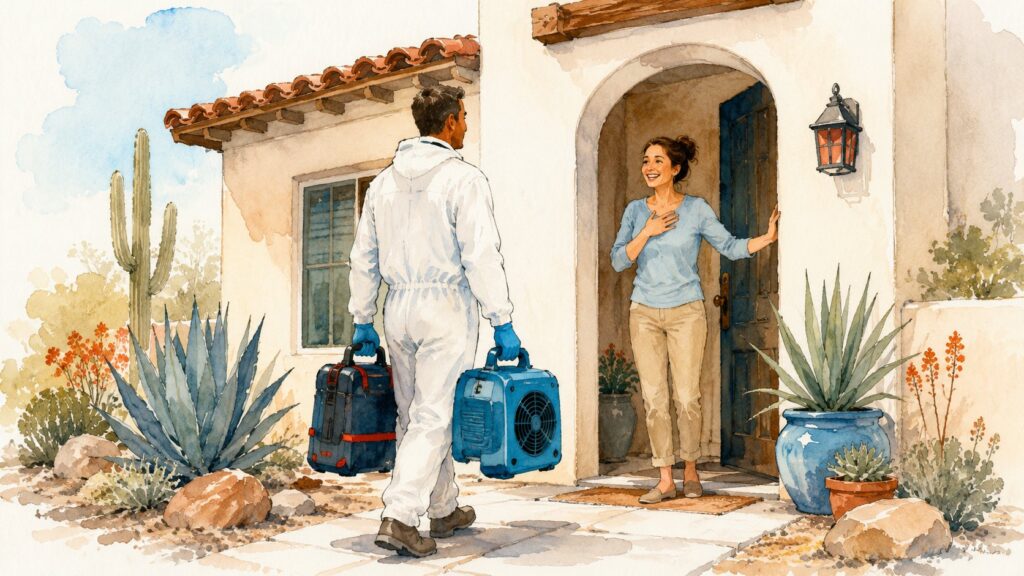
You walk into the laundry room and the smell reaches you before you see anything. Dark water is pooling around the floor drain and creeping toward the hallway, and it clearly isn’t clean. Maybe a toilet gurgled and pushed water onto the bathroom tile, or a garage floor drain started bubbling in the middle of a monsoon storm. Whatever the source, a backup like this is one of the few home water problems where the smartest first move is to step back, not grab a mop.
That’s because sewage carries things you can’t see. Before you touch anything, it helps to understand what you’re dealing with and why sewage backup cleanup gets handled so differently from a simple spill. If you own a home in Glendale or anywhere in the West Valley, this guide walks you through what to do first, what to leave completely alone, and who to call.
Why sewage water is different from a normal spill
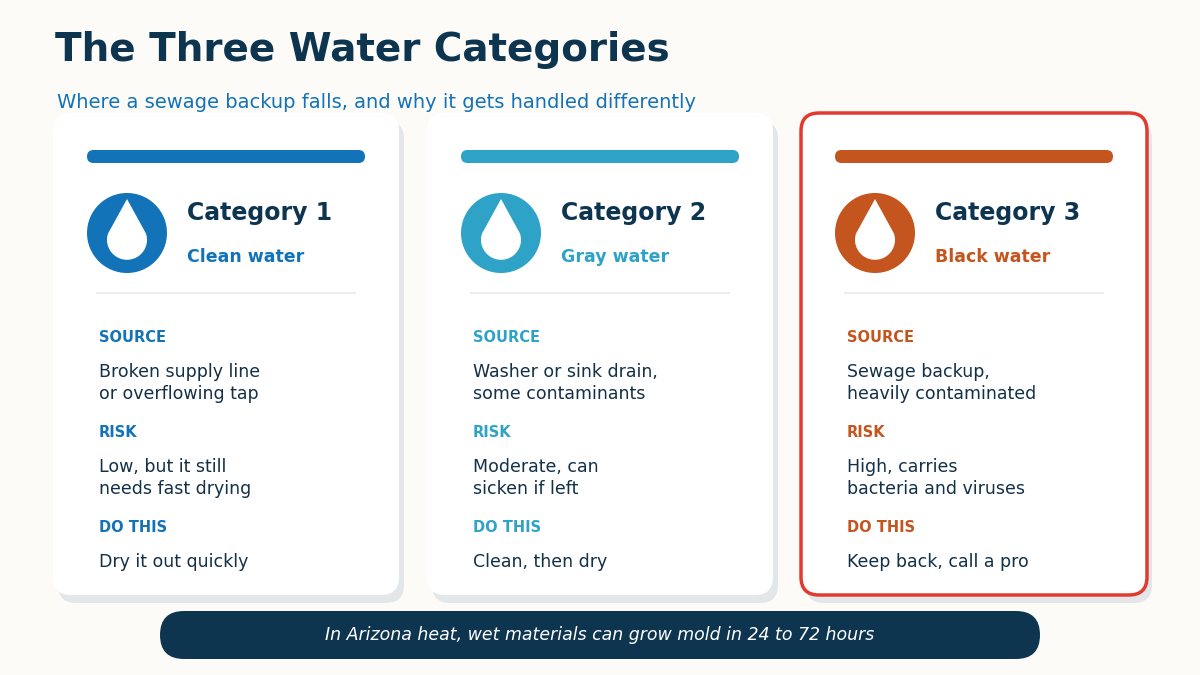
Restoration pros sort water into three categories. Clean water from a supply line is category one. Slightly dirty gray water from a washing machine or a sink drain is category two. Sewage is category three, often called black water, and it’s the most dangerous kind.
Black water can carry bacteria like E. coli, along with viruses and parasites. The CDC notes that raw sewage holds dozens of disease causing organisms. Contact with it, or even with the air and surfaces around it, can lead to stomach illness, infections, and skin or eye irritation. That’s why sewage is treated as a biohazard, not just a mess to wipe up.
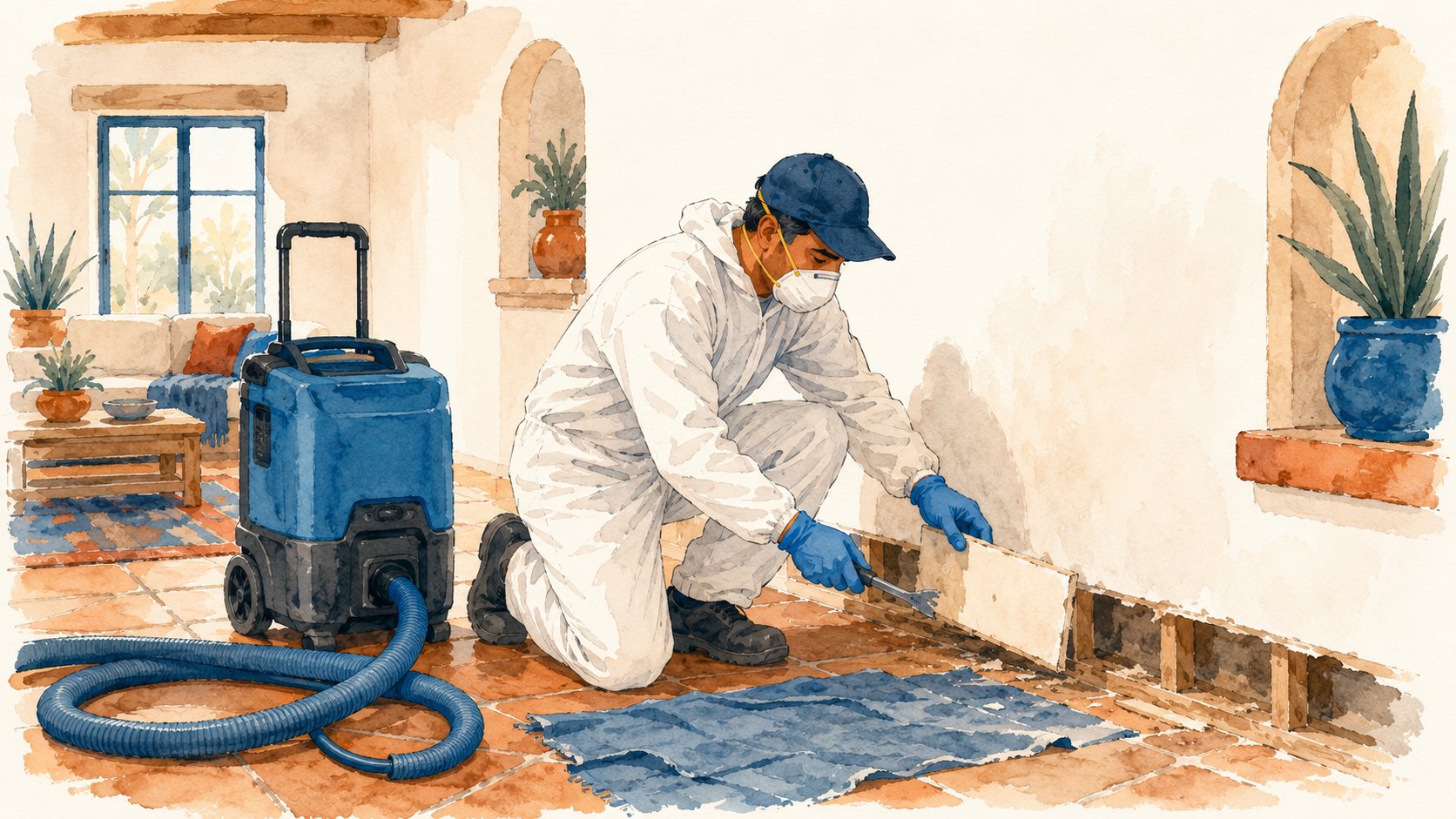
It also explains a rule that surprises a lot of homeowners. Porous materials that soak up sewage, like drywall, carpet, padding, and insulation, usually can’t be cleaned and saved. They have to be cut out and thrown away, often a foot or more above the highest water line. Hard, non porous surfaces like tile, metal, and sealed concrete can usually be disinfected and kept.

Sewage backup cleanup starts with your safety
The moment you realize a backup is sewage, your first job is protecting the people in your home, not the floor. Here’s what to do right away.
- Keep everyone away. Get kids and pets out of the room and shut the door if you can.
- Stop using water. Don’t flush toilets, run the washer, or use sinks. Every drop you add can push more sewage up through the lowest drains.
- Turn off the HVAC. Running the air conditioner or heat can pull contaminated air into the ducts and spread the smell and germs through the house.
- If you can reach it safely and dry, cut the power to the affected area at the breaker. Never step into standing water to reach an outlet or panel.
- Don’t try to clean it yourself. A regular mop, some towels, and a household bucket can’t disinfect black water, and you can make yourself sick trying.
Once people and pets are safe, call a licensed restoration company that handles sewage. Real sewage backup cleanup needs protective gear, commercial extraction, and hospital grade disinfectant, none of which lives in a normal garage. If the backup came alongside a flooded room, our guide on your first 24 hours after a flooded home walks through the wider cleanup too.
What a professional cleanup actually looks like
When a crew arrives, the work follows a fairly consistent path, even if the timeline shifts with how far the water spread.
First they find and stop the source, then extract the standing sewage with truck mounted or portable equipment. Next they remove the porous materials that can’t be saved and bag them as waste. After that comes the part you can’t match with home supplies: several rounds of cleaning and disinfection with EPA registered antimicrobial products, HEPA vacuuming, and treatment of any ducts the contamination reached.
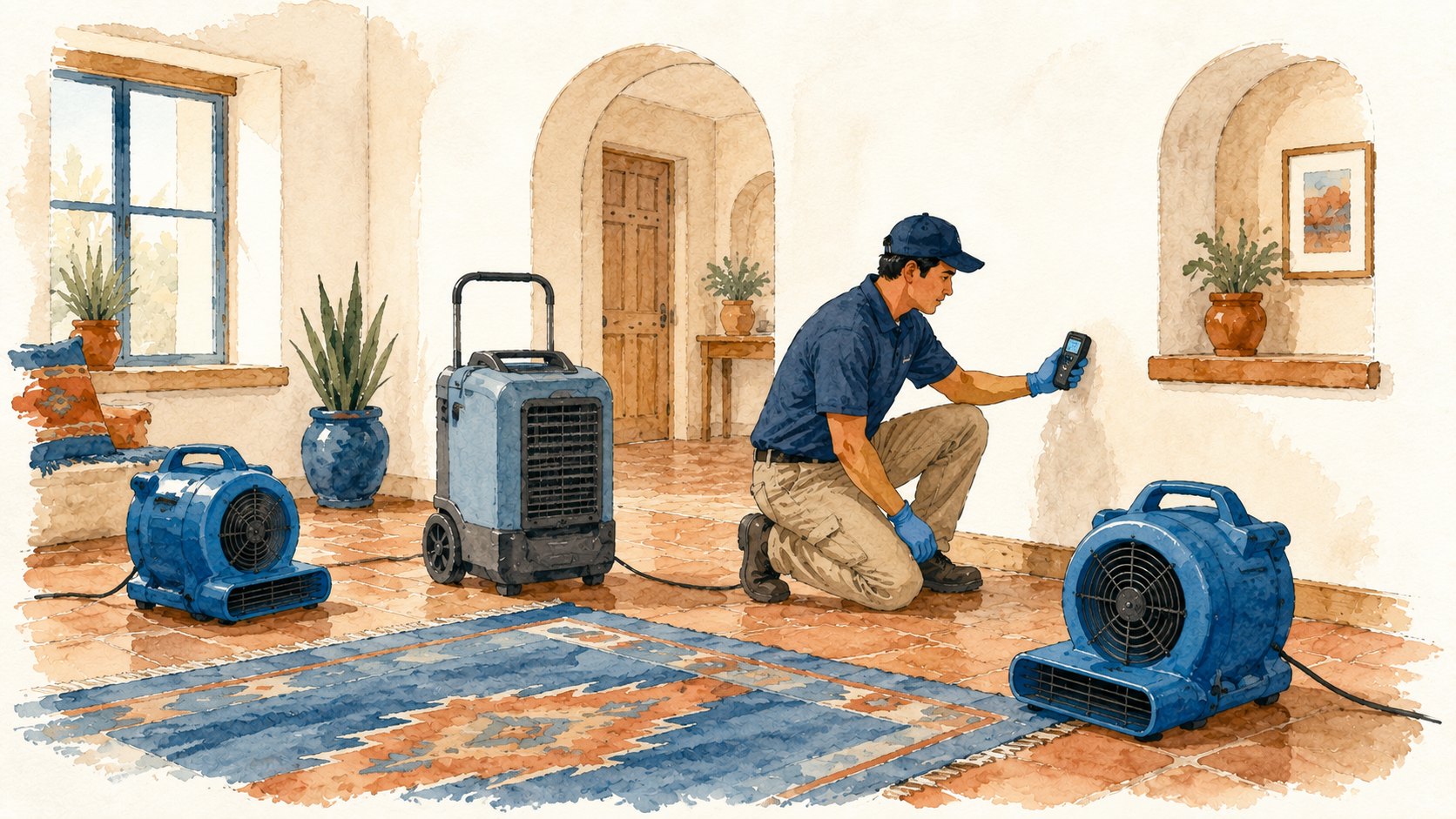
Only then does drying begin. Crews set commercial air movers and dehumidifiers, then place moisture meters in the walls and floor to confirm everything is truly dry before anything gets rebuilt. Jumping straight to drying without the disinfection step is exactly how odors and mold come back weeks later.
Depending on how far the water traveled, active cleanup and drying can run several days, and rebuilding any removed drywall or flooring adds more time after that. A good company keeps you updated at each step so you’re never guessing.
Why Glendale homes see sewage backups
Glendale homes back up for two main reasons, and summer makes both worse.
The first is the ordinary clog. Grease, wipes, and tree roots slowly narrow your main sewer line until it can’t keep up, and everything backs up into the lowest drains. Glendale’s very hard water speeds this along by leaving mineral scale inside older pipes.
The second is our monsoon. From mid June into September, a single storm can drop an inch or two of rain in under an hour. When that surge overwhelms the city system, back pressure can push water and sewage up through floor drains in garages and laundry rooms, and sometimes right up through toilets. Homes across Peoria, Surprise, Sun City, and Litchfield Park all share this seasonal risk.
The Arizona heat makes drying urgent
Here’s where Glendale differs from a cooler climate. Mold can start growing in 24 to 72 hours on wet materials, and our summer heat and monsoon humidity push that toward the fast end. A backup that looks small on Saturday can turn into a mold problem by Tuesday if wet drywall and padding sit untouched. Our guide on how fast mold grows in Arizona heat digs into that clock.
That’s another reason not to wait and not to simply air it out yourself. The faster contaminated materials come out and the space is properly dried, the less chance mold and lingering odor ever get a foothold.
Common mistakes to avoid
- Wiping it down and calling it done. Surface mopping leaves bacteria behind and spreads them around the room.
- Running fans before the sewage is removed. That just blows contaminated mist through the house.
- Saving soaked carpet or drywall to cut costs. Category three water makes those materials a health risk, not a bargain.
- Waiting a day to see if it dries on its own. In Arizona heat, that day is often the difference between a dry room and a mold problem.
- Assuming insurance automatically covers it, which brings us to the next point.
Does insurance cover sewage backup cleanup?
This one catches people off guard. A standard Arizona homeowners policy often covers sudden internal water, like a burst supply line, but it usually won’t cover sewer or drain backup unless you’ve added a specific backup endorsement. That optional coverage tends to be inexpensive, and it’s worth asking your agent about before monsoon season rather than after.
Flooding from outside the home is a separate issue too. Surface flooding usually needs a standalone flood policy, which most West Valley homeowners don’t carry by default. None of this is guaranteed, so read your own policy or call your agent, since coverage varies by home and insurer. For more on the local side, see our post on whether Arizona homeowners insurance covers water damage. Whatever you carry, photograph everything before any cleanup begins.
A West Valley example
Picture a family near 67th Avenue and Bell Road after a July storm. Water started seeping up through the garage floor drain during the heaviest rain, carrying a sewage smell into the laundry room. They did the right things: kept the kids and dog out of the room, stopped using water, and called for help instead of reaching for a mop.
Because they moved fast, the crew extracted the water, removed only the lower foot of drywall and the wet baseboard, disinfected the slab, and had fans running that same evening. The damage stayed small. Had they waited until morning, the heat would have handed mold a real head start.
What to do next
If you’re looking at a sewage backup right now, keep it simple. Get everyone away from the water, stop using water in the house, turn off the HVAC, and call a licensed restoration pro who handles sewage. Don’t try to clean black water yourself. The goal in that first hour is safety, not scrubbing. You can see the kind of help available on our Glendale water damage services page.
Key takeaways
- Sewage is category three black water, a biohazard that can carry bacteria, viruses, and parasites.
- Your first move is safety: keep people and pets away, stop using water, and don’t clean it yourself.
- Porous materials that soak up sewage usually have to be removed, not dried and saved.
- Glendale’s monsoon surges and hard water clogs are the common local causes.
- Arizona heat can start mold in 24 to 72 hours, so fast professional cleanup matters.
- Standard policies often exclude sewer backup unless you added an endorsement.
Frequently asked questions
Can I clean up a small sewage backup myself?
It really isn’t worth the risk. Even a small backup is category three water that can carry disease causing bacteria and viruses. Household mops and cleaners can’t disinfect it, and you can spread germs or breathe them in. Keep people back and call a pro.
How fast do I need to act on a sewage backup in Glendale?
Quickly. Beyond the health risk, Arizona heat and monsoon humidity can start mold on wet materials in about 24 to 72 hours. The sooner contaminated materials come out and the area is dried, the smaller the damage stays.
Will my homeowners insurance pay for sewage backup cleanup?
Often not by default. Many Arizona policies cover sudden internal water but exclude sewer and drain backup unless you added a backup endorsement. Coverage varies, so check your policy or ask your agent, and photograph the damage before any cleanup.
Why does sewage back up during monsoon storms?
Heavy rain can overwhelm the city sewer and storm system in a short time. The pressure pushes water and sewage backward through the lowest drains in your home, like garage and laundry floor drains, and sometimes toilets.
Glendale AZ Water Damage is a water damage information and lead request service. We are not a licensed restoration contractor, and this article is general information, not professional restoration, insurance, or health advice. A licensed local pro should assess your specific situation, since every home and every backup is different.
If you’re dealing with a sewage backup in Glendale or the West Valley, don’t wait it out. Reach out through our site or call the number at the top of the page for fast 24/7 help, and we’ll connect you with a local pro who can make your home safe again.