
You toss in a load of towels, step away to handle something else, and twenty minutes later you walk back into a laundry room with water creeping across the tile toward the hallway. It’s one of those small home disasters that somehow feels bigger by the second. In a Glendale home the clock matters even more than most people expect, because our West Valley heat can turn a damp floor into a mold problem in a day or two. So the way you handle that first hour counts.
Here’s the reassuring part. Most overflows are very manageable if you move quickly and in the right order. A calm washing machine overflow cleanup comes down to three things: stop the water, get it up fast, and dry everything out completely. This guide walks you through each step, from shutting off the supply to drying the room, plus how to tell when it’s time to call a local pro.
First, stop the water and cut the power
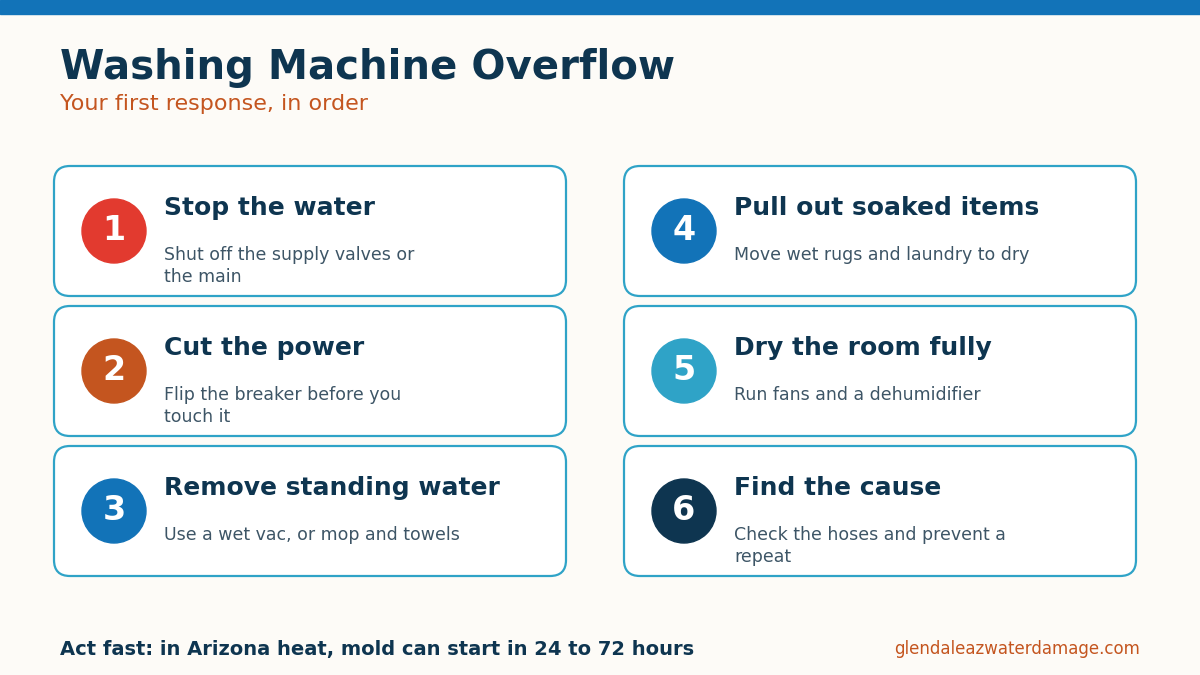
Before you grab a single towel, stop the water at its source. Reach behind the machine and turn off both supply valves, the hot and the cold. If they’re stuck or you can’t get to them, shut off your home’s main water valve instead. That one move keeps a small overflow from becoming a big one.
Resist the urge to hit cancel on the control panel. On many machines that just kicks off the drain cycle and pushes more water out. Simply stopping the supply and letting the machine sit is safer.
Water and electricity don’t mix, so think about power next. If water is anywhere near an outlet or the machine’s plug, never wade into standing water to reach it. Cut the power to the laundry area at your breaker panel first, then unplug the washer once it’s safe. When in doubt, keep your hands dry and your feet out of the water until the breaker is off.
Get the water up fast, and why speed matters here
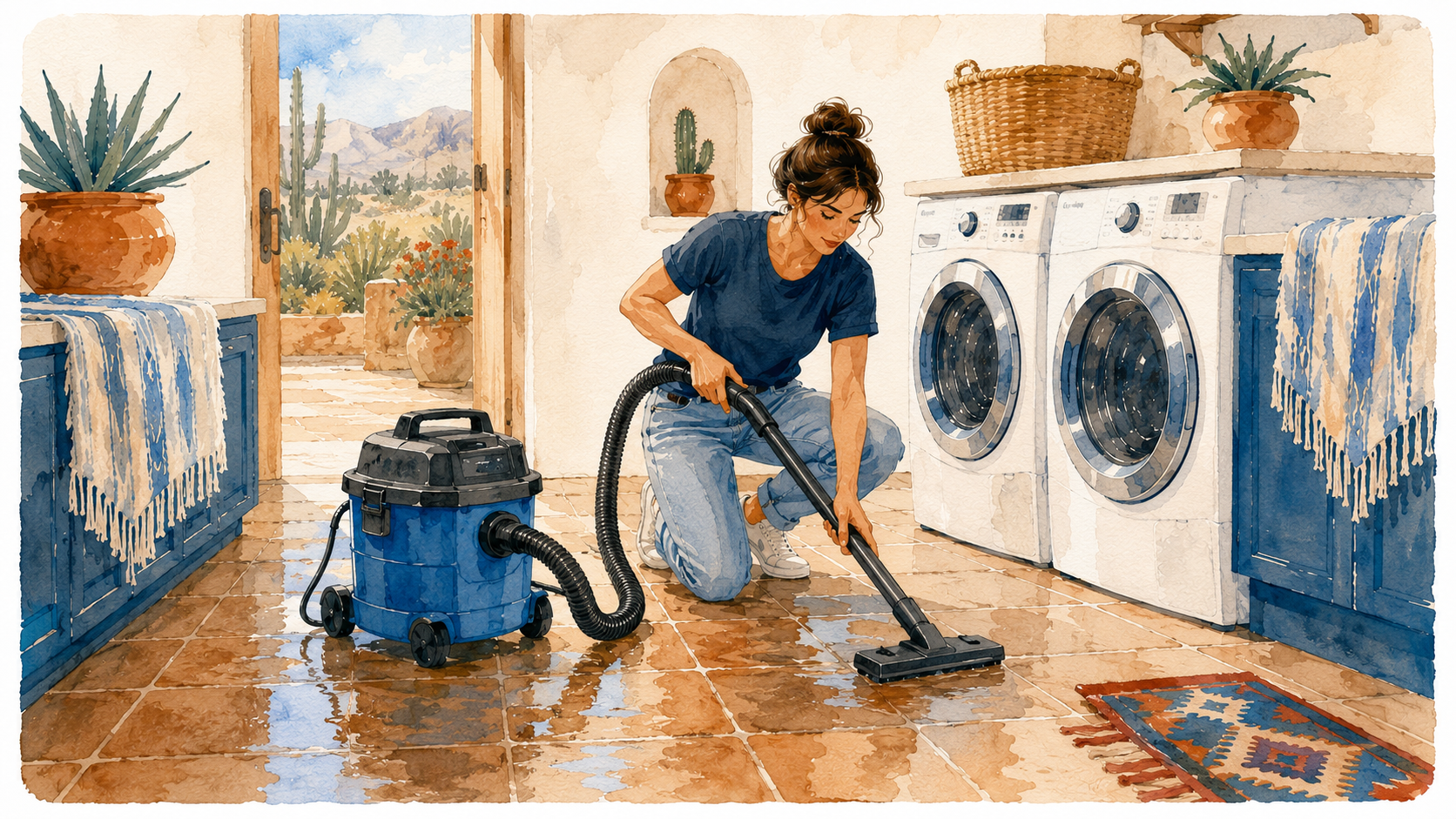
Once the water’s shut off, the goal is simple: remove standing water as quickly as you can. A wet/dry vacuum is your best friend for this. No vacuum? Old towels, a mop and bucket, and a squeegee will do the job, just slower. Work from the edges inward so you’re not chasing water into the hallway or a closet.
Speed isn’t just about tidiness. In our climate, mold can take hold in as little as 24 to 72 hours once materials stay wet, and the summer heat only speeds that along. Pull up wet rugs, mats, and any laundry that soaked up water, and move them somewhere they can dry out. Because water from a supply line is usually fairly clean, most of those items can be saved if you act quickly. If you want the full picture on how quickly mold moves in our heat, our guide on how fast mold grows in Arizona is worth a read.
Washing machine overflow cleanup, step by step
Here’s the order that keeps things calm and thorough. Follow it top to bottom and you’ll cover the parts people usually miss.
- Shut off the water supply valves, or the home’s main if you can’t reach them.
- Cut power to the area at the breaker, then unplug the washer once it’s safe.
- Remove standing water with a wet/dry vacuum, or mop and towels.
- Pull out soaked rugs, mats, and laundry, and set them somewhere to dry.
- Wipe down the machine, the floor, and the baseboards, then check behind and under the washer.
- Set up fans and a dehumidifier to dry the room fully.
- Look for the cause so it doesn’t happen again, and inspect the hoses.
The step people skip most often is checking behind and under the machine. Water loves to slide under the washer and into the wall cavity, where it sits unseen and quietly feeds mold. A few minutes with a flashlight now saves a much bigger headache later.
Is the water clean or dirty?
Not all overflow water is the same, and knowing which kind you’re dealing with changes how you clean it. When the water comes straight from the supply hose, it’s essentially clean, which makes cleanup safer and more forgiving.
If the overflow happened because the drain backed up, though, that water may carry soap scum, lint, and bacteria from the drain line. Clean water can turn dirty the longer it sits, too. For any water that came up through a drain, wear gloves and rubber boots, keep kids and pets out of the room, and disinfect the floor once it’s dry. If the water smells foul or looks gray, treat it as contaminated and lean toward calling a pro rather than handling it bare handed.
Dry the room out completely
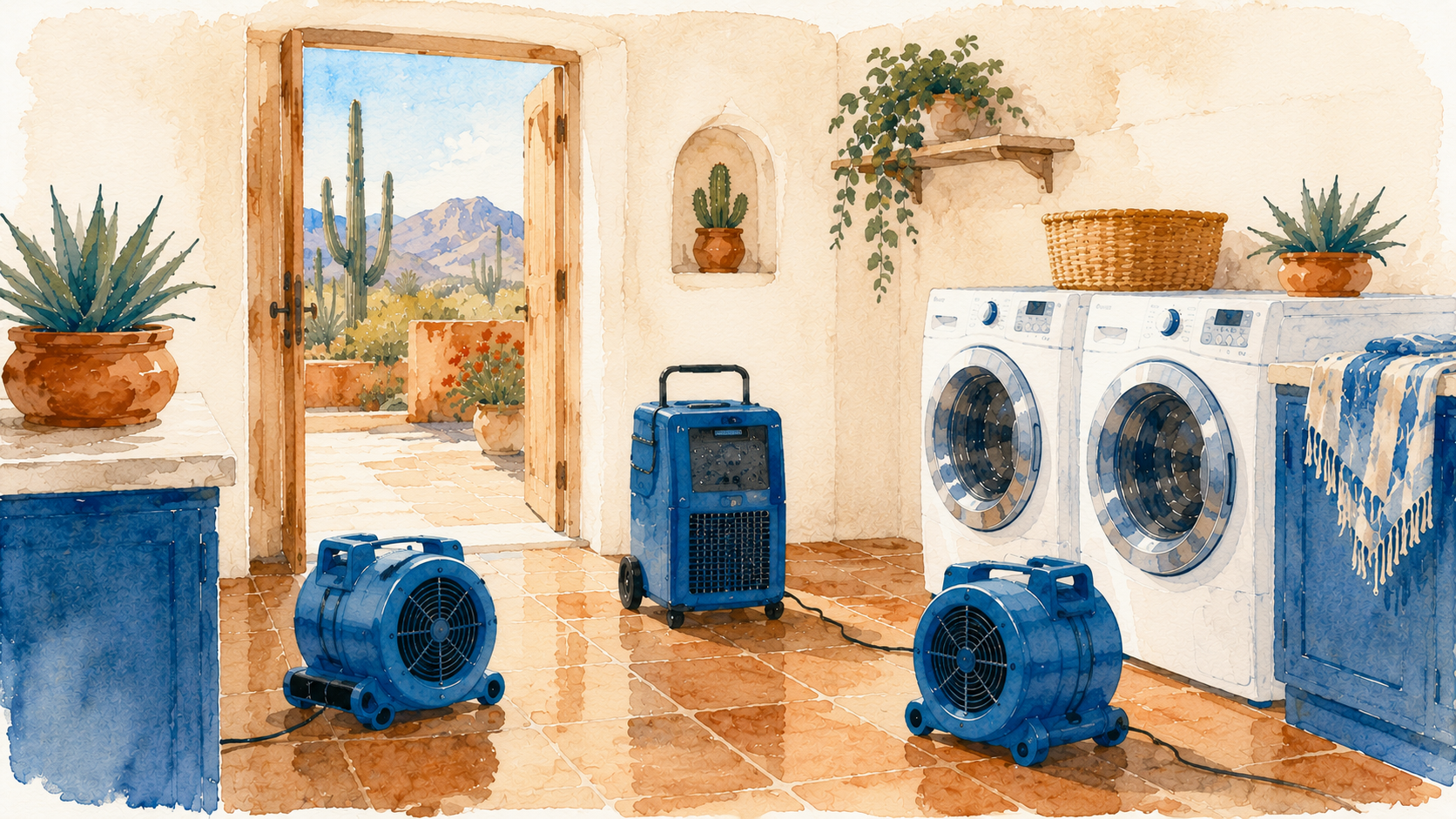
This is where Glendale homeowners have a small advantage. Our dry summer air pulls moisture out quickly, so run fans, aim them low across the floor, and add a dehumidifier if you have one. During monsoon weeks the outdoor air gets muggy, so keep windows closed and let the dehumidifier do the work on those days.
Surfaces can feel dry to the touch while the subfloor, the bottom of the drywall, and the wall framing are still damp. If a baseboard stays wet or you smell a musty note after a day or so, moisture is hiding somewhere. That’s the point where a moisture meter, or a quick call to a local pro who has one, earns its keep. Don’t rush to declare victory until everything is completely dry, not just dry on the surface.

What caused the overflow, and how to prevent the next one
Overflows almost always trace back to a handful of causes. A clogged drain is the most common, usually from lint, hair, and soap scum building up over time. Others include a kinked or blocked drain hose, a worn water inlet valve, overloading the drum, or an aging pump.
A little upkeep goes a long way toward keeping it from repeating:
- Add a mesh lint trap to the end of the drain hose and clean it regularly.
- Check the supply and drain hoses every few months for kinks, cracks, or bulges.
- Consider swapping old rubber supply hoses for braided steel ones, which are far less likely to burst.
- Use the right amount of high efficiency detergent so suds don’t overwhelm the drain.
- Avoid overloading the drum, and give the drain hose at least a little breathing room in the standpipe.
If your laundry room shares a wall with other water using appliances, glance at those too. Homes in the West Valley often run the washer, water heater, and softener close together, so a quick look can catch a second problem early.
Common mistakes to avoid
A few habits turn a minor overflow into a real repair. Steer clear of these:
- Letting the room “air dry” on its own. Arizona air is dry, but hidden moisture in walls and subfloor won’t clear without fans and airflow.
- Mopping only the surface and ignoring what slipped under the machine or into the wall.
- Forgetting to check the room below or the adjacent rooms, especially in a two story home.
- Flipping the breaker back on before the outlets and floor near them are dry.
- Assuming every overflow is harmless. Drain backups need more care than a clean supply spill.
When to call a Glendale pro
Plenty of small, clean overflows are a solid do it yourself job. Some situations, though, are better handed to someone with the right gear. Reach out to a local restoration pro if the water spread into walls, cabinets, the subfloor, or another room, if it came up through the drain and looks or smells contaminated, if it sat wet for more than a day, or if you notice a musty odor that won’t quit.
Take Maria, a homeowner near Arrowhead who mopped up a laundry overflow one evening and figured she was done. Two days later a faint musty smell led her to a soft spot at the base of the drywall, where water had wicked up behind the baseboard. A moisture meter and a couple of days of drying caught it before it became a mold job, which is exactly what a pro is for.
Key takeaways
- Shut off the water and cut the power before you start cleaning.
- Remove standing water fast, because mold can start within 24 to 72 hours in our heat.
- Check under and behind the machine, where water hides and dries slowly.
- Treat drain backups as contaminated and use gloves, or call a pro.
- Dry the room completely with fans and a dehumidifier, not just the surface.
- Fix the cause, inspect the hoses, and add simple prevention.
Frequently asked questions
Does homeowners insurance cover a washing machine overflow?
It often does when the overflow is sudden and accidental, like a burst hose or a failed valve. Coverage commonly gets denied when the damage came from slow, long term leaking or a lack of maintenance. Every policy is different, so check yours and document everything with photos before you clean up.
How long before mold starts after an overflow?
Mold can begin growing in about 24 to 72 hours once materials stay damp, and Arizona’s summer heat can push that along. That’s why drying quickly and fully matters so much, and why hidden moisture is the real risk.
Can I clean up a washing machine overflow myself?
Usually yes for a small spill of clean supply water. Stop the water, vacuum or mop it up, and dry the room thoroughly. Call a pro if the water is contaminated, spread into walls or floors, or sat wet for more than a day.
Should I replace my washing machine hoses?
It’s smart to inspect them a few times a year and replace any that are cracked, bulging, or kinked. Many homeowners upgrade old rubber hoses to braided steel, which hold up better and are much less likely to fail.
If you’d rather not sort out the drying and hidden moisture on your own, that’s completely normal. You can start with our step by step help for a flooded home in Glendale, or see who to call for emergency water removal at any hour. You can also see how we help at our Glendale services section.
Glendale AZ Water Damage is a water damage information and lead request service, not a licensed restoration contractor. This article is general information, not professional restoration, insurance, or health advice, and a licensed local pro should assess your specific situation. If water has spread into your walls or floors, or you’re worried about mold, reach out through our homepage or call the number at the top of the site for fast, 24/7 help.