
You flush, and instead of swirling away the water starts to climb. It rises toward the rim, tips over the edge, and spreads across the bathroom tile before you can grab a towel. It’s a small home emergency that feels a lot bigger while it’s happening, and here in Glendale the Arizona heat gives you even less time to get things dried out.
Take a breath. Most of the time you can handle a minor overflow yourself, and good toilet overflow cleanup really comes down to a handful of calm steps: stop the water, figure out how dirty it is, get it up fast, disinfect, and dry the room completely. What matters most is knowing when the water is clean enough to mop up yourself, and when it’s dirty enough that you should call a local pro.
Stop the water first
Before you reach for a towel, cut off the water. Look behind or below the toilet for the small shutoff valve on the wall and turn it clockwise until it stops. That’s the fastest way to keep more water from feeding the bowl.
If you can’t find the valve or it’s stuck, lift the tank lid and press the rubber flapper down over the hole, or lift the float so the tank stops filling. Shutting off the water is the single most important thing you can do in the first minute, because every other step gets easier once the source is off.
One safety note: if the water reached an outlet or a plug strip, keep your hands dry and switch off power to that part of the house at the breaker first.
Is the water contaminated? Clean, gray, or black
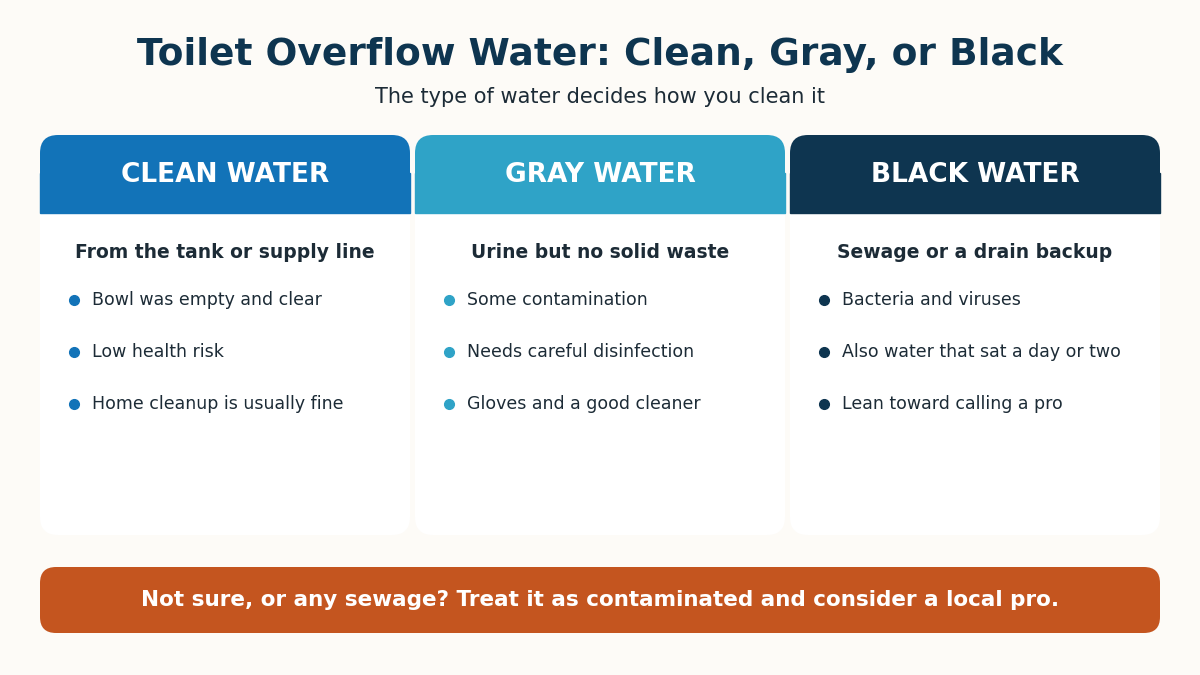
Not every overflow is the same, and the difference decides how you clean. Restoration pros sort water into three categories, and it’s worth knowing which one you’re looking at.
Clean water comes from the supply line or the tank, the part of the toilet that holds fresh water before you flush. If the bowl was empty and clear when it spilled, you’re most likely dealing with clean water.
Gray water carries some contamination, like an overflow with urine but no solid waste. It needs more careful disinfection than clean water does.
Black water is the serious one. Any overflow with sewage, solid waste, or a sewer line backup is black water, and it can carry bacteria, viruses, and other things that make your family sick. Water that has sat for a day or two drifts into this category too, as bacteria multiply in the warmth.
A quick rule of thumb: if it’s clear tank or supply water, careful cleanup at home is usually fine. If there’s any sewage, a backup coming up the drain, or you simply aren’t sure, treat it as contaminated and lean toward calling a professional.
Toilet overflow cleanup, step by step
Once the water is off and you know roughly how dirty it is, here’s how the cleanup goes.
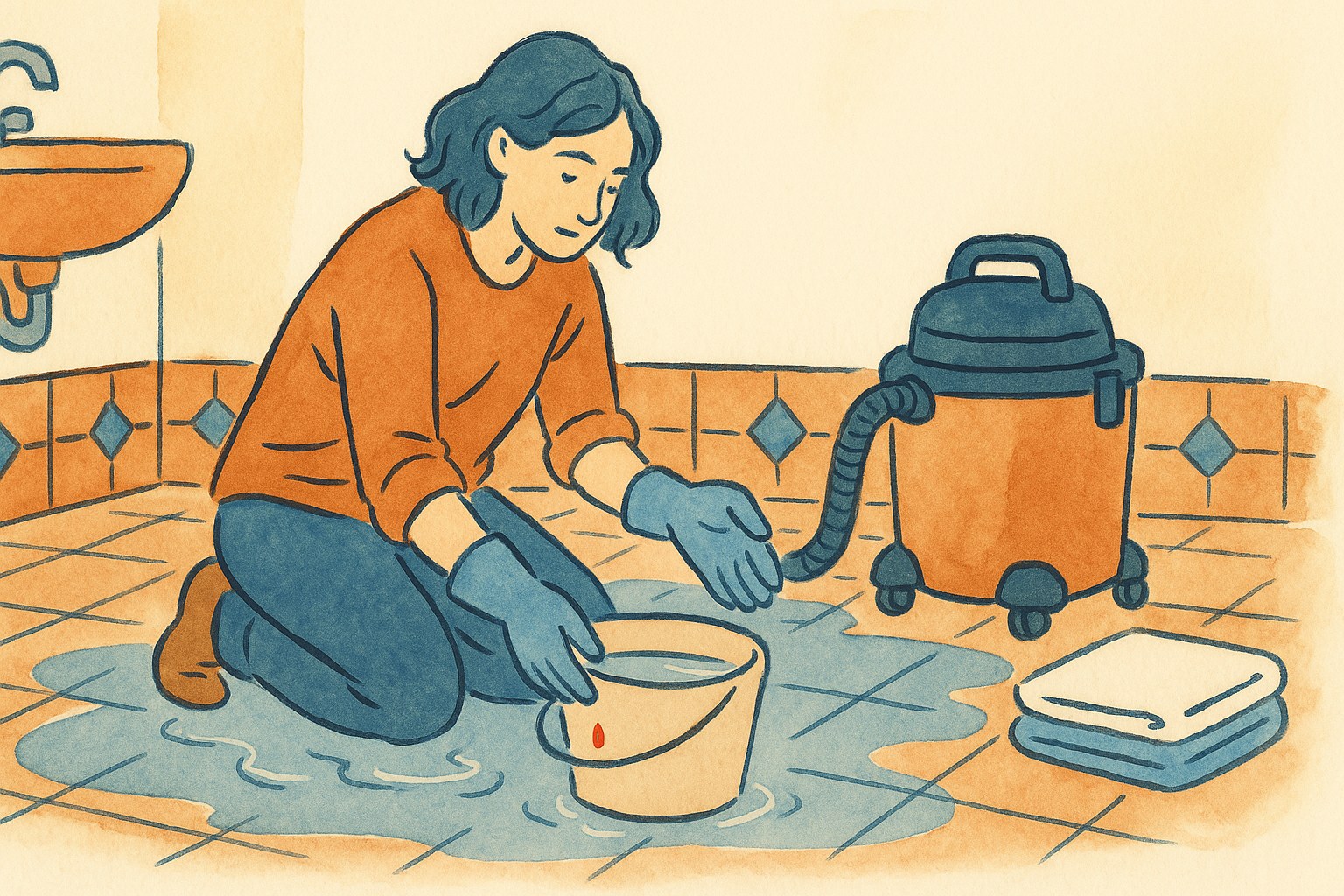
Contain it. Lay old towels around the edge of the spill so it stops creeping into the hallway or under the vanity. The smaller you keep the wet area, the faster the rest goes.
Get the water up. Scoop standing water into a bucket, or use a shop vacuum that’s rated for liquids. A regular household vacuum won’t handle water and can be dangerous, so skip it. For a thin layer, towels or a mop work fine.
Bag the soft stuff. Bath mats, rugs, and anything soft that soaked up contaminated water should go straight into a sealed trash bag. Cloth that touched gray or black water is very hard to fully disinfect, and it’s usually not worth saving.
Disinfect every surface the water touched. A common mix is about one cup of bleach to one gallon of water, worked over the tile, baseboards, and base of the toilet with a cloth or brush. Let it sit a few minutes so it actually kills what’s there, then wipe it down.
Rinse and dry. Rinse the cleaned surfaces with fresh water, wipe them dry, then wash your hands well and clean or toss whatever tools you used. That’s the whole toilet overflow cleanup routine for a minor spill. For a bigger job, our guide on washing machine overflow cleanup follows the same water up, disinfect, dry rhythm.
Protect yourself while you clean
Contaminated water isn’t something to handle bare handed. Wear waterproof gloves, and add a mask and eye protection if any sewage is involved. Open a window and run the bathroom fan so you’re not breathing fumes.
Keep kids and pets out of the area until it’s cleaned and fully dry. When you’re finished, wash any clothing that got wet on its own, in hot water.
Dry the room out, and watch the Arizona clock
Getting the visible water up is only half the job. The moisture that soaks into grout, under the baseboard, and down into the subfloor is what causes lasting water damage if you leave it sitting.
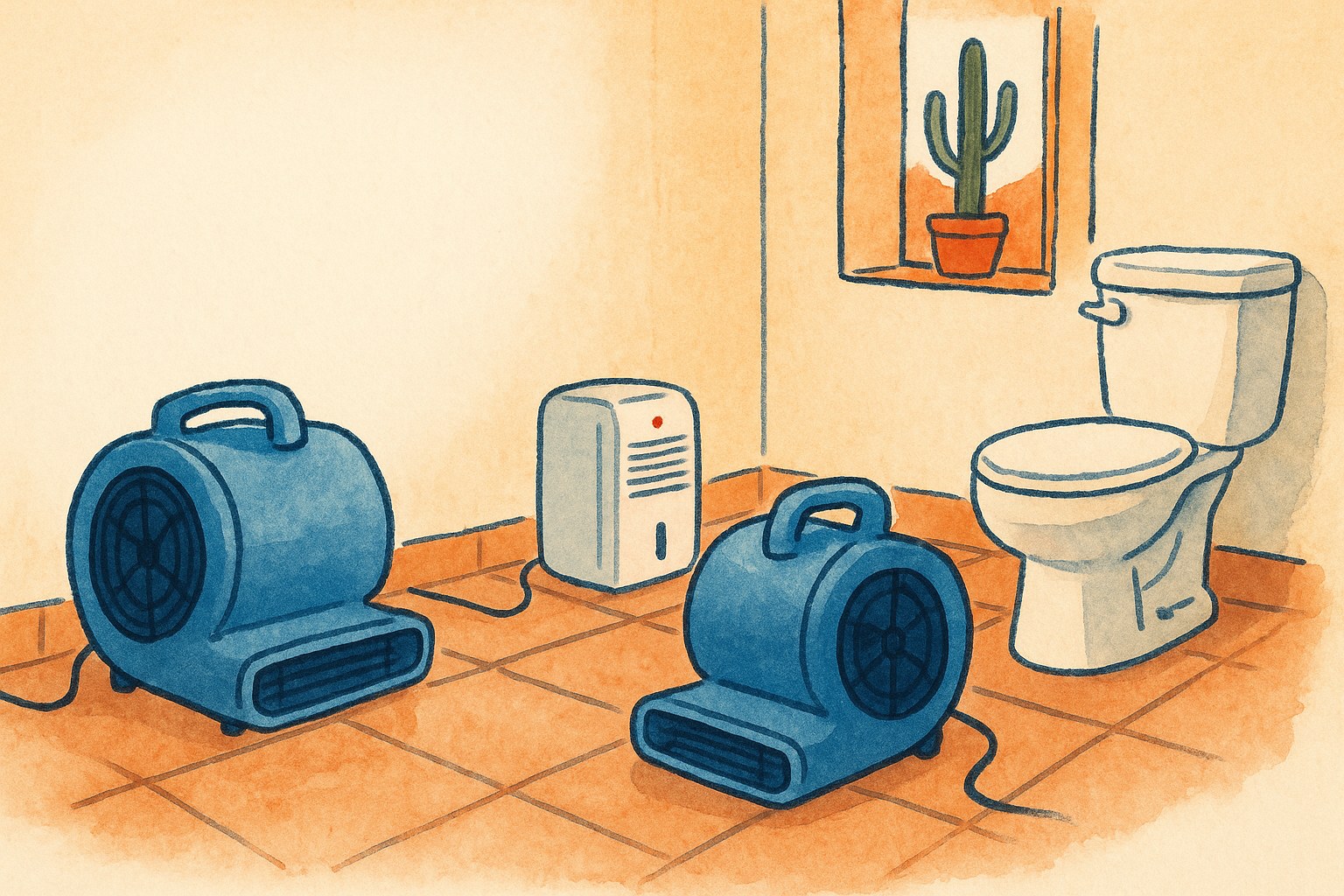
Set up fans and, if you have one, a dehumidifier, and aim the moving air across the wet floor. Pull the toilet base and the vanity toe kick into that airflow, since water loves to hide in those tight spots.
Here’s where Glendale and West Valley homeowners have to move faster than the advice written for cooler places. In our heat, mold can start growing in as little as 24 to 72 hours on a damp surface. During monsoon season the extra humidity slows drying down, so give it more time and confirm everything is truly dry, not just dry on the surface, before you call it done. For the full picture, here’s how fast mold grows in Arizona heat.
Why did the toilet overflow in the first place?
Knowing why it happened helps you keep it from happening again. The most common cause by far is a clog, usually too much toilet paper or something that never should have gone down, like wipes, cotton products, or a kid’s toy. Those so called flushable wipes are a frequent culprit, since they don’t break down the way paper does.
An overflow can also be mechanical. A stuck float, a worn flapper, or a failing fill valve can keep sending water into the bowl even without a clog. And if more than one drain is backing up at once, the trouble may be in your main sewer line rather than the toilet. To prevent the next one, flush only toilet paper, teach the kids the same, and deal with a slow flushing toilet before it turns into a full backup.
Common mistakes to avoid
A few missteps can turn a small overflow into a much bigger repair:
- Mopping up dirty water without disinfecting afterward, which leaves bacteria behind.
- Running a regular household vacuum over standing water, which can ruin the vacuum and create a shock hazard.
- Trying to save soaked rugs, mats, or cardboard that touched gray or black water.
- Stopping once the floor looks dry and ignoring the moisture hiding under the baseboard and subfloor.
- Waiting a day to deal with it, which in the Arizona heat is often all mold needs to take hold.
When to call a pro
Plenty of small, clean overflows are a mop and bucket job. Some are not, and knowing where that line falls protects your money and your health.
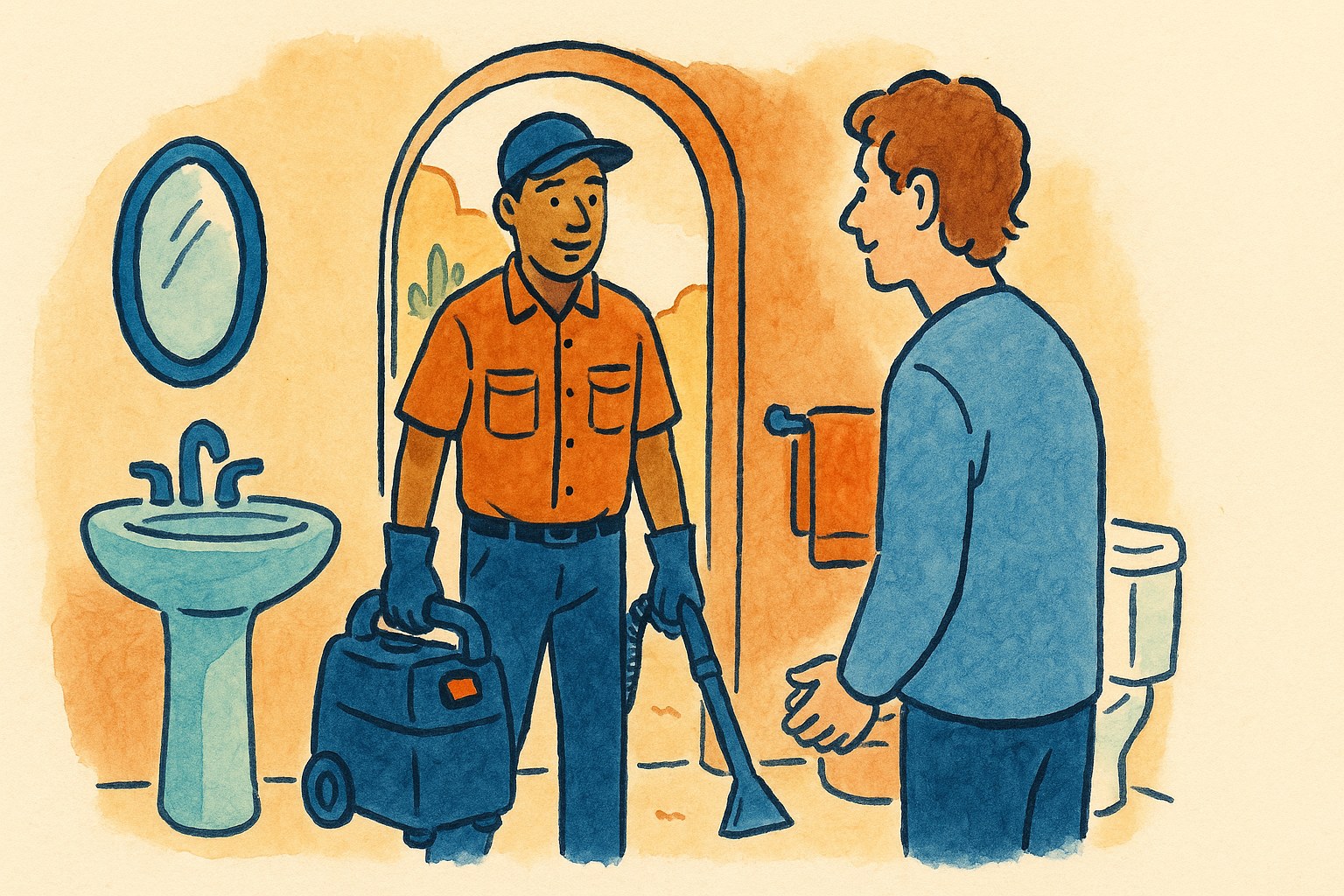
Call a professional when the water was sewage or a drain backup, when it soaked into carpet, walls, or the subfloor, when it spread well beyond the bathroom, or when it sat long enough to smell. At that point, toilet overflow cleanup is less about a mop and more about proper extraction, contaminated water disinfection, and structural drying, the jobs where the right equipment really does make the difference.
Here’s a real example from the West Valley. A homeowner near 67th Avenue and Bell Road had a guest bathroom toilet back up while the family was out for the afternoon. By the time they got home, gray water had spread under the vanity and into the hallway carpet. They did the right things: shut the water off, kept everyone out, and called for help instead of running a household vacuum across it. A local crew extracted the water, pulled the soaked carpet pad, disinfected, and dried the room before the heat could turn it into a mold problem. You can see that same calm approach in our first 24 hours after a flooded home guide, or reach a pro through our water damage services.
Key takeaways
- Shut off the water at the valve or the float first, then start cleaning.
- Decide if the water is clean, gray, or black. Any sewage means treat it as contaminated.
- Get the water up fast, bag soaked porous items, disinfect, then rinse and dry.
- Dry thoroughly within a day or two, because Arizona heat can grow mold in 24 to 72 hours.
- When sewage, carpet, walls, or a wide area is involved, call a local pro.
Frequently asked questions
Is toilet overflow water dangerous?
It depends on what spilled. Clear water from the tank or supply line carries little risk, while an overflow with urine or sewage can carry bacteria and viruses. When in doubt, treat it as contaminated and disinfect thoroughly.
Can I clean up a toilet overflow myself?
A small, clean overflow is usually fine to handle yourself with towels, a bucket, and disinfectant. If it involved sewage, soaked into carpet or walls, or spread beyond the bathroom, bring in a professional.
How long do I have before mold grows?
Not long in our climate. Mold can begin to grow in about 24 to 72 hours on a damp surface, and Glendale’s heat speeds that up, so dry the room completely within a day or two.
Does homeowners insurance cover a toilet overflow?
A sudden, accidental overflow is often covered by a standard Arizona homeowners policy, while damage from a slow leak or a problem you ignored is commonly denied. A sewer or drain backup usually needs a separate backup endorsement. Coverage is never guaranteed, so read your own policy. Our overview of Arizona water damage coverage goes deeper.
Get help fast if it’s more than a mop can handle
Glendale AZ Water Damage is a water damage information and lead request service. We’re not a licensed restoration contractor, and this article is general information, not professional restoration, insurance, or health advice. Every overflow is a little different, so a licensed local pro should look at your specific situation.
If you’re dealing with a contaminated overflow or water that spread past the bathroom, don’t sit on it. Call for fast 24/7 help or reach out through our site, and we’ll connect you with a trusted local Glendale pro.