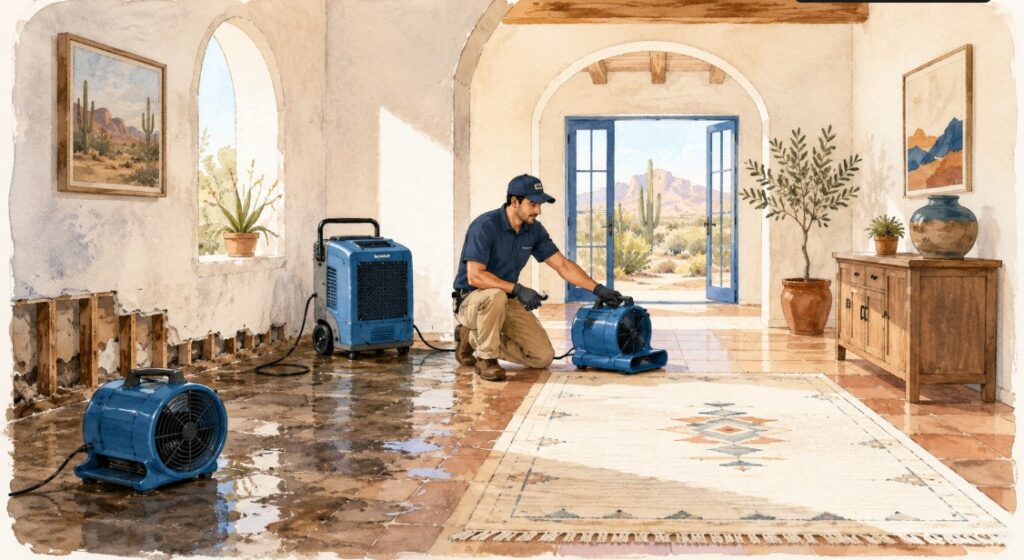
The fans have been running for two days, and you’re standing in your Glendale living room wondering when your home will feel normal again. The carpet’s pulled back, a machine hums in the corner, and a technician keeps pressing a little handheld gadget against the baseboards. If you’ve never been through this before, all that activity can feel like a mystery. You just want to know what’s happening, why, and when it ends.
Here’s the reassuring part. There’s a real, proven order to how a soaked home gets dried out and put back together, and once you understand the steps, most of the stress fades. What looks like chaos is actually a careful sequence, and every fan and meter has a job.
The water damage restoration process is the set of steps a licensed pro follows to take your home from wet and at risk back to dry, clean, and safe. In this guide we’ll walk through each stage the way it actually plays out in a West Valley home, how long it usually takes, and where Arizona’s heat and monsoon season change the picture.
What the water damage restoration process actually is
Restoration is not the same as a quick mop and a box fan. It’s a structured recovery that dries your home all the way down to the framing, kills off the conditions mold needs, and then rebuilds whatever had to come out. Pros across the country follow the same industry playbook, so the order rarely changes from one company to the next.
The reason it matters that much comes down to time. Water keeps moving after the leak stops. It wicks up drywall, soaks into subfloor, and travels along the bottom plate of your walls where you can’t see it. In our climate that hidden moisture is the real enemy, because Arizona heat can start growing mold in as little as 24 to 72 hours. A fast, orderly response is what keeps a small loss from turning into a big one.
The water damage restoration process, step by step
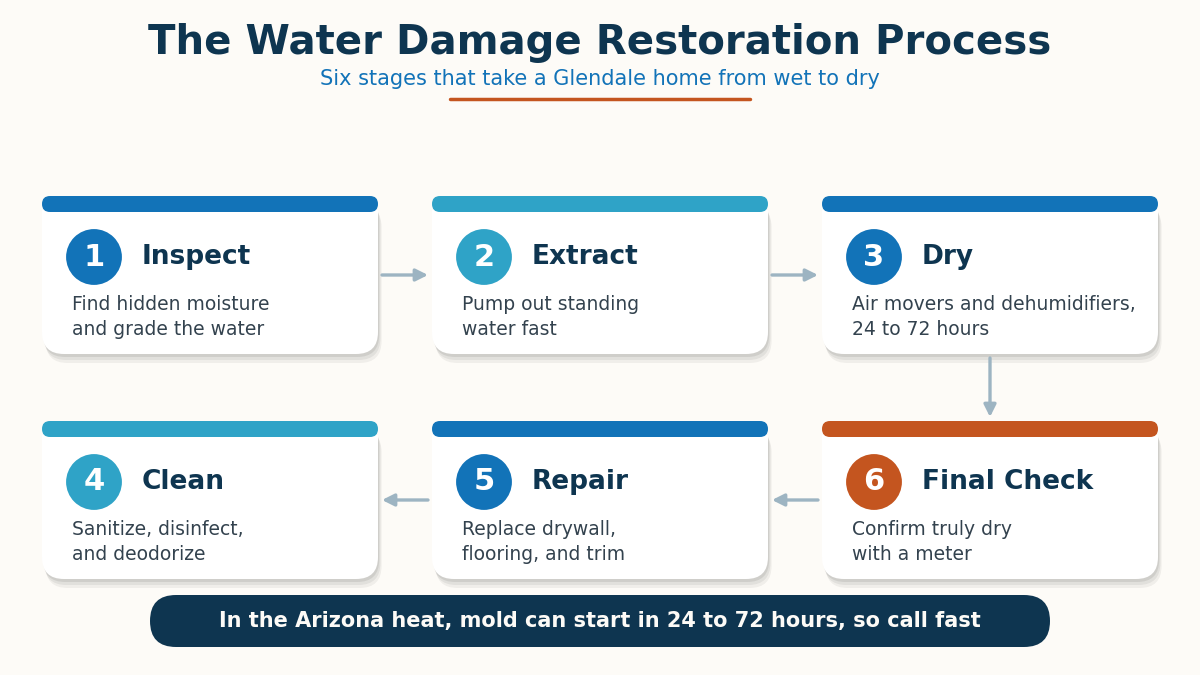
Every home is different, but a professional job almost always moves through these six stages in order. Knowing them helps you follow along and ask better questions.
1. Inspection and assessment
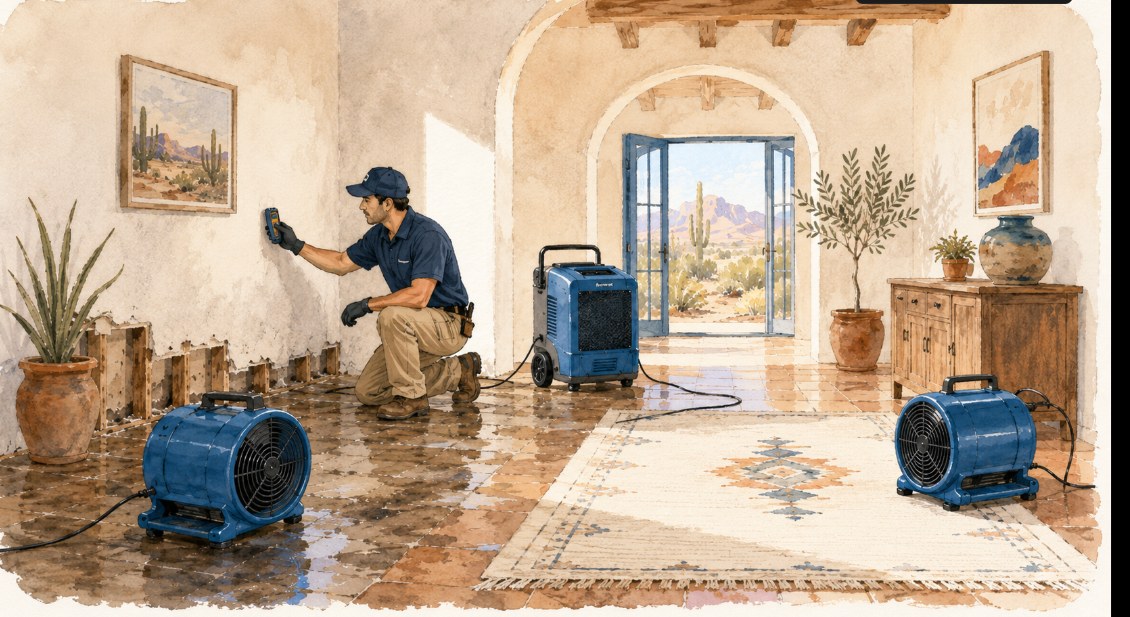
First a technician figures out how far the water went. They’ll use a moisture meter and often an infrared camera to find water hiding behind walls, under your tile, and inside cabinets. They also grade the water, from clean supply line water to gray water to contaminated black water, because that decides what can be saved and what has to go. This is also when they map out a drying plan for your specific home.
2. Water extraction
Next comes the water removal. Using truck mounted pumps and portable extractors, the crew pulls out standing water fast, sometimes hundreds of gallons of it. The sooner the water is gone, the less it can soak into your floors and walls. Wet carpet padding usually comes out here, and soaked belongings get moved somewhere dry.
3. Drying and dehumidification
This is the stage those humming machines belong to. Air movers push air across wet surfaces while dehumidifiers pull the moisture out of the air, and together they dry out materials you can’t reach with a towel. Drying a home well usually takes 24 to 72 hours, and the crew will come back to check readings until your walls and floors hit a safe, dry target. It’s tempting to rush this, but skipping it is how mold and warped floors show up weeks later.
4. Cleaning and sanitizing
Once things are dry, the crew cleans and disinfects the affected areas and any belongings worth saving. If the water was dirty, this step matters even more, and it often includes deodorizing to clear that damp, musty smell. Antimicrobial treatments help stop mold from getting a foothold while repairs are underway.
5. Repairs and restoration
Now your home gets put back together. Depending on the damage, this can be small, like new baseboard and a coat of paint, or larger, like replacing drywall, insulation, and flooring. In a serious loss it can stretch into structural work. This rebuild phase is what turns a dried out shell back into your living room.
6. Final inspection
Before the job is called done, a pro does one last moisture check with meters to confirm nothing damp is still hiding in your walls or subfloor. This final check is your proof the home is truly dry, not just dry on the surface. Ask for it, and ask to see the readings.
How long does the whole thing take in Glendale?
The honest answer is that it depends on how much water there was, what it touched, and how fast someone got to it. Drying alone runs a few days for most homes. A small, clean loss caught early might wrap up in under a week. A larger flood with structural repairs can run several weeks once the rebuild is figured in.
Our climate cuts both ways here. Dry desert air can help materials give up moisture, but the same heat speeds up mold, so the clock is less forgiving than people expect. During monsoon season, roughly July through September, humidity climbs and drying can take a little longer, which is exactly when a fast start matters most. Every timeline varies by home and situation, so treat these as rough ranges, not promises.

What it looks like in a real West Valley home
Picture a family near 67th Avenue and Bell Road who came home from a weekend away to a slow supply line leak under the kitchen sink. Water had crept across the tile and soaked into the base of two walls and the edge of the dining room carpet. Nothing looked catastrophic, but a moisture meter told a different story.
A crew extracted the standing water that afternoon, pulled the wet carpet pad, and set air movers and a dehumidifier running. They checked readings each day for three days until the walls came back dry, cleaned and treated the area, then replaced the padding and a strip of baseboard. Because the family called quickly, they avoided mold and kept most of their flooring. The point isn’t the exact days. It’s that a calm, ordered process turned a scary discovery into a manageable repair.
Common mistakes that make restoration harder
Most of the trouble we see comes from a few avoidable missteps. Watching for these can save you time, money, and a second round of damage.
- Waiting to call. Every hour lets water travel farther and raises the mold risk. Fast beats perfect.
- Assuming it’s dry because the surface feels dry. Moisture hides in wall cavities and under floors where your hand can’t reach.
- Only running a couple of household fans. That moves air but doesn’t remove the moisture from the air the way a dehumidifier does.
- Throwing everything out too soon. A pro can often tell you what’s salvageable, and your insurer usually wants it documented first.
- Skipping photos and notes. Documenting the damage before cleanup protects you if you file a claim.

What to do next
If you’re standing in a wet room right now, your job is simple. Stop the water at the source if you safely can, keep everyone away from anything wet near electrical outlets, and start taking photos. Then call a local pro who can begin the water damage restoration process before the mold clock runs down.
It also helps to understand the money side early. Coverage varies, but standard Arizona policies commonly cover sudden internal water like a burst pipe and often cover monsoon wind or hail roof damage, while flood usually needs a separate policy. Our guides on what restoration costs in Glendale and whether Arizona insurance covers water damage can help you plan. If you’re in the first hours of a mess, our what to do first and first 24 hours guides walk you through it step by step. You can also see the full range of help on our services page.
Key takeaways
- Restoration follows a clear six stage order: inspect, extract, dry, clean, repair, and a final moisture check.
- Drying usually takes 24 to 72 hours, and the whole job can run from under a week to several weeks depending on the damage.
- In the Arizona heat, mold can start within 24 to 72 hours, so calling quickly is the single biggest thing you control.
- Insurance often covers sudden internal water, frequently covers monsoon roof damage, and usually excludes flood without a separate policy.
- Always ask for that final dry reading before you consider the work finished.
Frequently asked questions
How long does the water damage restoration process take?
Drying most homes takes about 24 to 72 hours, and the full job, including repairs, can run from a few days for a small loss to several weeks for major damage. The size of the loss and how fast someone responded drive the timeline.
Can I handle water damage cleanup myself?
Small, clean spills caught right away can sometimes be handled on your own. But once water soaks into drywall, subfloor, or carpet pad, or if it’s dirty water, it’s worth calling a pro who can dry the hidden moisture and prevent mold.
Why do the drying fans have to run so long?
Building materials release moisture slowly, so air movers and dehumidifiers need time to pull it all out. Turning them off early leaves damp spots inside walls and floors, which is where mold and warping begin.
Does homeowners insurance cover restoration in Arizona?
It often does for sudden, accidental water like a burst pipe, and frequently for monsoon wind or hail roof leaks. Flood is usually excluded and needs separate coverage. Every policy differs, so read yours and ask your insurer.
Glendale AZ Water Damage is a water damage information and lead request service, not a licensed restoration contractor. This article is general information, not professional restoration, insurance, or health advice, and specifics vary by home, insurer, and situation. A licensed local pro should assess your particular case.
Dealing with water damage in Glendale or anywhere in the West Valley right now? You don’t have to sort it out alone. Reach out for fast, 24/7 help, and a local pro can walk you through the whole process from the first wet floor to the final dry reading.